25 février 2022
9 new projects for the mass dissemination of agroecology


Convinced that we must change our agricultural systems, we support and accompany exchange and sharing projects around agroecology, in alliance with 4 networks (Fadear, Cuma, Civam and Trame). For the2nd year of this joint call, 9 projects led by farmers’ collectives, of various productions and sizes, have been selected in metropolitan France and in French Guiana. A first meeting organized in January 2022 made it possible to begin the collective capitalization work that will identify the levers for the massive dissemination of agroecology.
Strengthening and accelerating our support for the agricultural and food transition
While French agriculture has historically been called upon by the public authorities and society to ensure food autonomy, increasingly clear and visible warning signs have led stakeholders to become aware of the limits of the agricultural model based on standardised practices and the intensive use of resources. This operation has a significant impact on climate change , of which ” farmers are also the first victims”, as Guilhem Soutou, Head of the Sustainable Food axis, reminds us.
In order to encourage change, we have brought together 4 networks (Fadear, Cuma, Civam and Trame) around a common vision of agroecology that can transform all current forms of agriculture and inspire new actors. This alliance takes the form of 3 annual calls for projects (2020-2021-2022) aimed at supporting the exchange of experience between collectives of farmers from various backgrounds, who are not used to exchanging with each other and wish to learn from their respective practices. “These calls for projects are all the more relevant as the crisis and climate challenges encourage us to strengthen and accelerate our support programs for the agroecological transition,” says Guilhem Soutou, adding: “We are responding with financial support but also with structural and technical support, impact assessment and valorization.”
«
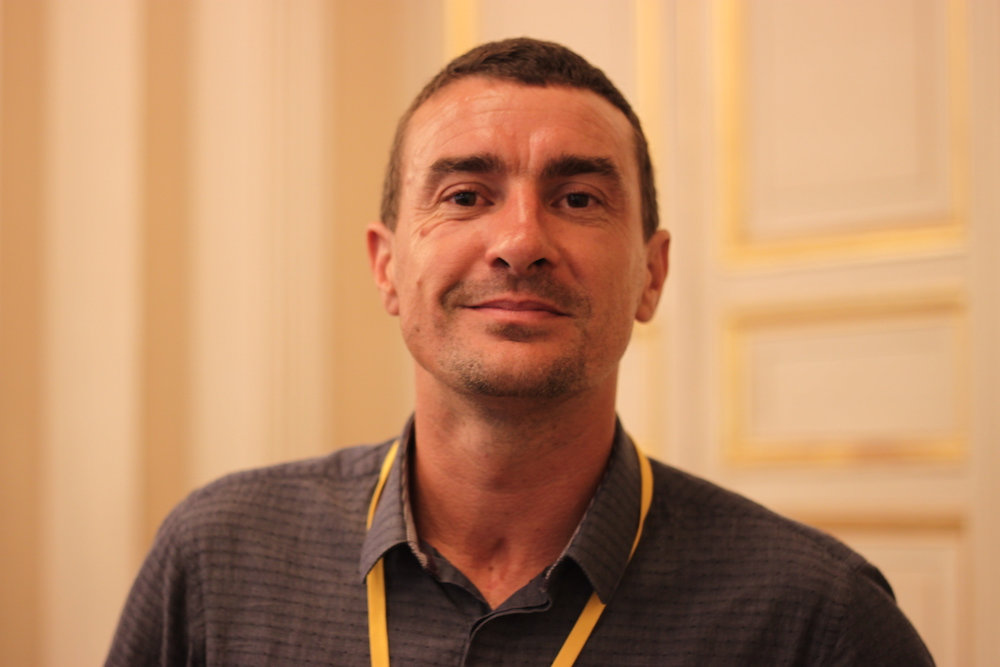
The clear interest of farmers in this call for projects shows that a very large community wants to make an agroecological transition. Coming from a wide variety of backgrounds, they demonstrate that ideological obstacles are not as significant as one imagines.
»Guilhem Soutou, Head of the Foundation's Sustainable Food Axis
9 projects supported during the2nd edition
For this2nd year, 9 projects led by farmers’ collectives, of various productions and sizes, were selected by a jury composed of farmers, researchers, engineers, sociologists and experts from local authorities and foundations. Initiated by the collectives themselves, these projects create a dynamic and sustainable environment for the dissemination of empirical knowledge, agroecological techniques and practices through workshops, farm visits, study trips and original methods of animation and mediation.

Sharing of experience between 16 farmers’ collectives in the Oise (CERNODO / Oise)
The Committee for the Rural Expansion of the North-West of the Oise Department, in partnership with the Chamber of Agriculture, supports, monitors and organizes the sharing of experience of 16 farmers’ collectives in the adoption of new agroecological practices in dairy or meat farming, field crops and organic farming. The entire process will be disseminated beyond the circle of CERNODO members, on a platform shared with local authorities and civil society.
The challenge of mechanization in market gardening (FR Cuma Occitanie)
About sixty market gardeners in 3 collectives in the Hautes-Pyrénées, Gers and Pyrénées-Atlantiques have asked the FR Cuma Occitanie and 3 Chambers of Agriculture to organise exchange days and field visits around the issue of mechanisation. These exchanges will be capitalized on and then broadcast in the form of videos.
Vegetable seed reproduction (ARDEAR Grand Est)
Three Alsatian agricultural collectives are cooperating in the field of vegetable seed reproduction in order to improve their practices and create a territorial dynamic. They are trained and equipped to gain technical and legal independence, set up and monitor field experiments aimed at obtaining quality seeds adapted to the territory, promote exchanges and reflect on the opportunity of a seed sector.
Soil preservation (SAMU de l’environnement / Alsace)
The Emergency Mobile Analysis Service (SAMU) of the environment supports Alsatian cereal growers, winegrowers and market gardeners who wish to become autonomous in the analysis, understanding and preservation of their soils. It relies on the experience of the Rhizobiome cooperative to offer training and exchange days between farmers, going as far as the self-construction of low-cost soil analysis kits.
Agroforestry in viticulture (Agrof’île)
Agrof’île, Vins vivants d’Alsace, Dephy Vigne, Civam Hérault, the GEST of Burgundy and Provence Agroecology Citizenship create a network of exchanges between winegrowers from 4 major regions wishing to evolve towards agroforestry systems. These systems benefit from a wide heritage of traditional practices (married vine, haughty, joualle) to be contextualized and shared. They will be supported by the Italian farmers’ network “Rete Contadina” which will shed light on traditional practices perpetrated as a precautionary measure in Veneto.
Farmers’ seeds in different cereal farming systems (Triticum)
Farmers’ seeds are an important part of the transition of agricultural systems. They allow adaptation to the reduction of inputs, to a diversity of local contexts, to climate change; affect nutritional quality or carbon storage. The Triticum Farmers’ Seed House brings together several networks around days of exchange on the use of these seeds in different cereal farming systems: soil conservation, organic farming, agroforestry, mixed cropping-livestock farming, etc.
Cattle production and food autonomy (FRGEDA Bretagne)
Breton farmers are seeing the impact of climate change. Shifted agricultural calendars, summer water stress and variations in yields shake them up every year. Four collectives bringing together more than 100 mixed crop-livestock farmers from the Manche, Ille-et-Vilaine, Côtes d’Armor and Morbihan regions, from both long and short supply chains, conventional or organic, meet regularly to discuss the production and food autonomy (particularly protein) of cattle.
Traditional Knowledge and Agroecological Innovations (Nature Rights Guyana)
The project “Les savoirs de la Forêt” led by Nature Rights Guyana, brings together traditional agricultural collectives representing the Guyanese Amerindian, “black maroons”, Creole and Asian communities. This network hybridizes traditional knowledge and agroecological innovations, then values and transmits them to the younger generations by organizing training, exchanges between farmers and farm visits.
Giving new life to pastoral livestock farming (Civam Empreinte, Causses and Cévennes)
Pastoral livestock farming, which is part of the ecology and history of the Causses and the Cévennes, is being lost. However, more than 30 shepherds and shepherdesses from 3 disparate collectives are reconnecting with pastoralism and wish to exchange, capitalize and bring this knowledge and know-how back to life. The CIVAM Empreinte supports these groups and disseminates knowledge to breeders (via the Institut de l’élevage), young people in apprenticeship or in the process of setting up.
Supporting the dynamics of change
In addition to providing support and advice to project leaders, we offer many opportunities for meetings, exchanges and promotion, whether through seminars, collective capitalization work, publications or major events such as the Food Meetings.
Thus, on January 6 and 7, we brought together the 17 winners of the 2020 and 2021 editions in order to reflect together and improve the dissemination of agroecological practices. Supervised by the DEFIS – GERDAL* team, this1st session inaugurated a long-term cycle of work that will continue with visits, interviews, remote information collection and bibliographic research.
“Our work, carried out collectively with all the project leaders, will focus on answering a complex question: what makes farmers today want or not, can or cannot, engage in agroecology?” explained to the participants Claire Ruault, Sociologist, research-training officer, coordinator of GERDAL, associate researcher UMR Innovation. “On the one hand, it is a question of studying the place occupied by the proposals put forward by farmers’ collectives that implement agroecological practices in local agricultural and socio-professional dynamics. And on the other hand, to provide answers to the practical questions that those who support them are asking, for example: how to mobilize farmers more, to energize groups, to make them last? How can we capitalize on and produce useful, relevant, accessible, up-to-date, proven technical references in agroecology? How can we make good use of what is exchanged in informal times, evaluate the impact of our activities on changes in practices? »
These are all avenues for accelerating the agroecological transition that will be shared, promoted and debated at a seminar scheduled for early 2023.

«
We think that when it’s not farmers who give leads, it doesn’t have any effect. The figures of the experts, the work of the IPCC, have no effect. We need examples of farmers who are trying things…
»Verbatim from the first interviews conducted by Gerdal-Défis with the winners as part of the capitalization program.
Save the date
The 2022 call for projects “For an agroecological transition through exchange and sharing”
will be opened next March.
Visit our website!
*Composed of sociologists of work and rural and local development, the GERDAL, Group for Experimentation and Research: Development and Localized Actions, conducts research and methodological support work on the processes of change in agriculture, with a view to strengthening the capacity for initiative and innovation in the face of the challenges of agricultural and food transition.
Photo copyright: Courtesy of Civam Empreinte