18 janvier 2023
Call for projects “Composing knowledge to imagine a sustainable future”


In line with the previous edition, this call for our Citizen Art axis aims to support artistic projects that involve several fields of research and practices in order to build new imaginaries allowing our societies to engage in the ecological transition imposed on us by the new climate regime. You have until March 31, 2023 to apply !
Mobilizing the arts and sciences
Waves of images of natural disasters, population movements, alarming statistics, etc., flood us without being able to offer us a horizon beyond the spectacle and experience of a generalized disaster. The work of artists is immense in apprehending and representing this new and constantly changing reality, as well as that of scientists, philosophers and all the citizens who guide our collective choices.
For the Daniel and Nina Carasso Foundation, in the current context, art must fully play its role as a citizen catalyst in order to help us imagine a sustainable future and trigger positive affects that allow us to grasp the reality of interdependence and to desire other ways of inhabiting our Earth, our common and unique home.
To emancipate themselves from the feeling of powerlessness generated by the repetition of hopeless diagnoses, to sketch desirable and sustainable futures, artists are initiating new working methods and are increasingly committed to synergy with researchers, residents, intellectuals, associative actors, professionals in care, social and environmental matters, etc.
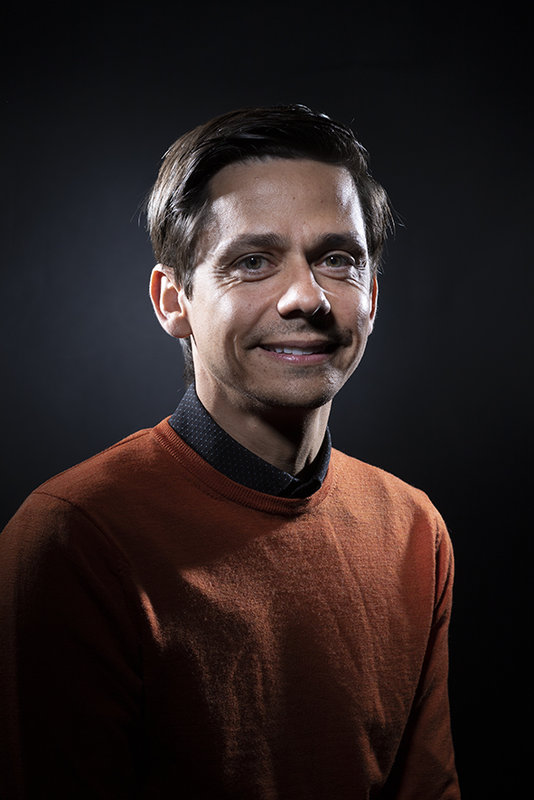
«
In a context of climate emergency, imagining tomorrow involves both knowledge and the creation of inspiring stories.
»Klaus Fruchtnis, Head of Citizen Art France
The projects expected by our jury
This call aims to support artistic projects that involve several fields of research and practices (scientific, empirical, cultural, etc.) in order to build new imaginaries that allow our societies to engage in the ecological transition imposed on us by the new climate regime.
It is aimed at artists, researchers, citizen collectives, cultural institutions, artistic education institutions, higher education and research institutions, associations, foundations, local authorities. In all cases, the projects must be backed by a non-profit structure falling under Articles 200 and 238bis of the General Tax Code.
For this new edition, we are looking for committed projects, anchored in the territory and with identifiable impacts. The selection criteria and application procedures are specified in the framework note, which can be downloaded here. Visit our “Calls for projects” page to apply.

Framing note
Composing knowledge to imagine a sustainable future 2023
18 jan. 2023 · PDF 627 KB
A meeting to explore knowledge together
Launched in 2015, the “Composing Knowledge” call for projects has supported 43 projects in France and Spain that dare to break down the barriers between disciplines and skills in order to imagine a tomorrow that is as sustainable as it is desirable. Driven by the urgency of transformation, we want to demonstrate the commitment of our partners by sharing their experiences and conclusions widely to enrich knowledge. The new Carasso Notebook (forthcoming) offers an analysis of these learnings, the result of an in-depth survey conducted among 25 projects.
Why is the composition of knowledge essential today? How do they decompartmentalize knowledge? What do they have in common in their singularities? What value do they produce within the collectives and beyond?
During a webinar on Tuesday 21 February at 3:30 pm, the Foundation’s Citizen Art managers will be accompanied by one of the two authors of this study, Valérie Pihet, but also by project leaders to present their learning. Hervé Quemeneur, in charge of the current edition of the call for projects, will also be present. You can join this discussion by logging in via this link.
3 questions to Klaus Fruchtnis, Head of Citizen Art France
What are the important points to remember for this new edition?
For the second edition in a row, we focused the call for projects on the ecological crisis. We are seeing a growing, even urgent, demand for transdisciplinarity, synergies and alliances in the transitions imposed on us by the new climate regime. This is why we want to encourage projects that demonstrate awareness and concrete actions on the ground. Because imagining tomorrow involves both knowledge and the creation of inspiring stories.
In what way does this call for projects fall under Citizen Art?
The function of citizen art is to raise specific claims to the commons, by accompanying users, inhabitants, communities, spectators, etc., in the creation of meaning and social links, and by giving them visibility in the public space to express themselves. This is why the cross-fertilization of several disciplines has its place in our axis: this interdisciplinarity allows us to acquire the ability to think and approach the complexity of the world differently, to imagine a better future.
Citizen artistic practices require interaction, a singular and active appropriation of each person. More than a finished product, the work of art thus becomes the symbol of a community that is created and transformed over the course of circumstances — a language that gives inventive power back to citizens, in addition to giving it to artists.
Can you explain the notion of “composing knowledge”?
The Citizen Art axis supports an ecosystem of both institutional and alternative actors, in order to structure and legitimize the emerging sector of the intersection between disciplines. The notion of “composing knowledge” expresses this approach of a community of learners that feeds on the contributions of the different disciplines to create knowledge. Thus, with our “Art, Science and Society” program, we encourage the intersection of art and science in projects that invent new models of knowledge construction around the major questions of our society.
Cover photo: Visual of the “L’air du pollen” project led by La Métonymie, 2021 winner