Socially engaged art
27 mai 2026
Citizen-commissioned works of art: a tool for local development


For the past ten years, the Daniel et Nina Carasso Foundation has actively supported the development of the New Sponsors protocol as a tool for cultural democracy and social transformation. Initiated in the early 1990s by the Fondation de France and now supported by the Société des Nouveaux Commanditaires, this program enables residents of towns and villages of all sizes to commission a work of art from an artist in response to local issues. In Saint-Amand-en-Puisaye, Burgundy, local residents chose to promote their local river, La Vrille, and its forest ecosystem, threatened by climate change. The story of an extraordinary artistic and civic adventure.
The Puisaye region is historically a “water landscape”: rivers, ponds, hedgerows, wet meadows and clay soils structure its ecological and landscape identity. But in this rural corner of the Nièvre region, the issue of water has become a collective concern. Drier summers, heavy rainfall, wetlands that are gradually disappearing: the Vrille basin is bearing the full brunt of the effects of climate change. And with them comes a broader question: how can we continue to live in a territory whose equilibrium has until now been based on abundant water, and how can we preserve its landscapes and biodiversity?
This concern has given rise to a citizens’ initiative that is unprecedented in the region. On the occasion of the Festival de la Pluie en 2023, the first local event to focus on water issues, local residents and stakeholders shared their concerns. And the approach gradually took shape around a collective project, the concept of which was discovered while reading press articles: a “citizen’s commission for a work of art”, aimed at rethinking the link between territory, water and biodiversity.
The citizen, initiator of a dialogue between art and territory
Launched in the early 1990s with the support of the Fondation de France, this unique scheme, now run by the association La Société des Nouveaux commanditairesis based on a simple but ambitious idea: to enable local residents to join forces with artists to commission works of art that respond to the social, cultural or environmental challenges facing their area. At the heart of this approach is the conviction that art has a role to play in society as a tool for cohesion, dialogue and social transformation. A vision actively supported by the commitment of the Daniel et Nina Carasso Foundation, which works to make artistic creation a vector for social cohesion and citizen involvement in local dynamics.
” It seemed to us that this scheme was in line with our ambition: to deepen collective awareness of the issues affecting our region, and to convince a wider public of the need to take care of the forest, the soil and the river ,” explains Odile Dupont, a retired resident of Saint-Amand-en-Puisaye and a member, with her husband, of the New Sponsors collective since the beginning of the adventure. ” It aroused interest and curiosity, including among the elected representatives in place, and we had no trouble forming a group of about fifteen sponsors “.
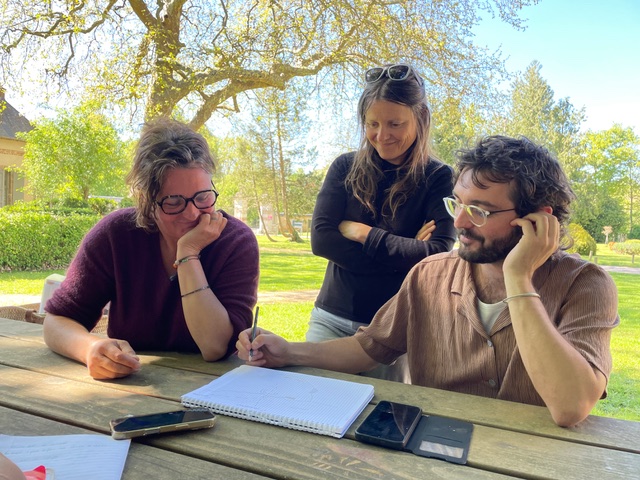
The group, which is structured around the Respire association, has no standard profile or defined socio-professional criteria: it includes several local councillors – including those responsible for public works and culture – and ceramists, representatives of a long-standing local pottery tradition. But also: a retired philosophy teacher, a psychologist, a photographer, the village bookseller, a young architect whose dissertation deals with the local valley… More recently, a librarian, a landscape gardener and a theater designer have joined the collective.
The mediator, conductor of a collective project
The principle turns the traditional codes of artistic commissions on their head. Clients are no longer just local authorities or major cultural institutions: they are residents, associations, teachers, hospital staff or neighborhood groups. Here, art doesn’t come down from an institution or a museum. It is born of a need expressed on the ground, in the heart of the territories.
As a key element of the project, an accredited mediator plays a pivotal role between citizens, artists and institutions. A true conductor of the project, he or she assists sponsors in formulating their request, translating a collective concern into an artistic project through a set of specifications. He or she identifies the most appropriate artist, facilitates exchanges and accompanies the production of the work through to completion. He or she ensures the coherence of the process, oversees the quality of the dialogue between the various parties, and makes sure that artistic, social and local issues are respected.
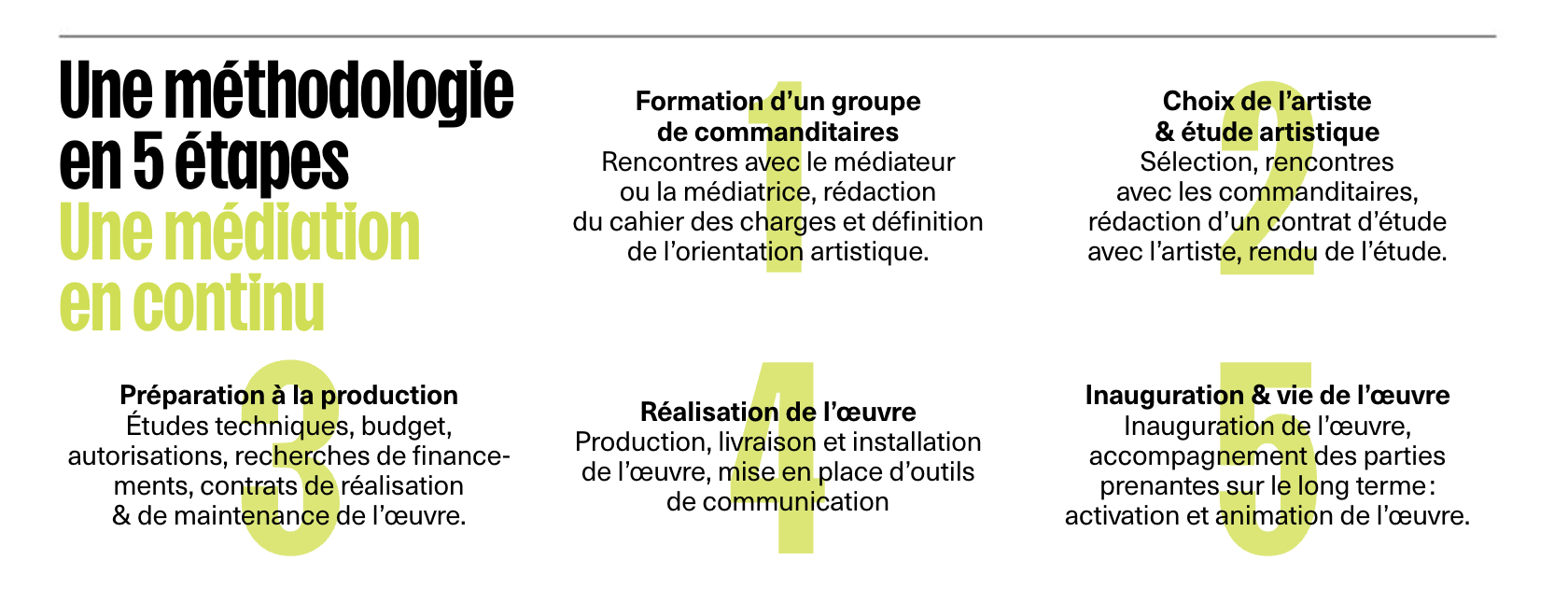
In Saint-Amand-en-Puisaye, the citizen sponsors benefit from the support of a two-person team: Amanda Crabtree (Hauts-de-France) and Valérie Cudel (Burgundy), who ensure the territorial anchoring essential to the project’s success. ” Our role as mediators is to bring contemporary art to people who are not involved in the cultural microcosm,” says Amanda Crabtree, ” It’s a multi-faceted job. In turn, you’re a group leader, a translator between the artist and the sponsors, a psychologist to deal with misunderstandings, a lawyer to ensure compliance with the rules of public space, a diplomat to seek funding and dialogue with elected officials…. And then there’s the artistic expertise: feeling out the right artist for the right group. ”
The artist, co-creator of a work of art as close to the field as possible
Invited to respond to a request from civil society, the artist occupies a singular position. They are not content simply to produce a work of public art: they are involved in a close dialogue with the sponsors and the area concerned. In tune with the issues at stake, he offers an artistic interpretation that goes beyond simple illustration to open up new perspectives.
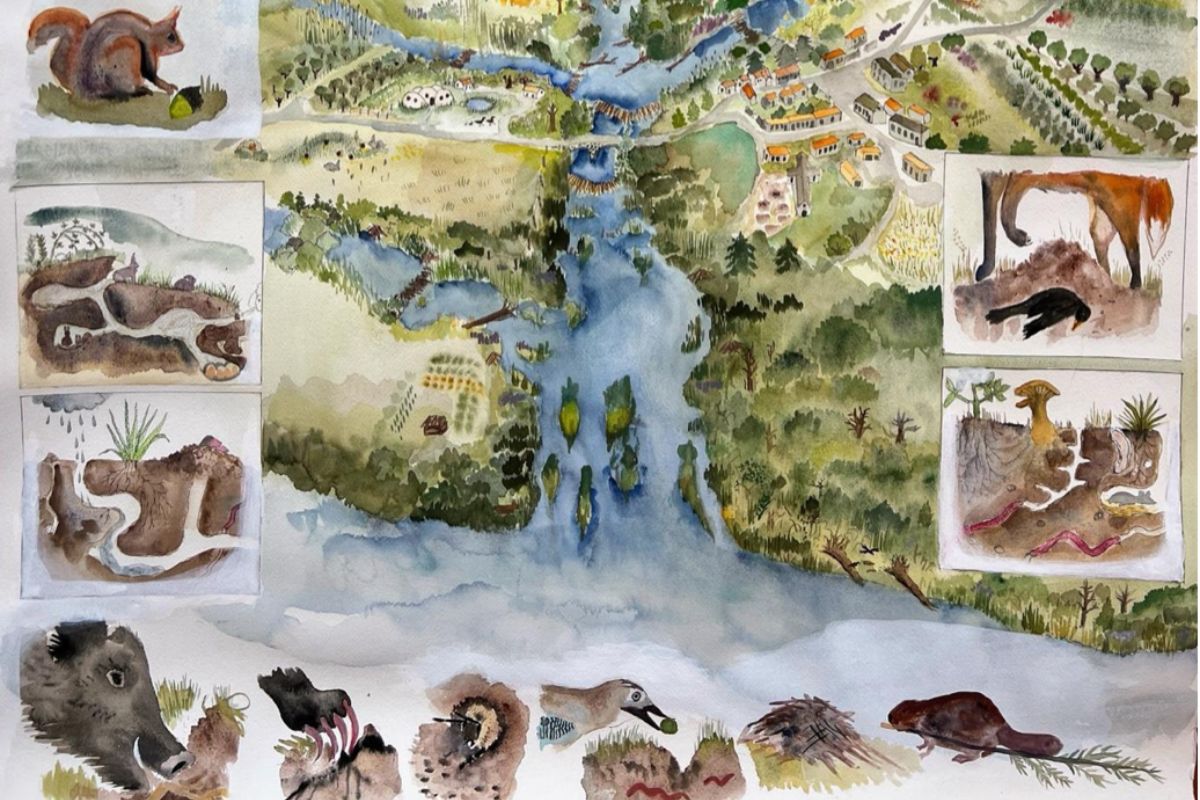
For this project, which is part of an ecological approach focused on preserving the Vrille basin and the area’s natural balance, artist Suzanne Husky was called in. A visual artist, qualified agronomist and landscape gardener, she has been working for several years on the relationships between humans, ecosystems and non-human life forms. Her approach, which blends scientific research with a variety of artistic practices (watercolour, film and even embroidery), questions our way of inhabiting natural environments. Co-founder and co-president of the Alliance movement with the beaver people for living riversThis committed artist is also involved in river regeneration and restoration. I’m unique in that I have one foot in the field and one in the studio,” says the artist. This allows me to bounce ideas off clients, particularly their desire for an environmental commitment to the ‘more than human’.”
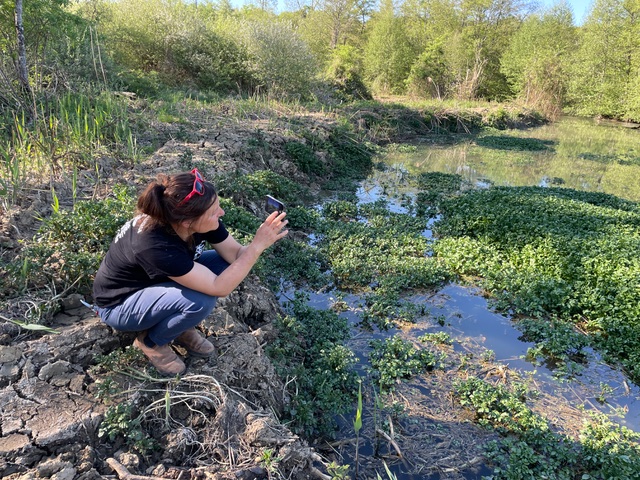
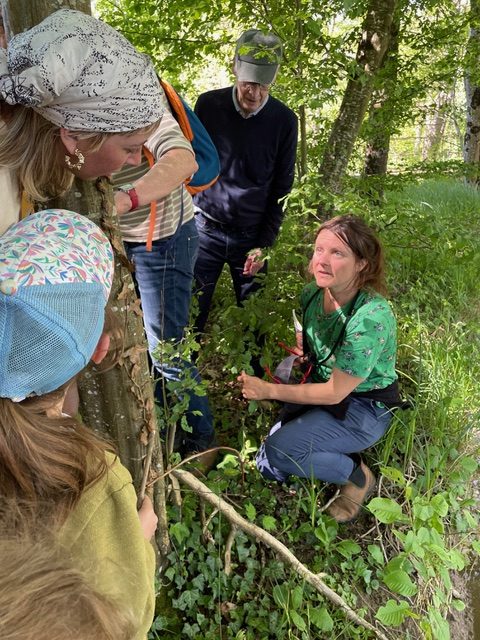
For the past two years, sponsors and artists have been exchanging ideas to build a project around the notion of “active hospitality”. Formalized in a charter currently being drafted by the sponsors, it aims to rethink the place of humans within the Living World. Suzanne Husky visited the site on four occasions to talk with the collective, the mediators and, above all, to immerse herself in the river landscape and the workings of its ecosystem. These sessions included walks along the valley to the watershed, searching for traces of beavers (which were present, to the surprise of the locals), and work sessions with the group. The artist also immersed herself in the history of the village’s ceramics heritage.
«
The artist plays a very important role, both in stimulating the desire to get to know and understand our territory and the ties that bind us to it, but also in providing guidelines for action. We don’t see our Vrille valley as we used to. We’ve become more committed: we’re advocates for the river, the forests and the bocage.
»Odile Dupont
sponsor
With each visit, broader links have been forged with other local players: other associations, young villagers via schools and social centers, or local ceramists. It takes time to get in tune with a territory and come up with the right proposal,” notes the artist. But it’s important for me to do something that can help: my art only has social meaning if it meets its audience in what it’s saying. ”
A committed and transformative project
Works produced within the framework of the New Sponsors scheme are not just aesthetic, they carry a narrative, a memory or a shared vision. They contribute to renewing the way we look at a place, revealing the issues at stake and fuelling public debate. In Saint-Amand-en-Puisaye, in addition to studio creations such as a drawing of the river for the library or a ceramic coat of arms for the town center, which aim to make visible the community’s commitment to this unique landscape, the idea is to anchor the proposal in the field, by creating an artistic and landscaped trail linking the Vrille to the watershed between the Loire and Seine basins. The trail would invite visitors to discover various landscape features: springs, ponds, washhouses, meanders, wetlands, ferriers, pollarded trees and beaver tracks. Participatory actions are already planned: a biodiversity inventory conducted with an ornithologist-biologist, planting to encourage local species and the creation of an edible corridor, and an educational hut erected by young local architects to raise awareness among local residents over the long term. Two unobtrusive art installations could punctuate the route, not as isolated monuments, but as points of attention allowing us to “read” the landscape in a different way.
It is now up to the mediators to ensure that all the actions imagined are carried out, and to continue the follow-up with the municipality and sponsors once all the artist’s interventions have been completed by the end of 2027. But while the production phase of the project is just getting underway, the transformations are already well underway. ” We don’t see our Vrille valley as we used to. We’ve become more involved: we’re advocates of the river, the forests and the bocage,” says Odile Dupont. The artist plays a very important role, both in stimulating a desire for greater knowledge and understanding of our territory and the ties that bind us to it, but also in suggesting avenues for action. What we feel is particularly important is to inspire the younger generation to take over from those to which we have contributed .
And these actions go far beyond raising awareness. With work planned on the river, Suzanne Husky suggested that it be carried out using a gentle method, i.e. without machines, trucks or gravel… Beaver-style. This request was accepted by local elected representatives, and its impact will extend beyond the Vrille worksite: from September 2026, all the department’s river technicians will be trained in the method proposed by the artist. Sponsors will be invited to visit the pilot site, some forty minutes away, to observe and understand the methods that will then be applied to their river. ” It’s sometimes a challenge to get elected representatives to understand the importance of listening to sponsors. But when we manage to widen the circle by involving them, the project takes on another dimension,” applauds Amanda Crabtree. By enabling non-specialists to formulate a request, debate and steer an artistic and civic project, the New Sponsors scheme turns culture into a field for democratic experimentation. More than just a cultural program, it outlines another way of contributing to the general interest, based on participation, dialogue and co-creation.
Long-term support in France and Spain
In France, since 2022, the Daniel and Nina Carasso Foundation has been supporting the work of La Société des Nouveaux Commanditaires, the heir to the scheme devised in the early 1990s with the Fondation de France. 12 projects are currently underway on the territory and in particular 8 as part of theBourges 2028European Capital of Culture”. Convinced of the potential of this method based on citizen participation, the Foundation has also contributed to its implementation in Spain since 2014 and in 2019 will support the creation of the platform Concomitant. It adapts the protocol to the Spanish context, working with groups of residents, mediators and artists on artistic commissions addressing social, territorial or ecological issues. Today, the Nouveaux commanditaires network represents over 500 projects in Europe (including nearly 320 in France), while Concomitentes has developed 17 projects across Spain, in fields as varied as healthcare, public space, heritage and the rights of disabled people. Through this long-term support, the Foundation affirms its determination to make art a space for citizen cooperation, capable of strengthening the power to act in territories and opening up spaces for collective transformation.