15 novembre 2021
Committed scientific research for the transition to a sustainable food system


A better understanding of the ecological, socio-economic and nutritional challenges and mechanisms of agriculture and food is essential to guide the transition. To this end, we support analyses and forecasts based on academic and empirical knowledge and support, in France and Spain, the development of multidisciplinary research on Sustainable Food. Here is an overview of our latest actions, including the awarding of the Daniel Carasso Fellowship to 2 young researchers in Madrid on October 14th!
Food Systems Research: A Way Forward
The IPCC’s 6th Assessment Report, released last summer, provides new estimates of the possibility that global warming will exceed 1.5°C in the coming decades and argues that unless there are immediate, rapid and massive reductions in greenhouse gas emissions, limiting warming to around 1.5°C, or even at 2°C, will be out of reach. “This report confronts us with reality,” said Valérie Masson-Delmotte, co-chair of IPCC Working Group I. “We now have a much clearer picture of the past, present and future climate, which is key to understanding where we are going, what can be done and how to prepare.” [1]
With agriculture and food accounting for nearly a third of global greenhouse gas emissions, the fight against climate change is in fact closely linked to the social mission of our Foundation. Supporting actors in the field for more than 10 years, we also support the development and dissemination of knowledge through multidisciplinary research in favor of the transition to a sustainable food system. Given the urgency we are all facing, we believe it is essential to encourage and consolidate scientific knowledge on the agricultural and food transition in order to promote concrete transformations and support courageous and informed decision-making.
[1] https://www.ipcc.ch/site/assets/uploads/2021/08/IPCC_WGI-AR6-Press-Release_fr.PDF
«
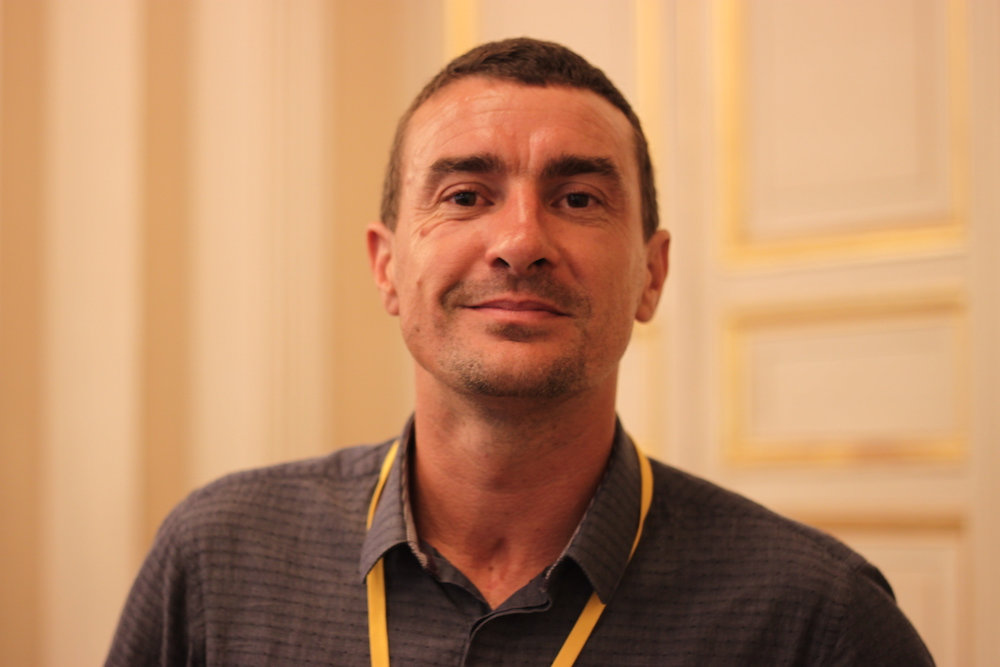
As a philanthropic actor in Sustainable Food, we believe that it is necessary to support a form of scientific research that is a driving force for the agroecological transition. Agricultural and food research should be put at the service of a real project for an agro-ecological, solidarity-based, democratic society. Like the Daniel Carasso Fellowship, the CO3 scheme, or the ClimOliveMed project, the Foundation constantly relies on committed and participatory scientific research.
»Guilhem Soutou, Head of the Sustainable Food Axis
Celebrating science for transition at the first Daniel Carasso Fellowship awards
On October 14th, we were gathered in Madrid to award 2 young researchers the first Daniel Carasso Fellowships. During this ceremony, which was streamed and available on our Youtube channel, Raquel Ajates, researcher at the National University of Distance Learning (UNED), and Daniel Gait’an Cremaschi, researcher at the Autonomous University of Barcelona (UAB), presented their projects on seed diversity and governance, and on sustainable public food markets in Spain. To mark this €160,000 grant, the two laureates received a sculpture specially created by Spanish artist Jaume Plensa from Isabelle Le Galo, Deputy Director of the Foundation in Spain, Marie-Stéphane Maradeix, General Delegate and Philippe-Loïc Jacob, Administrator.
The evening continued with a debate on the contribution of science to societal challenges. The six leading experts gathered stressed the importance of cooperation and dialogue between actors to address complex and urgent challenges: climate, biodiversity loss, degradation of natural resources, social inequalities, malnutrition, obesity, etc. ” Systemic research forces us to work together, to be truly inter- and trans-disciplinary, because technological innovation must be carried out hand in hand with the social, public policy, financial sector… All this must form an organic and meaningful whole, linked by a common intention ,” said Carlos Mataix, director of the Center for Innovation in Technology for Human Development.
For Maria Navarro, head of the Spanish Climate Change Office, when we talk about food policies ” We always focus on the production sector. However, the food system is a more complex reality: it begins with production, goes through processing, distribution and consumption. This approach is a radical change that must be taken into account. » A statement confirmed by Maria Ramos, researcher in agroecology and biodiversity : “We are at the very beginning of research on food systems as a whole. Disciplines are still very compartmentalized and hyper-specialized today. There is a need to do science differently, not only by uniting different disciplines but also by integrating other actors, by creating the need for new knowledge to understand food systems. Jane Battersby, 2017 recipient of the Premio Daniel Carasso (predecessor of the Daniel Carasso Fellowship), concluded the panel discussion from South Africa: ” Food is also a very controversial political issue. These new forms of cooperation that we are trying to find must focus on food systems but also become aware of how all the elements are linked to each other. Food sustainability is a matter of the future. »
Always committed to the crossroads between disciplines and approaches, we invited Cristina Pato, winner of the 2020 Committed Citizen Artist Award, to translate the scientific concerns of our laureates into a unique artistic piece “Public seeds: a musical dialogue” which was performed on stage.


Support and networking of participatory research projects committed to the ecological transition
To effectively support committed scientific research, we also support the collaboration of disciplines in a process of citizen participation, and co-construction of knowledge for the common good. Thus, we are joining forces with other structures to bring out projects for the future and encourage synergies between researchers and civil society that contribute to the ecological transition.
For the past 3 years, we have been participating in the CO3 scheme, in partnership with ADEME, the Fondation de France, Agropolis Fondation and the Charles Léopold Mayer-FPH Foundation, with the aim of highlighting and supporting participatory research projects, which until now have received very little funding. The CO3 scheme aims to encourage virtuous collaboration between researchers and civil society with a view to producing renewed knowledge and providing answers to the food, health and agri-environmental challenges of the years to come. In 2021, out of the 10 projects awarded, we financed:
- FAPO-2050: The future of peasant agroecology in Occitanie 2050 (Portage: InPACT Occitanie network, UMR ART-Dev (CIRAD, CNRS, Paul Valéry Universities and Via Domitia University);
- SAGITERRES: Collective strategies for a territorial agroecology through crop-livestock cooperation (Portage: INRAE and Biocivam de l’Aude);
- SOURDOUGHS: Sharing knowledge and building research to support the evolution of sourdough baking practices (Portage: UMR SPO (INRAE) and BioCivam de l’Aude.
All of these are ways that we hope will be promising for changing agricultural and food systems towards greater resilience and environmental sustainability and social justice!
Photo credits: Javier Echánove
Daniel Carasso Fellowship Awards Ceremony - English translation
15 nov. 2021
Press release France
15 nov. 2021 · PDF 713 KB
Press pack – English
15 nov. 2021 · PDF 3 MB