15 mars 2021
Opening of the call for projects “For an agroecological transition through exchange and sharing”


For the 2nd year in a row, we invite farmers’ collectives from all walks of life to present their projects for exchange and sharing around agroecology. This call for projects is the result of an alliance between our foundation and 4 major networks in the agricultural world, determined together to encourage the mass dissemination of agroecology. Apply until May 31, 2021!
Accelerating the agricultural and food transition
We aspire to a transformation for a greener, more inclusive and fulfilling society. With Citizen Art, Sustainable Food contributes to this desirable future by allowing everyone to act at their own level and collectively, in favor of change.
For the past 10 years, we have been supporting and accompanying projects that bring out more sustainable practices, from seed to compost, to allow universal access to healthy food that respects people and ecosystems. This transition is possible and necessary. More than ever today, we must accelerate it and develop our systems by testing and disseminating new agroecological and food practices.
This is why we have joined forces with 4 associative, cooperative and federative networks of agriculture (Fadear, Cuma, Civam and Trame), around a common vision of agroecology that can transform all current forms of agriculture and inspire new actors. A vision shared on the ground since many collectives have applied. Sorting of crops, market gardening, pastoral breeding, agroforestry, viticulture, family farming… in metropolitan France and the overseas territories, 9 projects led by farmers’ collectives of various productions and sizes were supported.
3 questions to Guilhem Soutou, Head of the Foundation’s Sustainable Food Axis
What is your assessment of the 1stedition of this call for projects?
Farmers have clearly shown their interest and willingness to exchange ideas by presenting more than 80 projects last year! Farmers want to exchange with each other, and with those who have different practices. This clear interest shows that a very large community of farmers wants to make an agroecological transition.
What is your analysis of the projects you support?
Actors from a wide variety of backgrounds wish to exchange ideas together: farmers’ collectives affiliated to different agricultural unions or different ONVARs (National Agricultural and Rural Organizations), chambers of agriculture, cooperatives, organic networks, education, etc. This diversity shows that the “ideological” barriers are not as closed as we imagine. There is a global and shared movement. This call for projects promotes and encourages concrete links and sharing beyond the quarrels of chapels.
And for this2nd year?
This call for projects is all the more relevant as the crisis encourages us to strengthen and accelerate our transition support programs. The crisis demonstrates the need for an agroecological transition. We respond with financial support but also with structural and technical support, impact assessment and valorisation. This is what we are doing, for example, in Martinique with the Green Collars, on the development of small-scale Caribbean organic agriculture. We are going to strengthen the support for project leaders in 2021, particularly on the technical side… To be continued!
Exchange and dissemination of knowledge and practices for all
In line with the previous edition, this call for projects is aimed at all farmers’ collectives, including breeders, fishermen, aquaculturists, whatever their profiles. It concerns projects initiated and developed by the collectives themselves in a bottom-up logic with the main objective of disseminating empirical knowledge, techniques and agricultural practices adapted to their territories.
Among the expected criteria, these projects:
- allow exchanges between heterogeneous collectives regarding their commitments to the agroecological transition, so that more experienced farmers can transmit and exchange with farmers wishing to become more involved
- take place in a territory consistent with the planned exchanges, with a broader territorial agricultural or food approach and integrating any other actors (consumers, local authorities, environmental protection associations, etc.)
- aim to perpetuate mechanisms for exchange and feedback over the long term
- provide for actions to disseminate the results, in particular to farmers in the geographical area in question, but also beyond.
Whatever they may be, attention will be paid to the quality of the methods of facilitating these exchanges.

«
The agroecological transition requires changes in practices, but also in systems and strategy, and even in the vision of the profession. To support these complex transitions for farmers, the collective is a lever that can allow them to reassure themselves, to take stock, to access new skills, to broaden the horizon of their reflections… We must never forget the importance of this rising energy from the field!
»Francis Claudepierre, President of Trame
Growing projects over time
Our teams support project leaders within the framework of rigorous monitoring and a human relationship based on trust.
The projects selected by our jury, made up of farmers, researchers, engineers, sociologists and experts from local authorities and foundations, can benefit from support for a maximum amount of 60,000 euros over 3 years. To meet their needs, support and advice missions can be offered to them, after a shared diagnosis. To improve their practices and value their work to their stakeholders, we support them in particular in measuring their impact.
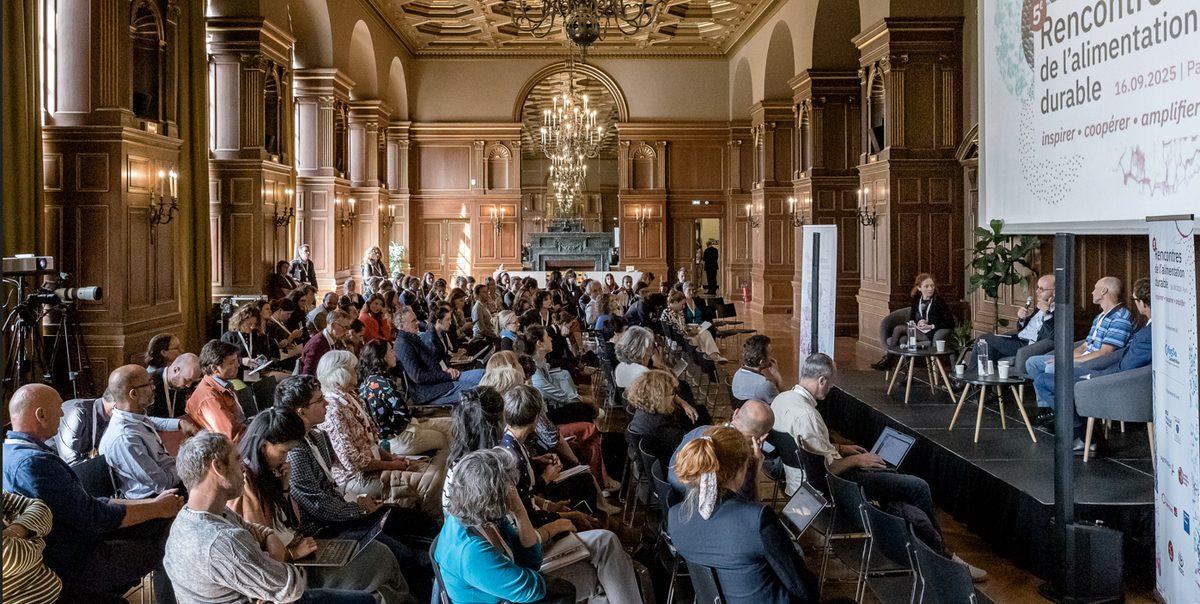
We also offer many opportunities for meetings, exchanges and promotion, whether through seminars, collective capitalization work, publications or major events such as the Food Meetings.
Application procedures, criteria, selection method... All the information on how to apply is available here


Download the framework note
15 mar. 2021 · PDF 816 KB
Copyright photos: Civam Network / Shutterstock FRCUMA