17 juillet 2023
Winners of the call for projects Composing knowledge: a very fine anthology of emerging projects.


The Daniel and Nina Carasso Foundation has launched, as it has every two years since 2015, its call for projects “Composing knowledge”, aimed at projects that link art, science and society. In line with the 2021 theme, this 6th edition, “Composing knowledge to imagine a sustainable future 2023” promotes artistic projects that involve several fields of research and practice with the aim of building new imaginaries allowing our societies to engage in the ecological transition and imagine a sustainable future.
Through its Citizen Art axis, the Foundation supports artistic projects that put the question of social ties and concerns in common while giving citizens a power of intention through Art. An invitation to various actors in art, research, communities, educational institutions and associations, to collaborate to forge links, to break down the partitions of their respective disciplines to constitute a network of knowledge in order to build new imaginaries.
This promotion, which follows the 2021 one, met with considerable attention, with a total of 146 projects received, of which 95 were eligible. A colourful picture of ambitious proposals has thus emerged, showing a strong interest in these issues. 15 projects were finally selected. These projects are the embodiment of the desire to go beyond areas of expertise to face the importance of the challenges that lie ahead. At a time when the ecological transition requires us to reinvent our lifestyles, these initiatives are so many seeds planted in the fertile soil of our society; Together, they shape our journey towards a sustainable future.
“Climate change requires us to think about synergies between disciplines to create new knowledge and ultimately inspiring stories to design a better future. This is the whole purpose of this new edition of “Composing Knowledge” which, for the second consecutive edition, has turned to the ecological crisis. We have noted a strong interest in the creation of live shows, in the theme of the coastline as well as in synergies with art schools and universities. “ says Klaus Fruchtnis, Head of the Citizen Art axis in France.

«
The interest of our participation in the call for projects is to be supported in a dynamic ambitious long-term project. It means supporting a laboratory at the confluence of societal, environmental, artistic and research issues. It is the possibility of experimenting, of deepening, of drifting as well as of swarming in an attempt to make a “method”.
»Mélanie Garziglia, secretary general at Le Dancing
The fifteen winners of the call for projects “Composing knowledge to imagine a sustainable future 2023”
A jury composed of experts from the world of art and research met on July 4, 2023 to deliberate on the projects presented. To promote the emergence of these new models of knowledge construction, they were evaluated according to their relevance to contemporary challenges and their ability to mobilize different disciplines in a common impetus for a sustainable future.
For this edition, the projects had to be based on an artistic approach and address environmental issues, in co-construction between artists and scientists. They also had to be eco-designed, and their distribution public.

«
Participating in this call for projects offers us a valuable opportunity to share our ideas and collaborate with other actors committed to the same cause. We strongly believe that art and science can work together to create new perspectives and solutions for the ecological transition.
»Cédric Carles, Director of Atelier 21
Criteria for the selection of projects committed to ecological transformation through the power of art
Among the selection criteria, the projects had to address environmental issues in a committed way, by proposing innovative artistic approaches.
This call for projects offers a unique opportunity to rethink our relationship with the world, to explore new paths and to nourish our collective imagination. It embodies the Daniel and Nina Carasso Foundation’s desire to mobilize creative and intellectual resources to shape a sustainable future, where art plays a central role in transforming our societies.

«
By supporting ecosystems of actors and creating a community of learners, we are helping to build new access to knowledge around issues that affect all citizens, with climate change in the lead.
»Klaus Fruchtnis, Head of Citizen Art France
Thank you to the members of the jury of the Composer les Savoirs 2023 call for projects
We would like to thank the members of the jury, volunteer experts who helped us select these projects with curiosity and kindness. It is thanks to their expertise that these projects were selected. Their crossed perspectives, nourished by their experiences, have shaped this mosaic of hopeful projects.
The 15 projects in detail
This series of promising projects, rooted in the intersection of art and science, have in common their commitment to a more sustainable future:
• Petrified Museum (Lighthouse Company)
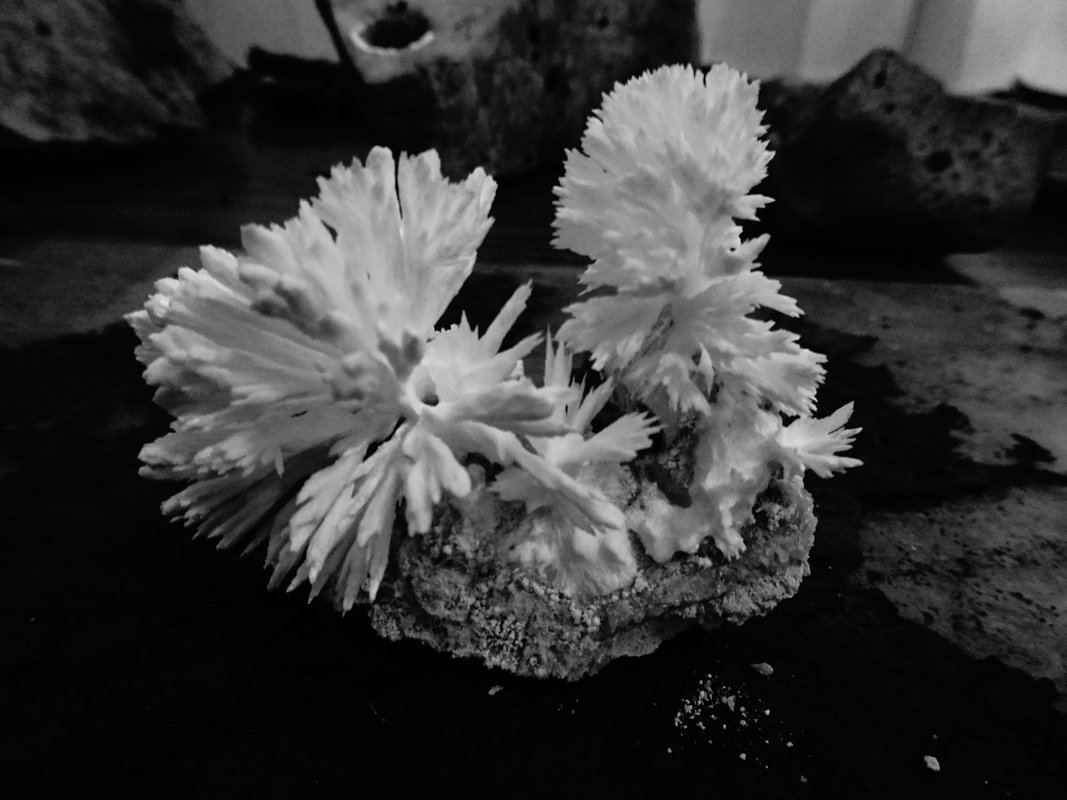
“The Petrified Museum” is an action research project on stage led by the theatrical companion The Lighthouse company based on a corpus of archives from the British Geological Survey (BGS) located in the north of England in Nottingham: the world’s largest collection of geological specimens collected since 1835. The project, which tackles a subject that is rarely treated in the theatrical world, the mineral world, brings together skills as varied as design, performance, humanities and experimental sciences. They developed a trio of experiences: a stroll through an exhibition, a space for laboratory practices and a show, a dreamlike choreography for young audiences
• There is another world and it is in this one (The Turbine)
The association La Turbine, a collective from Nantes, brings together a dozen artists, researchers and reporters who wish to set individuals and organizations in motion to create a desirable future through artistic and scientific stories and experiences. In 2023-2024, the members of the collective are working to develop 3 territorial projects in an Arts and Sciences network with a citizen dimension in participation: “Ocean, Moving Landscape”, a performance combining dance and biology; “Words for tomorrow”, a creative and participatory foresight workshop on transition issues; “Sound creations and listening sessions”, a collection of words from young people and adults, on the themes of gender, utopia and the body.
• Retrofuture: new narratives and tools for a participatory transition (Workshop 21)
Atelier 21 carries the Paleo-Energetic research program which compiles a retrospective vision of our common energy history to draw lessons and serve the energy transition with the help of collective intelligence. “Retrofutur” is a variation that aims, through ideation workshops, to bring together 3 pilot partner structures (a higher education school, a local authority and a company), a scientific committee and an artist around a common program to confront and complete their prospective approaches to the energy transition. Imagined as an experiment in collective intelligence, the objective of this project is to develop a participatory tool to envision the world of 2025-2050.
• At the Chazelet school (Les Augures)
In a mountain hamlet, the “A l’école du Chazelet” project seeks to create a place qualified as common to work on the intersecting issues of culture, ecology and the mountains. This project aims to rehabilitate the old school of the hamlet to make it a place of residence for artists, a space for meetings and debates, a cultural place for and with the village and its inhabitants. Les Augures sees this project as a showcase, a manifesto for the necessary ecological transition of the cultural sector.
• Mountain Trilogy (Oblique Scenes)
In the Belledonne massif, near Grenoble, this action-research project is deployed from the foothills to the top of the mountain, to launch a reflection involving researchers and inhabitants on the mountain as a living environment. Structured around 3 artistic projects, it aims to imagine the future of the mountains not only in Isère, but also elsewhere in the world. This first stage is intended to inaugurate an “International Mountain Cultural Area” (ECIM).
•Edge. Multimedia ethnographic survey on interactions between agricultural and forest landscapes in the Haut Beaujolais (Tillandsia)
This project questions both the industrial model that dominates forestry and agriculture in Haut Beaujolais and highlights alternatives that restore biodiversity and landscape balance. In the form of an ethnographic investigation filmed in the heart of the forest and agricultural landscapes of the north of the Rhône department, a creative documentary and a multimedia exhibition highlighting the environmental issues of this territory and the way its inhabitants look at it.
• Cinema on the ruins of the future (Echelle Inconnue)
Supported by Échelle Inconnue, an association based in Rouen, exploring through long-term research-action the hidden face of the making of cities, triggered following the fire at the Lubrizol factory (2019), the Cinema on the ruins of the future project aims to decipher the backstage of the reindustrialization processes of the Seine Axis. The production of a documentary notebook, a poetic video booth, a residency for authors in charge of writing dystopias, invitations to researchers, and debates with citizen collectives combine to collectively develop other knowledge and other narratives, contrary to the discourse on the virtuous metropolis. Ultimately, all of these steps will lead to the production of a film.
• Ver(t)s Bridge (Le Citron jaune, National Centre for Street Arts and Public Space)
This initiative of the Citron jaune and the artist Thierry Boutonnier sows seeds of innovation in Port Saint Louis du Rhône. In the context of a municipality exposed to the externalities of the Fos-Marseille petro-industrial complex, this participatory plant work intersects with issues of food insecurity and soil pollution. Artists, researchers, social actors and residents are working to plant orchards in the city’s political districts. These food beacons, composed, planted and cultivated in a collaborative way, aim to change our sensitive relationship with trees while experimenting with innovative urban agriculture methods adapted to polluted environments. This collective act should lead to the first production of olive oil in Port Saint Louis du Rhône by 2025.
• New stories for a new world (La filature du Mazel)
The Filature du Mazel, by presenting “New Narratives for a New World”, proposes a collaborative project that revolves around the ecological challenges of the Cévennes, in an inclusive approach. It articulates the intervention of artists and scientists with a view to raising awareness among the general public to transform imaginations and put into action. Art as a tool for popularizing science through various forms of artistic creation and cultural events, to contribute to the construction of “a new world”, to remake society with the Earth.
• Location(s): from the source to the confluences (Le Dancing – Centre de développement chorégraphique national Dijon Bourgogne-Franche-Comté),
A 3-year in situ laboratory project, designed with and around the work of the choreographic artist, pedagogue and dance researcher Laurent Pichaud, invited as an associate artist at the Dancing. It also engages in a multi-partnership between higher education schools (International Master’s Degree in Practice, École Nationale Supérieure de Paysage de Versailles-Marseille), artists, residents and local associations involved in the field of the environment. It unfolds around three moments of the festival “Entre cours et jardins” and is part of a process of creation in situ, with water as the common thread of the project.
• Hydromonde en Brière (Slow Dance),
The project uses art as a means of ecological awareness in the communal and intercommunal territories of the Loire-Atlantique department. Through artistic infusion projects, the association invites a poetic and sensitive reflection on local environmental issues. This takes the form of weeks of residencies over several months followed by an “event” time allowing the narrative and space of the field invested and its challenges
• From vines to seaweed (La Compagnie, place of creation)
La Compagnie, lieu de création invites us to explore the mysteries of the plant kingdom with its bewitching project entitled “From vines to algae”. Inspired by the work of Dénetem Touam Bona, this artistic journey transcends cultural boundaries to reveal the deep links between man and nature. Like vibrating strings, vines become allies in the fight against the commodification of life, symbols of resistance and subversive wisdom.
• ARTLABO RETREAT: Island Ecologies (Ultra Association)
Artists and scientists come together to explore the social and ecological issues that are rooted in geographically sensitive island lands. The project is part of a long-term perspective at the crossroads of scientific and artistic approaches (on the islands of Batz, Ouessant and Molène). They weave links between ancestral knowledge and contemporary innovations, inviting everyone to rethink their relationship with these ecosystems. Through research-creation residencies, they redraw the relationship with the environment by understanding it as a set of relationships whose mesh constitutes a relational ecology. The objective is to produce knowledge that generates autonomy, diversity and sharing.
• In transition (Association Rezonance),
This project explores the fertile field of agroecology. Through participatory audiovisual, committed artists collect stories and images to highlight the actors of change in the agricultural world, concerned with the safeguarding of peasant know-how and the sustainability of agricultural space. Their creative approach, nurtured by collaboration with local communities, offers an authentic look at the challenges and successes of the agroecological transition. Through an immersive installation designed for wide distribution, they plant the seeds of collective consciousness by questioning the societal issues of our consumption choices.
• Memoirboards (ABERS LAB – Ateliers Bretagne Ecole Regard et Sciences)
The Association seeks to renew the relationship with the environment by recreating the link between generations sharing a common territory, marked by environmental amnesia – the result of a break both in generation and in the link maintained with the environment. Through creative workshops led by artists and scientists, younger generations come together alongside elders to share stories and memories, revealing the richness of our shared environmental heritage. Based on archival films from the Cinémathèque de Bretagne and personal stories, these encounters open a window on our past, reviving the collective memory and renewing links with our environment.
The intersection of disciplines as a catalyst for a sustainable transformation of our societies
The winning projects of this call for projects reflect the diversity of the fields of intervention and the magnitude of the challenges we face. Solutions are emerging for pressing environmental, social and economic issues.
Over the years, this call for projects has established itself as a catalyst for innovation in the field of arts and sciences. The various stakeholders recently had the opportunity to share their feedback during a binational webinar. This webinar, which was held on 21 February, enriched collective reflection and fostered fruitful collaborations across the French-Spanish border.
We invite you to discover the Carasso Learning Notebook “Composing Knowledge”. It brings together the reflections and lessons learned from twenty-five selected projects and makes it possible to grasp the added value of collaborations between the different actors and to explore the contemporary challenges related to the construction of a sustainable future.