Socially engaged art
22 June, 2026
Colophon: two days to imagine the future to come with art


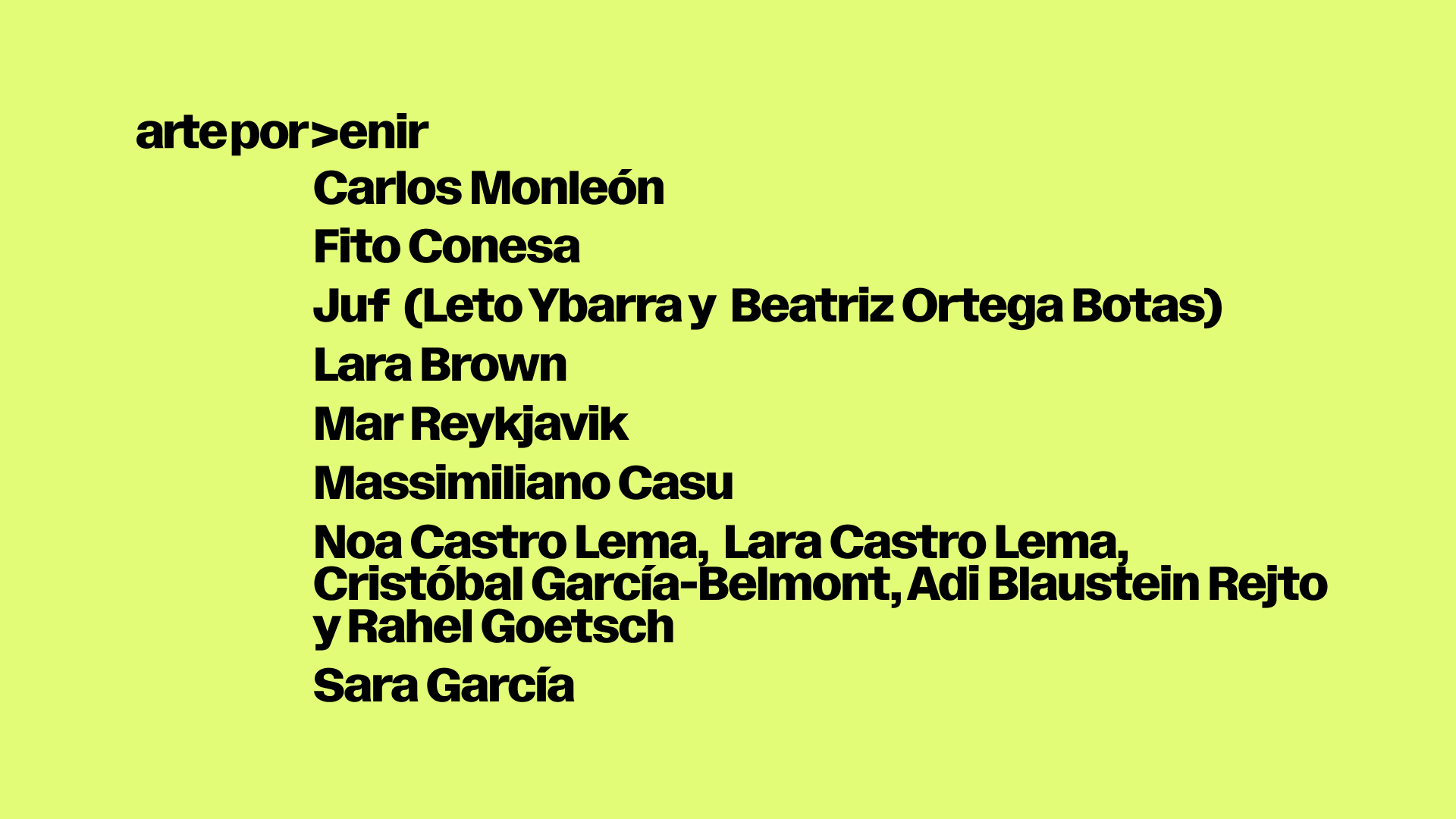
Durante dos días, la Fundación Daniel y Nina Carasso celebró en Infinito Delicias el festival Colofón, which brought together the eight projects from the first edition of its Art to Come grant programme . Concebido como a moment of openness, the gathering made it possible to share with the public a year of ongoing research, processes and artistic methodologies, through conversations, screenings, performances, workshops, music, listening, food and open devices in the space. More than a presentation of results, this festival offered an immersion into the ways of working of the participating artists, where each activity served as a gateway into a different process: archives marked by absences, stories built in community, oral transmission practices, neighbourhood gestures, expanded cinema, live music, popular rituals and ways of coming together around the table.
The afternoon of Friday, May 29 began with the festival presentation, which set out the spirit of the gathering and the working framework of Art to Come, underscoring the desire to open processes to the public as living research in continuous development. The welcome anticipated the course of the two days: a programme in which seeing, listening, talking and taking part would be complementary ways of engaging with the projects. The festival was also positioned as a space of transfer from one edition to the next, since projects from the first edition were shown while those from the second were also present. In this way, that community began to take shape, to be built up edition after edition.

Colofón is a very moving moment for all of us, because it marks the end of the first edition of Art to Come. In the context of fragility we find ourselves in, we are seeking greater cohesion as a society, and that also means creating an artistic fabric in which artistic perspectives enrich one another and help us imagine new ways of being in the world.
Lucía Casani
Director of the Daniel and Nina Carasso Foundation for Spain
Projects around a table
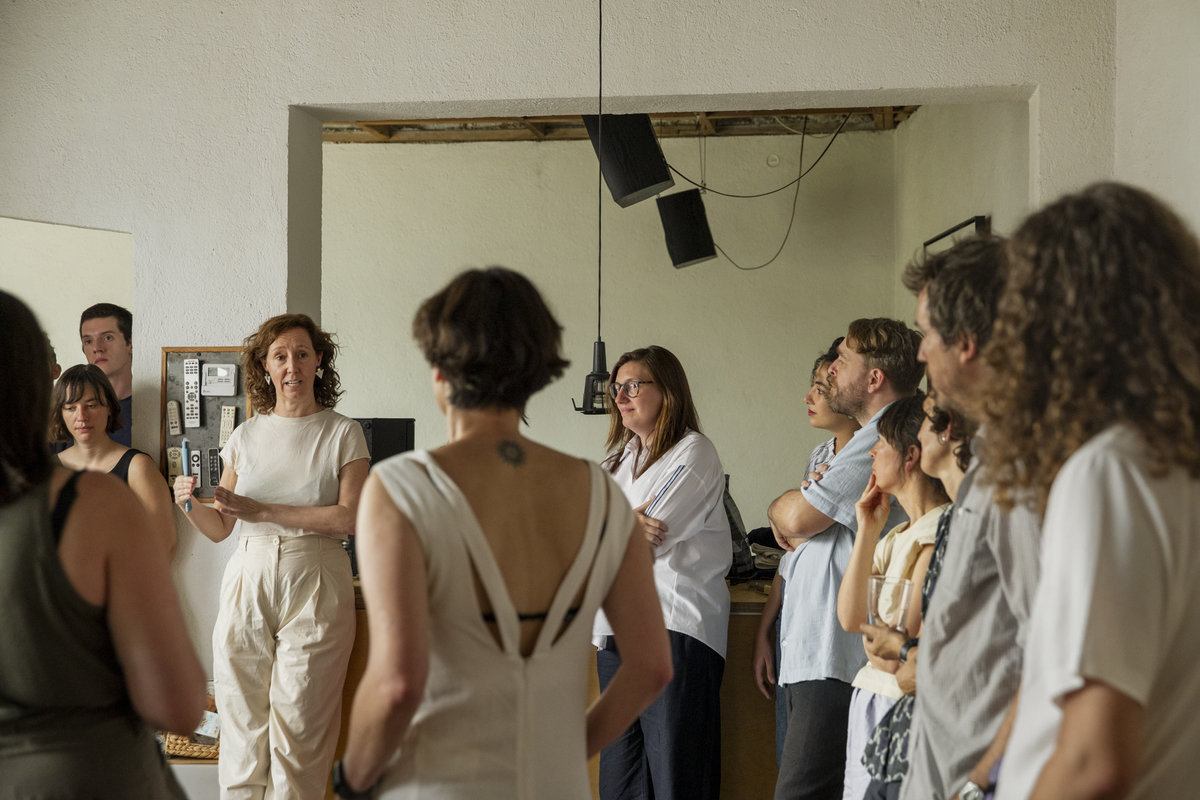
The projects from the first edition of Art to Come unfolded at Colofón like a constellation of living processes, able to bring together memory, territory, archive, fiction, body and community. The Documentary Research Office opened to the public Insubordinate Strategies for a Broken Archive, an invitation to think about the memory of forced disappearances as a collective construction, and the archive as a place from which to question silences, absences and unresolved truths. In this activity we were able to learn about everything from working processes to the lives of people who were disappeared during the years of the Civil War or under Francoism, as well as how a group of schoolchildren experience studying these archives. Oliver Laxe shared the documentary A Present of Goats, a process rooted in Os Ancares that connects land art, extensive livestock farming, landscape care and new forms of rural rootedness. After the screening, the audience had the opportunity to talk openly about the project and the farming and neighbourhood movement around it. Lorenzo Sandoval and Zineb Achoubie, beginning with an orange-blossom ceremony and some Arab sweets, presented Tablecloth 01: The House of Clasps, where textiles, ceremonies, films and collaborative gestures built bridges between North Africa and Southern Europe. The whole session was accompanied by the music of Amine Achoubie, who later took centre stage, closed the day with Sonic Costellations, a live sonic journey that brought together memory, roots and improvisation, moving through Andalusian mawal to open out into Andalusi melodies, flamenco resonances and gnawa rhythms driven by the guembri.
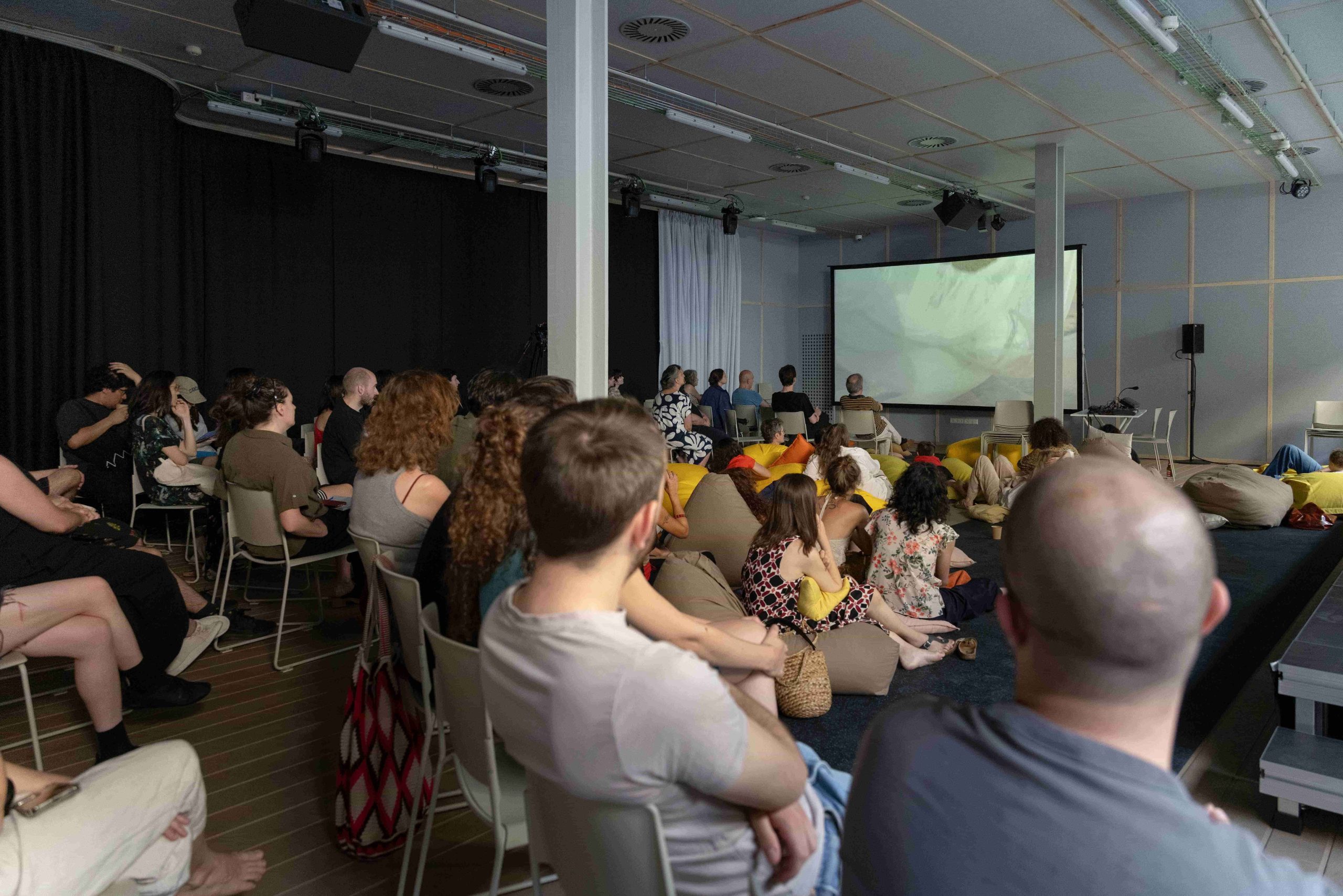
Saturday, May 30 began with the screening of the audiovisual piece Marfantes, from the project led by Anna Moreno. This speculative fiction set in the Ebro Delta in 2099 shows how cinema can become a collective tool for imagining possible futures in the face of the climate emergency. After the three-screen screening, Anna Moreno and the film editor Mónica Cambra received feedback from the audience to complete the edit. Next, Agnes Essonti Luque and Agnès Agboton turned the kitchen into a space of memory, affection and oral transmission through A Practice of Sharing, preparing kondre, a dish from western Cameroon, while sharing readings and stories linked to their grandmothers, their kitchens and their cupboards. Afterwards, Fermín Jiménez Landa activated the Storm-Scaring Pot-Banging together with residents of Delicias, a sound action inspired by the tentenublo that brought an old popular gesture of collective protection into an urban context. The route led the audience to the Sala Marina, where the banquet became one of the festival’s defining images: a shared table where the food, objects, stories and actions of each artist made their research present from a close, sensory and everyday place.
The day continued with Romería Update, by Miralda, in conversation with Nerea de Diego, a journey through ex-votos, altars, relics, offerings and other objects capable of condensing desires, activating narratives and building bridges between traditional rituals and contemporary readings. To close the projects, Olmo Cuña and Clara Brea presented Fever, an audiovisual and sound performance based on materials generated in an experimental film workshop and field recordings in Aboño, Asturias; live sound and moving images explored the relationships between body, landscape and industry. Taken together, all these proposals made Colofón a space where art was offered as a form of listening, care, imagination and encounter; an open table from which to rehearse other ways of remembering, inhabiting and sharing the future.
The festival concluded with a DJ set by Oumoukala, who turned the closing into a celebration. The music offered one last space for an informal get-together between artists, participants and the public.
Peer-to-peer conversations
In addition to opening processes to the public, during the gathering peer-to-peer conversations between the projects took place, focusing on a specific theme that ran through both practices.
The first conversation brought together Agnes Essonti Luque and Fermín Jiménez Landa, whose practices made it possible to think about the archive through the body, orality, encounter and transmission. Drawing on the projects developed during this edition, the conversation raised questions about how memories are preserved and shared when they are not always fixed in documents, objects or official records. The session highlighted the importance of gestures, voices, family stories and collective practices as forms of archive that can be activated in the present. Agnes shared with us her way of creating a space for encounter through cooking, starting from her own experience to reach other people’s histories and generate shared knowledge. For his part, Fermín explained that, rather than creating those spaces, he joined ones that already existed, moving from the rigidity of established practices towards more artistic ones.
The second conversation, between Oliver Laxe and Miralda, made it possible to return to Galicia as a shared territory of research. From their respective practices, both addressed issues linked to rural depopulation, popular rituals and traditions as spaces for contemporary reading. The conversation brought together Laxe’s view on repopulation processes, herding and landscape care with Miralda’s long trajectory around ceremony, food, objects and popular cultures. “We’re surrounded by stimuli and stories that are fantastic,” Miralda maintained. Meanwhile, Oliver Laxe explained his connection to Galicia and his practices because there “in that space, in that village, in that field, I remember that we live in an inhabited and magical world”.
La tercera conversación, entre Olmo Cuña and Anna Moreno retomó las posibilidades del medio fílmico como detonador de procesos colectivos situados. A partir de sus proyectos, la charla abordó cómo la imagen en movimiento puede abrir espacios de imaginación y trabajo común en territorios atravesados por la emergencia climática, la transformación del paisaje o las tensiones entre memoria y futuro. Cuña compartió su experiencia en torno a Fever y explicó la contradicción de recurrir al súper 8 “para evitar la nostalgia”, atraído por su dimensión material, inmediata y doméstica, así como por la posibilidad de que el propio material fílmico apareciera deteriorado, quemado o atravesado por la idea de calentamiento. Moreno, por su parte, introdujo la noción de “estalgia”, una nostalgia mediterránea por aquello que sabemos que va a desaparecer, término que envuelve su proyecto Marfantes. From there, the conversation made it possible to draw links between practices that understand cinema not as a closed tool, but as a process of listening, editing and relating to specific communities.
Finally, the two collectives behind The House of Clasps and the Documentary Research Office (OID) talked about returning to placing at the centre the stories that live on the margins of hegemonic narratives. Using different methodologies, both collectives shared strategies for making visible displaced or fragmented histories, materials and forms of knowledge. The dialogue connected textile research, patterns, cultural transmission and broken archives around a shared question: how to compose more complex, more plural stories, more attentive to what is usually left out. In the case of the OID, Concha and Diego, representatives of the collective, explained that this search involved approaching the archive from another place, through workshops, embodied experiences and encounters that had allowed them to address it from a more poetic and imaginative perspective. For their part, Lorenzo Sandoval and Zineb Achoubie linked that same question to an exercise in the archaeology of memory, aimed at celebrating difference and making visible heritages that are still little recognised.
Space for Art to Come residencies
In parallel, the Art to Come residency programme also opened its processes to the public through different proposals that explored new forms of learning, living together and shared attention. Mariana Murcia and Sofía Montenegro presented Radio Porvenir, a radio station in the making as a way of creating a school and circulating knowledge and voices, and generating spaces for collective learning, while Valentina Desideri and Vito Gil-Delgado shared their research into forms of encounter, reading and collective organisation. Luz Broto, together with residents of Juana Doña street, activated Juana Doña 5-6-8, a minimal yet powerful intervention based on exchanging phone numbers between nearby residents, capable of transforming the everyday perception of a street and strengthening its ties. After the banquet, María Jerez and Andrea Canepa proposed a guided nap that invited people to slow the festival’s pace and understand rest as a shared practice, opening up a slower, more horizontal and sensitive time from which to imagine other ways of being together.
So as not to get lost: traces
Throughout the gathering, each project left a “trace” in the Infinito Delicias building—a small display that opened up the process in a more intimate way, a “face-to-face” between project and public.
With this festival, the Daniel and Nina Carasso Foundation celebrated a year of shared work and opened up a space to keep thinking about what art can do when it unfolds alongside communities, territories and diverse forms of knowledge. For two days, Art to Come stopped being just a promise of the future and became a concrete experience: something that could be listened to, cooked, talked about, rested with, celebrated and shared. That continuity is already underway with the eight projects selected in the second Art to Come call for the 2026/2027 edition, which have begun developing new research around listening, care, critical ecologies, the body as archive, memory and territorial languages.