Socially engaged art
21 May, 2025
Culture, an economic engine of transformation towards a fairer future


At the Daniel and Nina Carasso Foundation, we believe in the power of art and culture as levers of meaningful transformation. This idea is reinforced by data: the cultural and creative sectors (CCS) are much more than expression or identity; they are also economy, innovation and well-being. These conclusions are drawn from a report that we have supported and that has been carried out by the COTEC Foundation with the participation of the Econcult research group of the University of Valencia, on the situation of the economic value of the cultural and creative sectors in Spain.

The cultural and creative sectors in Spain
Analysis of its economic value
21 May. 2025 · PDF 6 MB
We have been accompanying those who work for years from the intersection between citizen art, social innovation, science and sustainability. This report confirms that supporting culture is not subsidizing something incidental, but investing in the pillars of a fairer and more resilient society. The report, which was presented on 19 May in the presence of the President of the Government of Spain, Pedro Sánchez, reveals that SCCs in Spain contribute significantly to sustainable development, while generating wealth, quality employment and territorial cohesion.
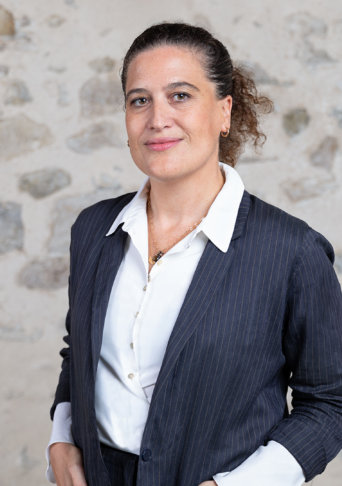
Knowing this data in such a transparent way helps us to give visibility and economic legitimacy to what many people and groups already experience every day on the ground. It’s time to put culture at the heart of change
Lucía Casani
Director of the Daniel and Nina Carassso Foundation in Spain
At a crucial moment for the development model in Spain, the cultural and creative sectors emerge as catalysts for social, economic and ecological transformation, presenting culture as a strategic response. Given that culture is a broad and complex field, it is essential to focus the analysis with a clear purpose: to provide data and arguments that demonstrate the importance of protecting and promoting these sectors in Spain.
The report offers eleven key points to understand the economic importance of a living sector that is transforming and increasing its relevance every day:
- The cultural and creative sectors (CCS) are growing faster than the Spanish economy and contribute more to GDP than industries such as textiles, pharmaceuticals or chemicals.
- Every euro invested in the SCCs generates €1.75 of added value, exceeding the multiplier effect of tourism and construction.
- Productivity per worker in the SCCs is 40% higher than the average for the services sector.
- Job creation in the SCCs grew by 17% after the pandemic, more than double the economy as a whole (+8%).
- Average salaries in SCCs are higher and the gender gap is smaller, although there is greater internal wage inequality.
- The number of cultural businesses has increased by 12% since 2020, while in the rest of the economy it has decreased; however, 70% are self-employed.
- The SCCs have more “gazelle” (high-growth) companies than the national average (8.5% compared to 7.8%), concentrated mainly in Madrid and Barcelona.
- Spain is an exporter of cultural and creative services, with sustained growth over the last decade.
- One in four international tourists in 2023 was cultural, and their daily spending was 17% higher than the average for international visitors of other types.
- Investment in innovation in SCCs grew by 46% after the pandemic, with more companies betting on digital transformation.
- SCCs attract more NextGenEU funds than they should due to their economic weight, although these are concentrated in certain industries and territories.
According to the report, culture in Spain not only contributes to sustainable development, but also creates wealth, high-quality employment and cohesion in the territory. It is important to recognize that the value of SCCs is not limited to economics. Citizen participation is driven by artistic and creative activities, which in turn promote critical thinking, emotional well-being, and respect for the environment. These practices are a space conducive to promoting inclusion, facilitating dialogue and promoting the transition towards greater environmental sustainability.
Despite their relevance, SCCs remain underrepresented in public spending priorities and often invisible in the political debate. Changing that view is urgent. Doing so requires cross-sector partnerships, institutional recognition, and policies that put care, creation, and collaboration at the center.
Culture is not an ornament: it is a common good. And as such, it must be protected, promoted and shared.