Philanthropy
11 February, 2021
Impact investing and the sourcing committee: two exciting bets on philanthropic innovation


It is a great satisfaction for the people who make up the Foundation to make public the first Impact Investment Report of the Daniel and Nina Carasso Foundation. In it, and also through its press release, we show the responsible intervention that we have been carrying out in the financial markets for several years now. For 2023 we have set ourselves an ambitious and motivating goal: to reach 15% impact investing and 70% Socially Responsible Investments in its portfolio, a goal that we have already exceeded, reaching 79% in these assets. In this way, we are strongly committed to an investment strategy in coherence with the social mission we carry out, as well as in the fight against the climate emergency: for this reason, since 2016 the Foundation has had an Impact Investing Committee and, starting this year, a Sourcing Committee will work to identify SRI and social impact opportunities in Spain

Impact Investment Report
Investing for a green and inclusive transformation
11 Feb. 2021 · PDF 6 MB
Fortunately, impact investing is beginning to gain momentum in the Spanish ecosystem, and it is in this context that, at the Daniel and Nina Carasso Foundation, we reaffirm our pioneering role, functioning as a laboratory for philanthropic innovation. It is with great enthusiasm that we present our first Impact Investment Report, which highlights the first fruits of the Foundation’s financial strategy, which we undertook in 2015 by developing a socially responsible investment (SRI) policy as a complementary tool to donations.
To give coherence to this policy, in 2016 we established an investment code that defined roadmaps. We wrote this code according to the commitments of the DivestInvest agreement, a global movement of investors that promotes the exit of investments in fossil fuels. In it, we define the investment policy in terms of mission, values and profitability, excluding certain sectors and specifying preferential investment themes, in particular those related to Sustainable Food, thus also working transversally with the preservation of the environment.
At the Foundation we follow the pioneering model of Anglo-Saxon foundations: we allocate a sub-fund of 3% of our financial investments specifically to impact investing in relation to the two programmes in our field of action: Sustainable Food y Citizen Art (programme-related investments – PRI sub-fund). And not only this: at the Daniel and Nina Carasso Foundation we go one step further, because we have set ourselves the goal of reaching 15% of impact investments in 2023, when in 2020 we have already reached a figure of 7%. For the remaining 85% of the portfolio, we have set ourselves the goal of reaching 70% of investments that meet the SRI criteria set out in our Investment Code, which is much more ambitious than the usual general SRI criteria in the financial sector. We have already exceeded this target in 2019, with 79% of SRI assets.
In the report we wanted to capture not only our enthusiasm, but also how, thanks to the financial management of this 3% PRI sub-fund, social and environmental impact takes precedence over financial performance. In addition, we have created two other impact sub-funds with a target of 6% of the endowment for each. One of them will be dedicated to investments related to our general mission as a Foundation (such as the agricultural and food transition, agroecology or social inclusion – MRI sub-fund), but prioritizing economic profitability over a demonstrated social and environmental impact. Meanwhile, the other 6% will be directed to so-called sustainable investments, in the field of the fight against climate change and sustainable and inclusive development, in order to ensure a high level of economic return.


The commitment, embodied in an Investment Code
Thanks to the drafting of a new Investment Code, based on the existing one from 2016, the Foundation’s governance was able to send a message that concretized our commitment to coherence between investments and the theory of change. We thus work as an ethical and responsible investor at the service of our mission and promote not only the development of our two founding lines, Sustainable Food and Citizen Art, but also the more global and cross-cutting issue of the ecological transition.
This code thus stands as a guide in the financial management of the Foundation, because it defines the guidelines that apply to all the investments we make.
In our Investment Code, not only are topics related to Sustainable Food and environmental conservation prioritized, but we exclude others that run against our mission: those related to tobacco, betting or the industry related to blind weapons.
In this way, we establish as a criterion a minimum level of social and environmental respect in any investment, whether or not it has an impact. In addition, specifically with impact investments that contribute to systemic change, we subsidize an initiative, investing in it when it has grown enough. This procedure, known as venture philanthropy, illustrates this continuity between donors and investors. Within each social and environmental impact fund we also think of a theory of change as a criterion for selecting initiatives.
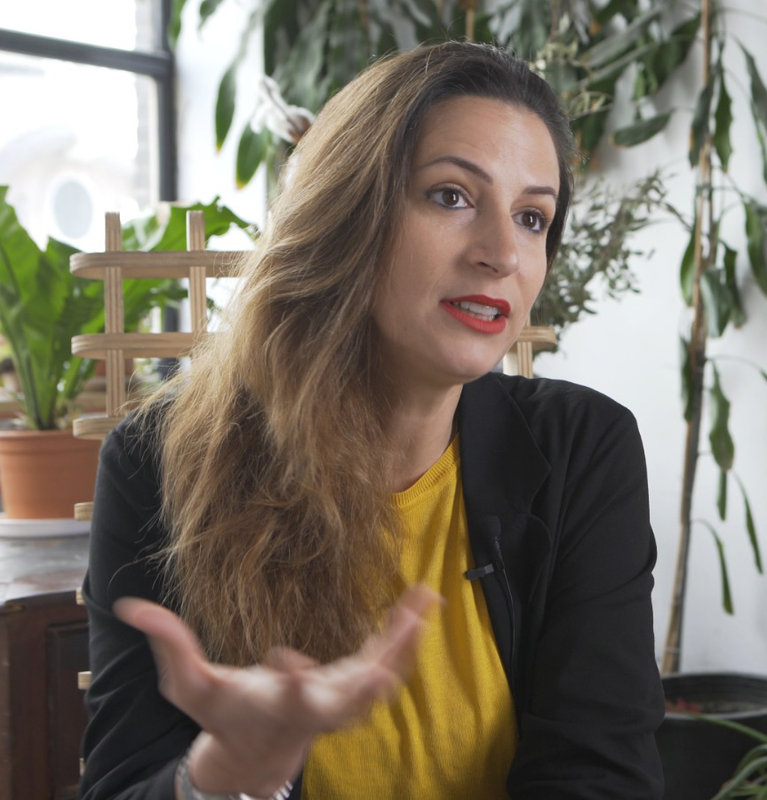
“The foundation is particularly concerned about the excessive use of the concept of social impact, which is why we believe that we have the capacity to play a fundamental role in this area by focusing on the theory of change at different levels: foundation, program, project… and investment funds, something pioneering and very unusual in the field of the logic of social transformation”
Isabelle Le Galo, director for Spain of the Daniel and Nina Carasso Foundation
The climate emergency, our priority
Along these lines – and due to the commitment we have made to the fight against climate change – during the celebration of COP21 we committed not to invest in fossil energies, moving a part of our investments into solutions to fight climate change. These investments have an approach that goes beyond mere investment in renewable energies, focusing our commitment more on energy efficiency and soft mobility. In this way, our carbon footprint in the Foundation’s SRI portfolio is 30% lower than market indices.
With these investments, we always act under the umbrella of the SDGs (Sustainable Development Goals), which constitute a universal framework and have been incorporated as a common language in the foundations sector, something that we value very positively.
However, at the Foundation we have decided to go further, opting for a more demanding impact analysis framework than the one defined by the SDGs. To achieve this, we have co-built in collaboration with Quadia, in the dedicated Sustainable Food fund within the PRI sub-fund, a set of selection and monitoring criteria based on the principles of the Global Alliance for the Future of Food to measure progress on its theory of change. This analysis framework is based on six broad principles (regeneration, diversity, resilience, health, equity, and interconnectedness and inclusion) where we combine objectives and impact measurement indicators that allow the analysis and monitoring of their participations.
In addition to the fund created with Quadia, we have decided to connect the priority SDGs of our two main lines of patronage with the six new principles of the Global Alliance, in order to apply a monitoring framework to all its impact investments.

The Sourcing Committee: the realization of our commitment
To strengthen our work with impact investing (and in line with our commitment to the climate emergency) we have created a Sourcing Committee in Spain responsible for locating strategic investment opportunities in our country, following the logic of the three pockets: PRI, MRI and Sustainable.
At the Foundation we are aware that a responsible intervention must be carried out in the long term. That is why our approach has a lasting vocation. This Committee was created with the need to promote a more resilient world, a quality that has proven to be more necessary than ever after the crisis arising from Covid-19.
So far, our impact investment strategy has been developed mainly in France, while in Spain the boom in this field has taken off in the last two years, as the sector has increased significantly in its structure. Some pioneering organisations have started to finance social enterprises in our country and are committed to the development of the sector: they have now become key players in the Spanish market. In an exercise of coherence with our principles, values and trajectory, this scenario has made relevant for the Daniel and Nina Carasso Foundation the need for the creation of this committee in Spain, the country in which we have been carrying out our work since 2014.
The Committee was created as an effective tool, capable of nurturing investment opportunities in Spain. With its work, the Sourcing Committee will seek opportunities for PRI, MRI and Sustainable pockets within the fields of Sustainable Food and Citizen Art with a cross-cutting focus on the climate emergency. These niches in 2019 did not exceed a total of 200 million euros in our country.
Regarding the contribution to the strengthening of the sector, the Sourcing Committee was born aware that the gap in investment is located in the initial stages of a project, at a time when its financing needs are still small and its level of risk is high, which makes transaction costs relatively low. Venture philanthropy, almost non-existent in Spain, is essential for these first steps and is a task that we assume from the Foundation in line with our mission.
The initiatives of the Sourcing Committee therefore have several tasks that will be essential to our objectives. That is why the Committee will activate collective reflection on the needs of the impact investment ecosystem in Spain, in particular in our lines of work: Sustainable Food and Citizen Art, but not only here. On the other hand, and taking into account the embryonic state of impact investing, in the Committee we will find the necessary help to identify Spanish initiatives in which to intervene with social impact funds from the PRI, MRI and Sustainable pockets

“Thanks to the creation of the Sourcing Committee, we also want to build a network in constant growth, which focuses its work on the analysis of the social and environmental impact of a set of invested projects from the same logic, to defend and solve an identified social cause”
Isabelle Le Galo, director for Spain of the Daniel and Nina Carasso Foundation
Committee members, volunteer experts committed to social impact
The Sourcing Committee is made up of six professionals from the world of finance and social innovation, who now put their knowledge at the service of the philanthropic work of the Daniel and Nina Carasso Foundation. In this way, its components, José Moncada, General Director of La Bolsa Social, Mercedes Valcárcel, General Director of the Generation Spain Foundation, Luis Berruete, Co-founder and Managing Partner of Creas, Clara Navarro, Co-founder and Co-director of Ship2B, Cristina San Salvador, Expansion & Program Development Manager at Ship2B and María Ángeles de León, Co-founder and President of the Open Value Foundation, begin a crucial work for the future of the Foundation.
In this sense, foundations are an important actor in the development of impact investing, on the one hand as sources of capital and providers of technical assistance to social enterprises, on the other, as agents of structuring the sector capable of ensuring that impact investing really solves social causes, on the other. In line with this reality, the Spanish Association of Foundations (AEF) has just created a working group on Impact Investing, whose Administrative Committee includes Isabelle Le Galo.
In these ten years, at the Foundation we have developed our work in two main lines of intervention thanks to the coherence in the performance of our philanthropic mission, which we put at the service of an ecological and inclusive transformation of society and the production model. In this sense, we have a double responsibility: the management of heritage and the management of the patronage policy. Connecting these two activities in the service of impact is essential to multiply our transformative impact and unite all the agents of our society around an economy committed to life. Within the framework of this strategy undertaken after the first ten years of the Foundation’s journey, this aspiration to invest in the service of change and at the same time support models that share our principles, has become a structural axis of our operation, with the aim of accelerating our impact on society.
Illustration credit: Tessa Mars