Sustainable food
27 January, 2026
People and projects selected in the first call of the ENZYME programme


The ENZYME program seeks to accompany those who want to transform restoration from within, integrating economic viability with the care of people, environments and natural resources. From this perspective of a more conscious hospitality industry, rooted in the territories and committed to collective well-being, the first call for the program was launched, which ended last November.
Selected individual projects
In the first call for ENZYMEs, five personal initiatives have been selected that, from different territories, are committed to a restoration rooted in the local, with a strong social, environmental and community commitment. Their residencies will take place in person in February in the Infinito Delicias building. Each proposal is based on the experience and motivation of its promoters to respond to the specific needs of their environment.
–Nydia Rangel, from the Balearic Islands, is developing a project deeply linked to the local productive fabric, with a strong commitment to Mallorcan products and responsible waste management. Their extensive experience in the sector and their specific knowledge of the island context provide a solid basis to move towards a low-impact model.
–Bárbara Amor, in Castilla y León, proposes the creation of a space that transcends the function of a restaurant to become a cultural meeting place. With a place available and the planned investment, his project seeks to generate community through gastronomy, exchange and artistic activity, integrating different social dimensions in the same proposal.
–Giorgia Frutaz, from the Valencian Community, presents a takeaway vegetarian cooking initiative that connects directly with the orchards of Valencia. His scientific profile, together with his interest in catering, gives shape to a project that aims to respond to a specific need of the territory: to offer healthy, accessible food aligned with local production.
–Soraya Sánchez, in Madrid, promotes a community restaurant in collaboration with the NGO Karibú. The proposal combines management, cooking and social action, with the aim of creating a space for training and employment for migrant women, while consolidating itself as a safe environment open to the neighbourhood.
–Isabel Segura, from Galicia, proposes the reactivation of the family business through a furancho that highlights the value of her own garden and the products of the environment. Its long career in the hospitality industry translates into a proposal that links traditional knowledge with a renewed look at sustainability and the continuity of the project.
Selected collective projects
The collective modality brings together teams that are already underway and that seek to consolidate and improve their practices, deepening sustainability from a strategic and shared perspective. They are projects with diverse trajectories that understand restoration as a tool for social, environmental and territorial transformation. During autumn 2026, these five teams will carry out an online residency with joint face-to-face activities:
–Abastos de Abastecer, in Galicia, participates through one of its restaurants as a pilot experience. With a previous track record in sustainability, the group seeks to organize processes, systematize learning, and move towards replicable and certifiable models.
–La Txula, in the Basque Country, develops a proposal of homemade cuisine to take away in a rural context. Its participation in the programme is aimed at strengthening the network of local organic suppliers and improving the profitability of the project, with a view to sustainable growth that will allow it to expand its capacity.
–Guruzu Jatetxea, in the Basque Country, linked to the EDE Foundation, functions as a restaurant space at the service of social inclusion. Through ENZIMA, the team seeks to strengthen its environmental performance and optimize the processes of the canteen, in coherence with its work within an insertion company.
–Espacio Jándala, in Cantabria, combines gastronomy, culture and tourism in a proposal that dialogues closely with its surroundings. The program’s support focuses on refining its economic strategy and consolidating a network of local suppliers that reinforces the coherence of the project.
–El Rebost de Can Moragues, in Catalonia, a restaurant of the EMYS Foundation, integrates the conservation of the seed bank with the generation of employment for young people in vulnerable situations. Its participation in ENZIMA focuses on improving the efficiency of its processes and strengthening an economic model that sustains its social and environmental impact.
Overall, the selected projects reflect the plurality of possible paths towards a more responsible restoration, connected to the territories and attentive to the people who make it possible. Through this accompaniment, ENZIMA consolidates itself as a space for shared learning and practical experimentation, where emerging and consolidated initiatives advance, collectively, towards fairer, more resilient models aligned with the current challenges of the sector.

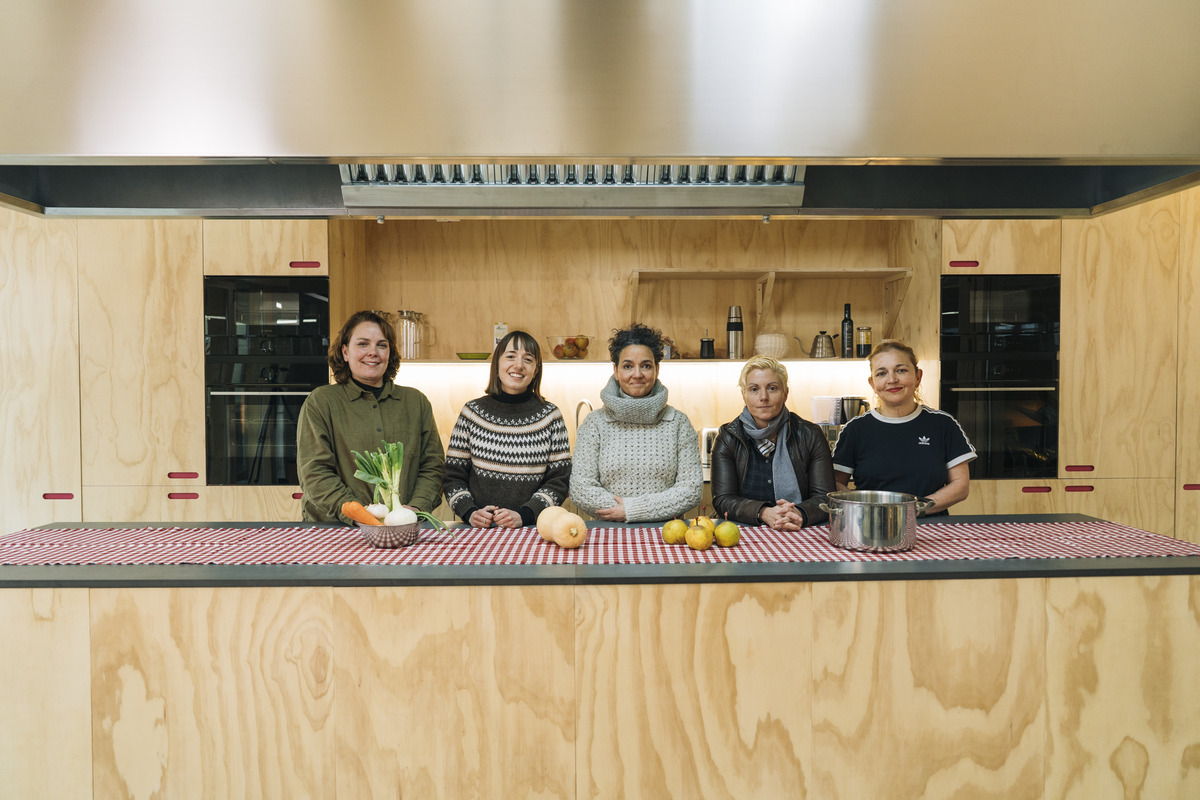
Giorgia Frutaz

Isabel Segura

Soraya Sánchez

Nydia Rangel

Barbara Love