6 juillet 2022
Feeding the Future 2022: Social, Technical and Economic Innovations


For the3rd edition of the Feed the Future call for projects, 11 promising and innovative projects have been selected to accelerate the transition to sustainable food. CARTAE support is offered to 4 additional collective projects in order to consolidate their operation. In a context of crisis and inflation, our jury of volunteer experts particularly welcomed the territorial experiments to fight against food insecurity. An overview of these emerging solutions that are set to change the way we produce, process and consume, with news from past winners!
Disruptive solutions
The urgency of the transition encourages us to anticipate the challenges of tomorrow more, to support creativity and solutions that break with those we know. In addition to the actions developed and spread by the Foundation as part of its various programmes, this “Feeding the Future” call invited those who dare to look at and build the world differently to apply, whether they work in civil society or in companies.
Installation of new farmers, soil decontamination, island agriculture, bio-waste, artisanal fishing, … 11 projects are supported to the tune of 450 KE for this 3rd year of Feeding the Future. With Covid and the dedicated Recovery Plan, the issues of social justice and access to food have returned to the forefront of concerns. This is particularly the case for social food security, addressed by 2 laureates. “We have been following and supporting civil society for a long time that is thinking about and promoting social security for food, such as Engineers Without Borders – Agrista, which has initiated a collective,” says Guilhem Soutou, Sustainable Food Manager France. “Two of the winning projects this year are experimenting with it and evaluating its implementation, according to different modalities, in Montpellier and Toulouse.”
The winning projects (excluding CARTAE support)
Bulk & Cocinas
Social food security (SSA) offers the prospect of dignified access to sustainable food for all. As part of Territoires à vivres, Vrac and Cocinas are experimenting with SSA in Montpellier with the support of a citizens’ assembly in co-responsibility with the public authorities. A common food fund topped up in local currency will be redistributed to 200 households in precarious situations and can be used in a distribution circuit approved for the purchase of solidarity and quality food products.
Cocagne Alimen’Terre
In two priority neighbourhoods of Toulouse that lack a quality food supply, Cocagne Alimen’Terre is conducting a food social security experiment with 200 families: it is based on a solidarity fund financed in part by citizens and a supply of solidarity baskets from the Cocagne garden.
GESRA
To give everyone access to quality food and reduce its cost, the Groupement des Epiceries Sociales et Solidaires en Rhône-Alpes – Auvergne (GESRA) coordinates shared governance with producers, associations from the food aid sector and a collective of third-party funders (citizen, private and public). It centralises a shared logistics platform and offices common to the network to create economies of scale and facilitate cooperation.
Secours Populaire 63
As part of the Territoire Zéro Chômeur project in Clermont Ferrand, SPF 63 is setting up an employment company aimed at hiring people on permanent contracts and developing an organic market gardening activity, which will make it possible to supply and multiply the pop’solidarity markets. Launched at the end of the 1stlockdown, they have allowed thousands of precarious households to access fresh, local and quality products, in exchange for a symbolic financial contribution.
The Gardener
New farmers, who do not come from an agricultural background, are struggling to set up. They come up against the difficulty of finding land, initial investments, the arduousness of the work, social isolation, etc. In Rhône-Alpes, La Jardinière offers support for agricultural production collectives: it builds a support programme dedicated to collective projects, facilitates their installation and leads a community of collectives.
CPIE Belle-Ile-en-Mer
In order to promote the development and maintenance of agriculture in Belle-Île-en-mer, the CPIE (Permanent Centre for Environmental Initiatives) wishes to set up a consultation of all the users of the territory in order to carry out concrete actions for the shared management of wildlife. This methodological approach will be part of a collaborative exchange with the other islands of the RAIA network (Atlantic Islands Agricultural Network).
The Guardian Angels
In the mining basin of the Hauts de France, marked by very intensive agricultural production, land pollution limits agricultural prospects. Les Anges Gardins, an integration structure located in Loos-en-Gohelle, proposes the establishment of an Ecological Services Agency to decontaminate the soil on 2 pilot sites (14ha), install farmers, regenerate the soil and its biodiversity.
At the citizens’ table
The agroecological and food transition is at work in many sectors. Those in processing and culinary production are struggling to evolve. In a logic of incubation and transmission of know-how, A table citoyens, creator of Baluchon, is launching Thermostat: a space dedicated to entrepreneurs allowing them to have access to logistics and production tools, contract services, shared deliveries, as well as training and exchanges between peers.
INRAE
The agroecological transition requires a cooperative approach with living things. INRAE studies the methods of education on sensitivity in biodynamics, based on the training offered by the Biodynamic Agriculture Movement, and then supports agricultural education and agroecological research to strengthen this sensitive approach.
Albigensian Citizen Lands
The metabolism of cities concentrates the nutrients needed for agriculture in their bio-waste. Terres Citoyennes Albigeoises is testing a circuit for the recovery of bio-waste from Albigensian collective catering by transporting and composting it directly in vegetable farms around the city, without a centralised platform and by supporting market gardeners.
High tide
Artisanal fishing offers a range of techniques that respect marine biodiversity. Faced with the industrialization of the profession, this fishing is on the verge of disappearing. Pleine mer is creating “Mer de lien”, a financing system based on citizen savings, which will support the installation of artisanal fishermen practicing sustainable fishing techniques.
Specific support offered to 4 projects
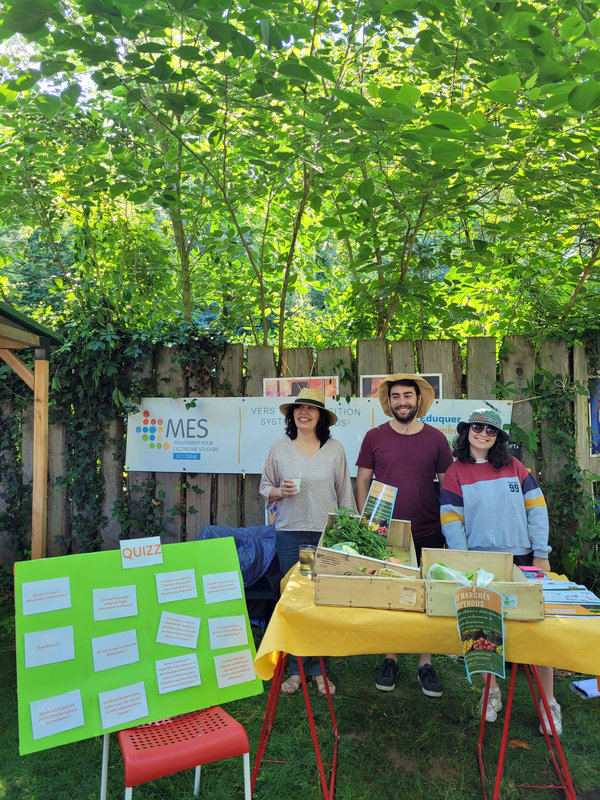
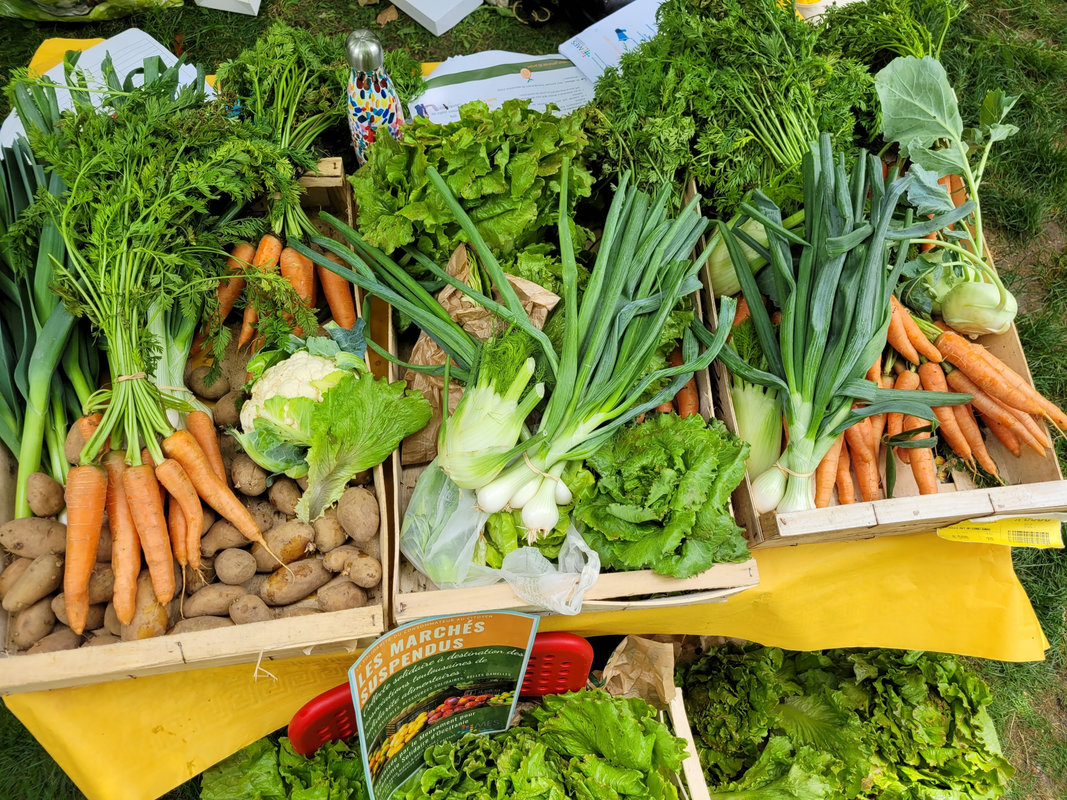
Among the hundred or so proposals received and examined, 4 other projects were identified by the jury for specific support via our CARTAE offer. Governance, economic model, territorial diagnosis, long-term strategic vision, data processing, competitive positioning… are some of the topics that will be explored in depth by experts commissioned with the laureates in order to consolidate their operation. Thus, the Movement for the Solidarity Economy Occitanie will be supported for its feasibility study of the Suspended Markets, a solidarity system between retailers, producers, consumers of open-air markets and precarious people in order to allow a supply of baskets of fresh fruit and vegetables of good quality.
«
We are very pleased with the Foundation’s support. After a 1st experiment which resulted in the harvesting of about twenty kilos of organic and local fruit and vegetables at the Monplaisir market in Toulouse, we need to build an innovative socio-economic model by integrating monetary and non-monetary flows while relying on a community of supportive citizens (consumers, precarious people and producers).
»Léopol Dauriac, Development Manager at MES Occitanie
Among these projects, 2 are the result of the collective intelligence process initiated during the last Sustainable Food Meetings (2021) during which participants from civil society, local authorities and the business world were brought together to bring out ideas for collective projects in order to meet significant and unmet needs. Indeed, faced with the complex and multifaceted challenges of the agroecological and food transition, singular and sectoral proposals are no longer enough. “The agriculture and food ecosystem still operates in silos, with very dynamic and innovative but specialised players. In the objective of systemic change pursued by the Foundation, we encourage organizations to share their knowledge and practices and build joint projects in order to strengthen their impact,” explains Guilhem Soutou, Sustainable Food Manager France.
What has become of them?
Since the launch of the Feeding the Future call for projects, 44 projects have been supported, accompanied and networked. This 3rd edition is an opportunity to give news of two 2019 winners who have come a long way since then.
Justice Pesticides: A tool for information and cooperation for pesticide victims through a legal database to take action
Pesticides are the subject of growing scientific and social questions, resulting in an increase in legal cases. Justice Pesticides has created a census of all these lawsuits and their outcomes. This unique and free international database provides documented data to legal and societal debates. The aim of the association is to better defend people who are victims of pesticides, regardless of their nationality or status (neighbours, farmers, local authorities, scientists, etc.).
My bottle is called “Revient” / Locaverre
Waste management has become a major concern and invites us to review our practices. With 2.3 million tonnes per year, glass represents 49.6% of the total weight of household waste in France! In Drôme-Ardèche, Locaverre has set up a bottle deposit system between 80 producers. This pooling makes it possible to facilitate the logistics of recycling, washing and redistributing bottles and to achieve economies of scale. The deposit is 75% less energy, 33% less water and 79% less greenhouse gas emissions compared to recycling*.
* figures from the Deroche 2009 study, ADEME 2012 study.
Photos: Instagram “mes_occitanie”
Feeding the Future 2022 Winners
6 juil. 2022 · PDF 273 KB