11 juillet 2024
Feed Forward 2024 “Exploration” Projects


In the Pays de la Loire, in Occitanie or Ile-de-France but also in the Overseas Territories, discover 12 initiatives that dare, explore and build sustainable agriculture and food today! Facilitating the installation of farmers, preserving biodiversity and fighting against global warming, creating micro-slaughterhouses in the territories, developing short circuits… This fifth edition of our Feeding the Future call for projects presents a promising array of creative and innovative solutions in line with the needs of farmers, ecosystems and citizens.
Promising pathways to sustainable agriculture and food through creative and innovative solutions
The current situation and the crises we are going through require us to go beyond proven solutions to transform our agriculture and food systems towards environmentally and economically sustainable models, politically, socially, culturally and nutritionally. For this reason, the Foundation identifies, supports and accompanies innovative local projects that are in their early stages and need help to materialize and prove their usefulness. All of them focus on emerging subjects, which are currently considered secondary or exploratory, but which we can think will gain in importance to become structuring of our agriculture (including livestock and fishing) and our food.
“This year, the subject of agricultural installation testifies to the urgency of generational renewal. Smallholder agriculture shows here all its dynamism to propose and develop a very concrete sustainable agriculture, based on a solidarity-based, inventive network determined to trigger the agroecological transition on a large scale, despite the headwinds ,” says Guilhem Soutou, Head of Programs at the Foundation. ” We are also delighted to see initiatives integrating migrants, bearers of know-how and aspirations, to adapt our agriculture to climate change, as with the project of the Association d’Accueil en Agriculture et Artisanat.”
It should be noted that this year, a second part of the Feeding the Future call for projects also identified emerging and innovative projects on issues of democracy and food justice. In total in 2024, Nourish the Future is supporting 29 projects for an amount of nearly 1.6 million euros.
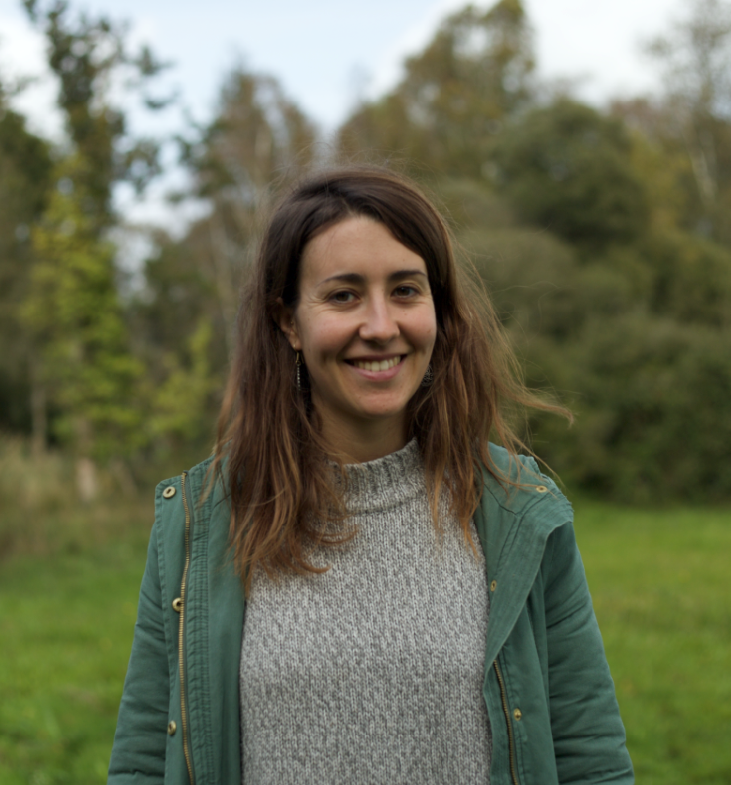
«
The best way to protect the environment and biodiversity is to access land and occupy it with my sheep.
»Solène Sacré, Peasant by nature in Maine et Loire
Exploration 2024 projects
Farmers and inhabitants advance biodiversity in the territories / Association Paysans de nature
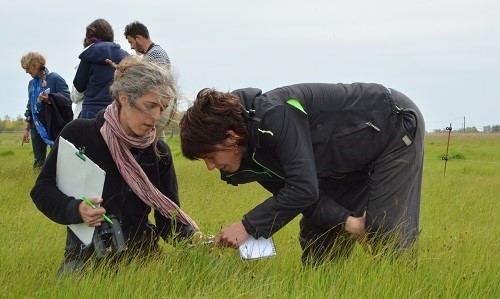
In the Vendée, then in the Pays de la Loire, a hundred farmers and naturalists have defined agricultural specifications together. These “Nature Farmers” have shown that it is possible to cultivate while integrating and respecting biodiversity as much as possible while feeding populations and paying farmers. Today, 18 structures in 6 other regions wish to duplicate this management method. Paysans de nature will accompany and train these collectives, equip them, support them to maximize their chances of success.
https://www.paysansdenature.fr
A mobile sheep-goat slaughterhouse in the Cévennes: a necessity for the maintenance of small pastoral farms / Association de Préfiguration de la Structure Locale d’Abattage Coopératif
Small sheep and goat farmers in Lozère have less and less access to slaughterhouses, which are increasingly remote and overloaded. These conditions cause stress for the animals and costs for the farmers. However, demand is strong, driven by the still lively installation of small breeders. The SLAC is testing a mobile slaughterhouse in a semi-trailer that can be used to slaughter on the farm, which will eventually benefit a hundred farmers
Experimentation and modelling of innovative activity testing devices in sustainable livestock farming – To train the farmers who will feed us tomorrow / Association Coopérative d’Installation en Agriculture Paysanne de Loire-Atlantique
The Coopérative d’Installation en Agriculture Paysanne du 44 has historically worked in the market gardening sector. However, most of the opportunities for agricultural transmission in the territory are in the field of cattle breeding. CIAP 44 will therefore test training systems and real-life tests of future farmers on three pilot sites, explore several teaching methods, legal arrangements and economic models before choosing the most suitable tools.
Promoting farmers’ knowledge from the South for Sustainable Agriculture in France / Association d’Accueil en Agriculture et Artisanat
The A4 association promotes the knowledge of farmers from the South for sustainable agriculture in France. It is testing and adapting nutrient-rich, drought-resistant seeds from West Africa on three pilot farms in Ile-de-France and Brittany. It is based on the expertise and knowledge of farmers from Mali and Senegal with scientific support from INRAE.
One million new farmers, it’s possible: let’s dare to be multi-active / The ICARE workshops
Following an informal experience of eight employees involved in a multi-activity approach, the association Les Ateliers d’Icare, created for the occasion, wishes to develop the concept of chosen multi-activity. This concept would make it possible to give meaning to work for certain urban employees and to compensate for the labour shortage in agriculture. The project aims to significantly increase the number of hybrid contracts and gives itself the means, through an experiment, to answer the various technical, legal and social questions that these new employment contracts raise.
“Committed!” Immersive journey between farmers and citizens / Coopérative d’Installation en Agriculture Paysanne de la Mayenne
The Mayenne Peasant Agriculture Installation Cooperative wants to install 60 farmers per year to save the bocage and all its ecological riches. To do this, it is enriching its system with an immersion course in inspiring farms as well as meetings with citizens and elected officials.
https://ciap-pdl.fr/la-ciap-en-mayenne-2/
Experimentation with the transformation of farms into SCOP / Coopérative d’Installation en Agriculture Paysanne des Pays de la Loire
The Cooperative for Agricultural and Peasant Installation of the Pays de la Loire is seeking to experiment with the transformation of agricultural farms into SCOP (Cooperative and Participatory Companies – in strong development outside the agricultural sector). This status could facilitate the transmission of agricultural capital on the one hand, and allow farmers to become salaried partners for a better remuneration for their work and for a more secure social protection on the other hand. The project presented consists of promoting the SCOP status in agriculture, supporting three highly capitalized collective farms in their transformation into SCOP, and feeding the reflection for future advocacy.
https://ciap-pdl.fr/#:~:text=Qui%20sommes%20nous%20%3F,ont%20pas%20toutes%20les%20clés.
COROLLARY: Consideration of an inter-farm crop-crop rotation in a collective of organic farmers / National Research Institute for Agriculture, Food and the Environment
Long and diversified crop rotations are complex for farmers because they require a diversification of skills and equipment. In order to overcome these difficulties, INRAE wishes to experiment with Agrobio 35, a system of pooling skills, land, crops and livestock with a dozen farmers. Thus, everyone within this collective will be able to develop bipartite or tripartite collaborations so that each professional develops his or her specialty on the land of others thanks to inter-farm cropping systems. For example, the Petits Chapelets dairy farm can now integrate cereals into its forage rotation, managed by a cereal farmer, who in exchange will give it land for fodder.
Treilles et Terrasses, vines in rupture / Syndicat des Hautes Vallées Cévenoles
The Syndicat des Hautes Vallées Cévenoles aims to participate in the response to the challenges of the territory by rehabilitating the methods of vine cultivation in trellises (in pergolas), and terraces. This method of cultivation will allow better water infiltration into the soil, reduce the risk of flooding, allow market gardening under trellises, and therefore crop diversification.
Making peasant jobs accessible and rurality desirable / SOLidaire BIOlogical agriculture
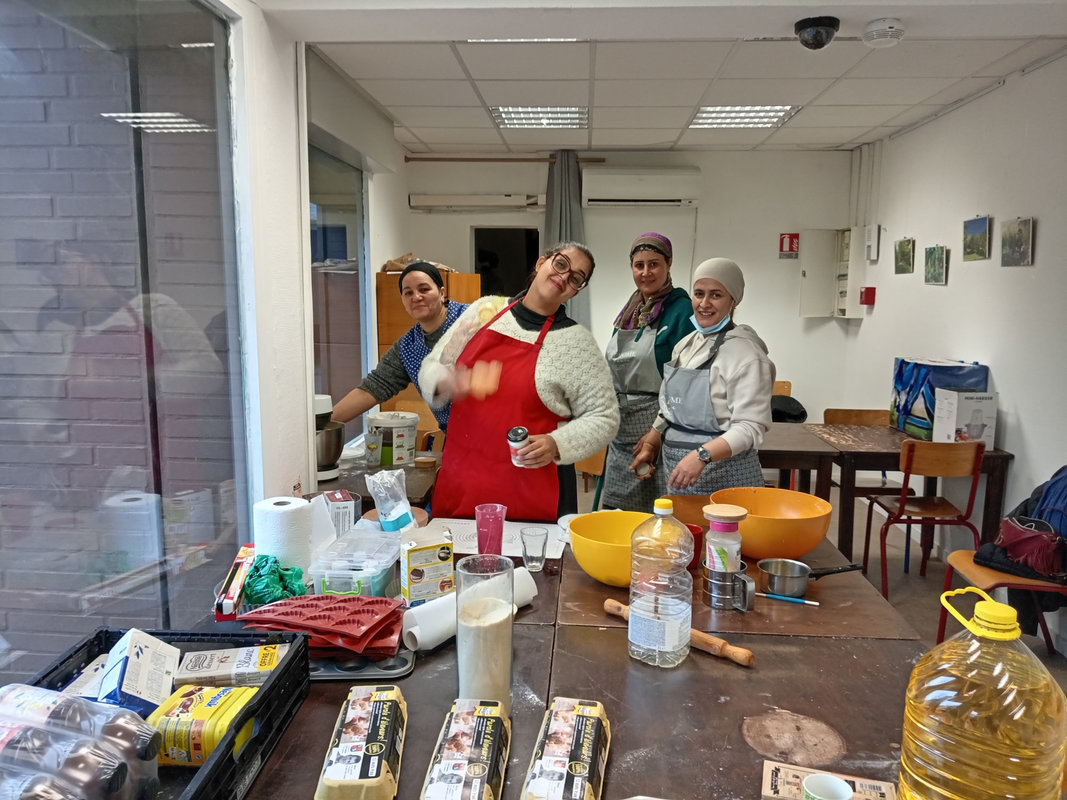
To respond to the lack of agricultural labour and the migrants’ desire for integration and autonomy, Terre de liens IDF, the AMAP IDF Network and Les Champs des Possibles encourage agricultural vocations and then provide professional support to migrants and precarious people. They offer them a friendly welcome on farms in the Ile-de-France region to discover the range of agricultural professions, then support them in their careers: agricultural employment, setting up, etc.
Developing the peasant poultry sector through the creation of a collective mobile slaughtering tool / Regroupement Circuit-Court Volailles 34
Farmers sometimes develop small poultry farms in short circuits to benefit from the ecological and economic complementarities of the two activities. In the Hérault, the department does not have poultry slaughtering tools accessible to small farmers. The RCCV34 association proposes to test a collective slaughter system by establishing collective micro-slaughterhouses in four parts of the country.
Our part for better local health / EPEFPA Opunohu (Public Establishment for Agricultural Education and Vocational Training)
The agricultural vocational high school of the island of Moorea in French Polynesia wishes to contribute to the autonomy and food quality of the island’s inhabitants while training its students in agroecological techniques. He wants to produce and sell market garden and fruit baskets by refrigerated locker.
Photos
Front page: Nature farmers / “DPN” illustrates the monitoring system of the network’s farms, the Permanent Dialogue for Nature (Credits Gaetan Calmes)
Portrait: Peasants of Nature / Credits Hugo Tocqueville