


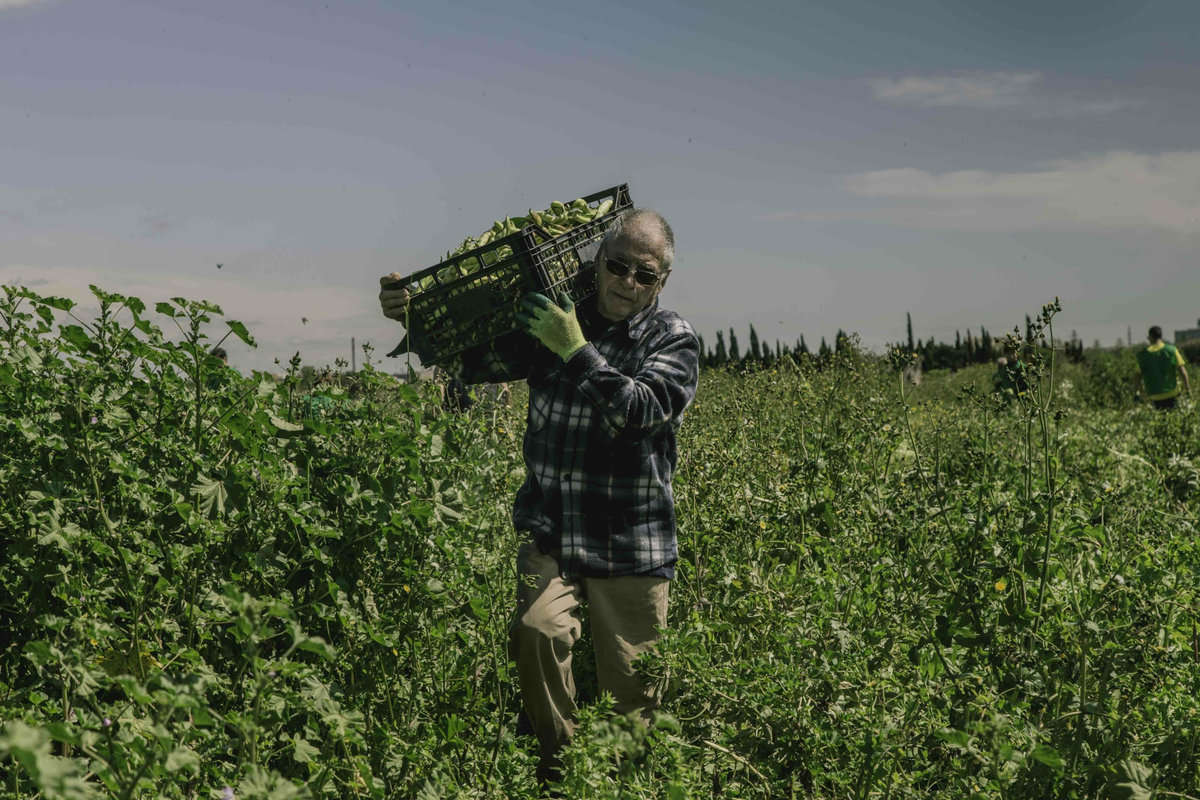
The urgency of the transition is prompting us to anticipate tomorrow’s challenges, and to support creativity and solutions that break with what we know. “Nourrir l’Avenir” supports and accompanies initiatives with a strong social and/or environmental impact, addressing emerging issues and creating new knowledge, services or products for the benefit of as many people as possible. The Foundation encourages projects that open up new avenues, which may be risky and/or break with conventional solutions. These innovations can be organizational, economic, technological or conceptual. They can draw their inspiration from the history of forgotten practices, or from creativity and new opportunities.
Collective and Agroecology
La Jardinière
AUVERGNE-RHÔNE-ALPES
New farmers from non-agricultural backgrounds have a hard time setting up in business. They have to contend with the difficulty of finding land, initial investments, the arduous nature of the work, social isolation, etc. In the Rhône-Alpes region, La Jardinière offers support to agricultural production collectives: it builds a support program dedicated to collective projects, facilitates their installation and animates a community of collectives.
Sea of links
Pleine Mer
FRANCE
Artisanal fishing offers a range of techniques that respect marine biodiversity. In the face of industrialization, this type of fishing is on the verge of extinction. Pleine mer has created “Mer de lien”, a financing system based on citizens’ savings, to support the installation of artisanal fishermen practicing sustainable fishing techniques.
Coexisting with crop-damaging wildlife and mobilizing environmental and agricultural players around a shared vision to build a resilient food system
CPIE Belle-Île-en-Mer
BRITTANY
To encourage the development and maintenance of agriculture on Belle Île-en-mer, the CPIE (Centre Permanent d’Initiatives pour l’Environnement) wishes to set up a concerted effort involving all users of the area, in order to implement concrete actions for the shared management of wildlife. This methodological approach will form part of a collaborative exchange with the other islands in the RAIA network (Réseau Agricole des Îles Atlantiques).
End-of-field compost
Albigensian Citizen Lands
OCCITANIE
The metabolism of cities concentrates the nutrients needed for agriculture in their bio-waste. Terres Citoyennes Albigeoises is testing a circuit for recovering bio-waste from Albige’s collective catering by transporting and composting it directly in the market-garden farms around the city, without a centralized platform, and by supporting the market-gardeners.
New demonstrators and ecological and nurturing services
Les Anges Gardins
HAUTS-DE-FRANCE
In the Hauts de France coalfield, which is characterized by highly intensive agricultural production, soil pollution is limiting agricultural prospects. Les Anges Gardins, a social integration organization based in Loos-en-Gohelle, is proposing to set up an ecological services company to clean up the soil on 2 pilot sites (14ha), install farmers and regenerate the soil and its biodiversity.
Caisse Alimentaire Commune
BULK & Cocinas
OCCITANIE
Social food security (SSA) offers the prospect of dignified access to sustainable food for all. As part of Territoires à Vivres, Vrac et Cocinas are experimenting with SSA in Montpellier, based on a citizens’ assembly and co-responsibility with public authorities. A common food fund, topped up with local currency, is redistributed to 200 households in precarious situations, and can be used in an agreed distribution circuit to purchase quality, solidarity-based food products.
Towards a food accessibility industry
GESRA
AUVERGNE-RHÔNE-ALPES
To give everyone access to quality food at lower cost, the Groupement des Épiceries Sociales et Solidaires en Rhône-Alpes – Auvergne (GESRA) coordinates shared governance with producers, food aid associations and a collective of third-party funders (citizens, private and public). It centralizes a shared logistics platform and offices common to the network, creating economies of scale and facilitating cooperative ventures.
A mode of practical knowledge based on a sensitive relationship with living things: the example of biodynamic agriculture
INRAE
FRANCE
Agroecological transition requires a cooperative approach to living things. INRAE is studying the ways in which biodynamic agriculture teaches sensitivity, based on the training courses offered by the Biodynamic Agriculture Movement. It is then working with agricultural education and agroecological research to reinforce this sensitive approach.
Solidarity baskets: the beginnings of social security for food
Cocagne Alimen’Terre
OCCITANIE
Cocagne Alimen’Terre is running a social food security experiment for 200 families in 2 of Toulouse’s priority neighborhoods, which lack a quality food supply. The experiment is based on a solidarity fund financed in part by local residents, and a supply of solidarity baskets from the Cocagne garden.
Thermostat
Citizens at the table
ÎLE-DE-FRANCE
The agro-ecological and food transition is underway in many sectors. Culinary processing and production, on the other hand, are struggling to evolve. With a view to incubating and transmitting know-how, À table citoyen, creator of Baluchon, is launching Thermostat: a space dedicated to entrepreneurs giving them access to logistical and production tools, contract services, shared deliveries, as well as training and peer-to-peer exchange.
Maraîchage solidaire du Secours populaire
Fédération du Secours Populaire Français du Puy-de-Dôme
AUVERGNE-RHÔNE-ALPES
As part of the Territoire Zéro Chômeur project in Clermont-Ferrand, SPF 63 is setting up an employment company to hire people on permanent contracts and develop an organic market gardening business, which will supply and increase the number of pop’solidaires markets. Launched at the end of the 1st containment period, these markets gave thousands of low-income households access to fresh, local, quality produce, for a token financial contribution.
Suspended Markets
Occitanie Solidarity Economy Movement
OCCITANIE
MES Occitanie is launching a feasibility study for the “Marchés Suspendus”, a system of solidarity between retailers/producers/consumers at open-air markets and disadvantaged people, to provide baskets of high-quality fresh fruit and vegetables.
Let’s strengthen the sustainable and universal food (eco)system in Saint Étienne
The Transition Factory
AUVERGNE-RHÔNE-ALPES
The project aims to strengthen Saint Étienne’s sustainable food ecosystem by supporting emerging SSE projects, raising awareness among residents, young people and professionals, organizing networking in a “food solidarity collective” and promoting the initiatives of this ecosystem among local authorities, professionals, organizing networking within a “food solidarity collective” and promoting the initiatives of this ecosystem to local authorities.