Socially engaged art
Impact Investing
14 April, 2026
Sustainability, diversity and impact: the challenge of strengthening cultural entrepreneurship


In the last decade, the cultural sector has undergone a remarkable evolution in its levels of business development and specialization. In this context, entrepreneurship has been gaining relevance as a way to promote projects that, from culture, contribute to social transformation. But under what conditions is this undertaking being developed today? What tools accompany it and how do they affect its sustainability?
Report "To strengthen cultural entrepreneurship (or how accompaniment programs can improve)"
14 Apr. 2026 · PDF 2 MB
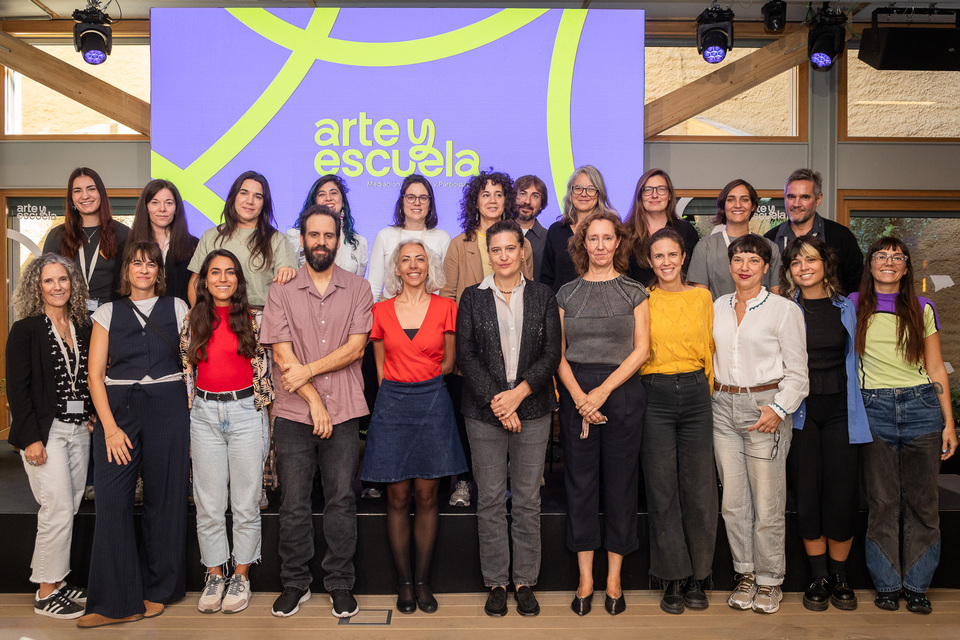
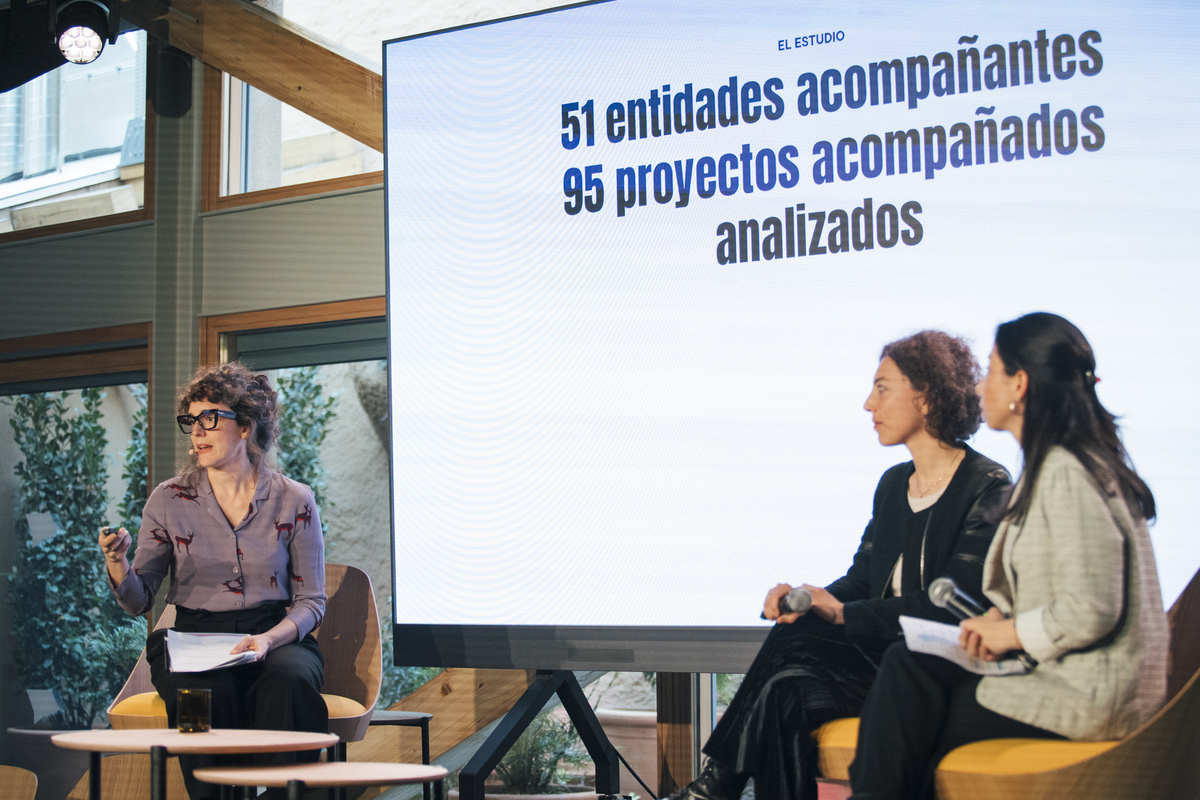
On March 25, we presented at Infinito Delicias, within the framework of the InPulse program and in collaboration with the Gabeiras Foundation, the report To strengthen cultural entrepreneurship (or how accompaniment programs can improve). With the aim of contributing to a better understanding of the ecosystem of cultural entrepreneurship in Spain, we support this research that analyzes the role of 51 accompanying entities, including accelerators, incubators, consultancies and public programs, as well as the experience of 95 cultural projects. Based on real experiences and data, the report seeks to offer a vision of the sector: who is an entrepreneur, how they do it and what impact support programmes have on its development.
The session, inaugurated by María Suárez, InPulse’s curator of entrepreneurship, was attended by Lucía Casani, director for Spain of the Daniel and Nina Carasso Foundation, as well as Patricia Gabeiras, founding patron of the Gabeiras Foundation. From there, the day was structured around two roundtables that allowed us to delve into some of the key issues raised by the report: the economic sustainability of projects, the construction of networks, the role of public aid or diversity in the profiles of those who undertake in culture.
In the first table, Deborah Gold, impact investment advisor at the Daniel and Nina Carasso Foundation in Spain, spoke with the independent researcher Andrea Macías, in a conversation moderated by María Lorenzo, coordinator of the Gabeiras Foundation. In their speech, they highlighted the need for the sector to consolidate structures in order to think in the long term. To this end, being able to secure sources of financing is one of the keys, as can be seen from the conclusions of the report, which also shows the impact of these accompaniments on the economic sustainability of the projects. The instability of financial support – which in almost all cases is allocated to specific projects, not to structures or specialized services such as bankable expenses – makes the long-term path difficult.
However, the participants also stressed that “unaccompanied financing is meaningless.” In this context, the role of incubators, consultants and other support entities is key, as it allows projects to better understand their own needs and develop from a more strategic and entrepreneurial perspective.
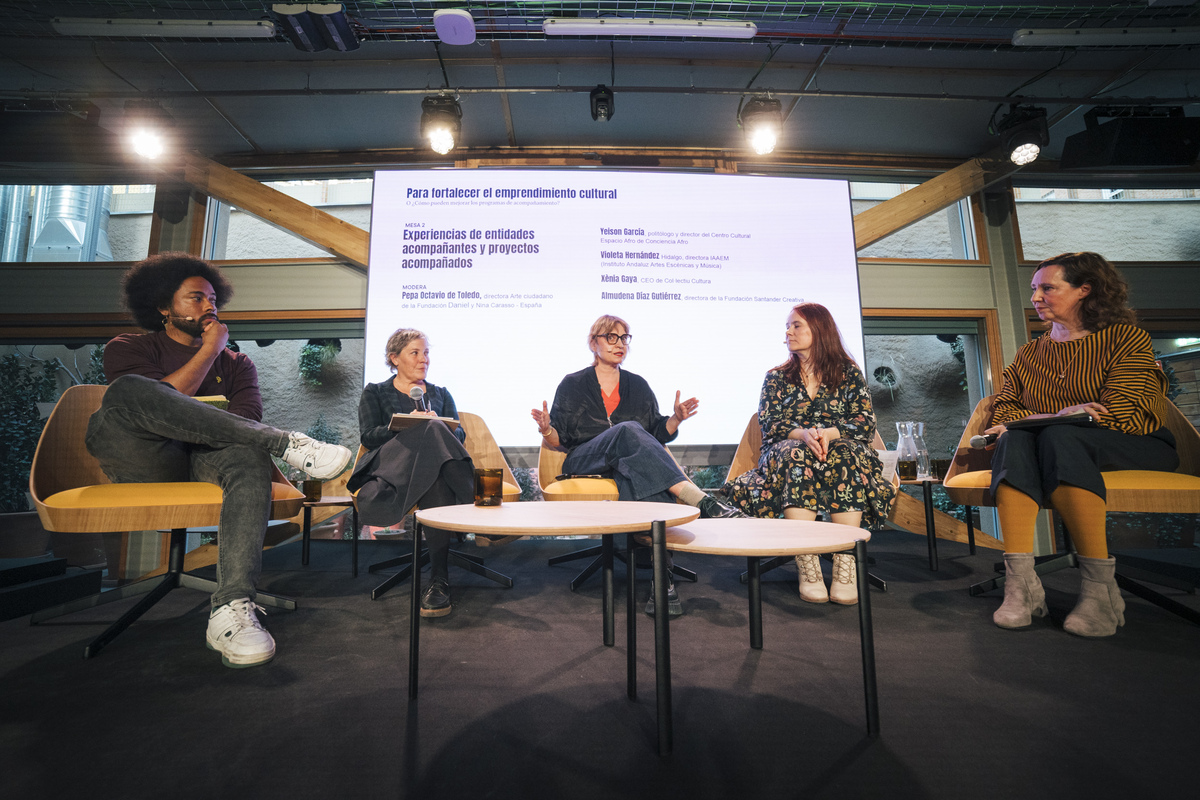
The second round table brought together voices that, from different perspectives, shared their experiences in cultural entrepreneurship: Yeison García, political scientist and director of the Conciencia Afro Cultural Center; Violeta Hernández Hidalgo, director of the Andalusian Institute of Performing Arts and Music (IAAEM); Xenia Gaya, CEO of Col·lectiu Cultura; and Almudena Díaz Gutiérrez, director of the Santander Creativa Foundation.
The conversation, moderated by Pepa Octavio de Toledo, director of our Citizen Art axis in Spain, addressed key issues such as the need to systematize data to measure the impact generated by these projects and improve processes. Financing as a cross-cutting concern was also addressed in this second table, which highlighted the difficulties in responding from the administration to the reality of cultural projects: excessive bureaucracy and the limitations imposed by the Law on Public Sector Contracts or the Law on Subsidies.
In light of the report’s findings, the discussion also addressed the lack of diversity in the profiles of cultural entrepreneurs, making it necessary to open pathways for entrepreneurship among racialized populations, people with disabilities, and minority groups. These concerns were also echoed among the audience thanks to a participatory dynamic that collected the different opinions on the progress in these shared challenges.
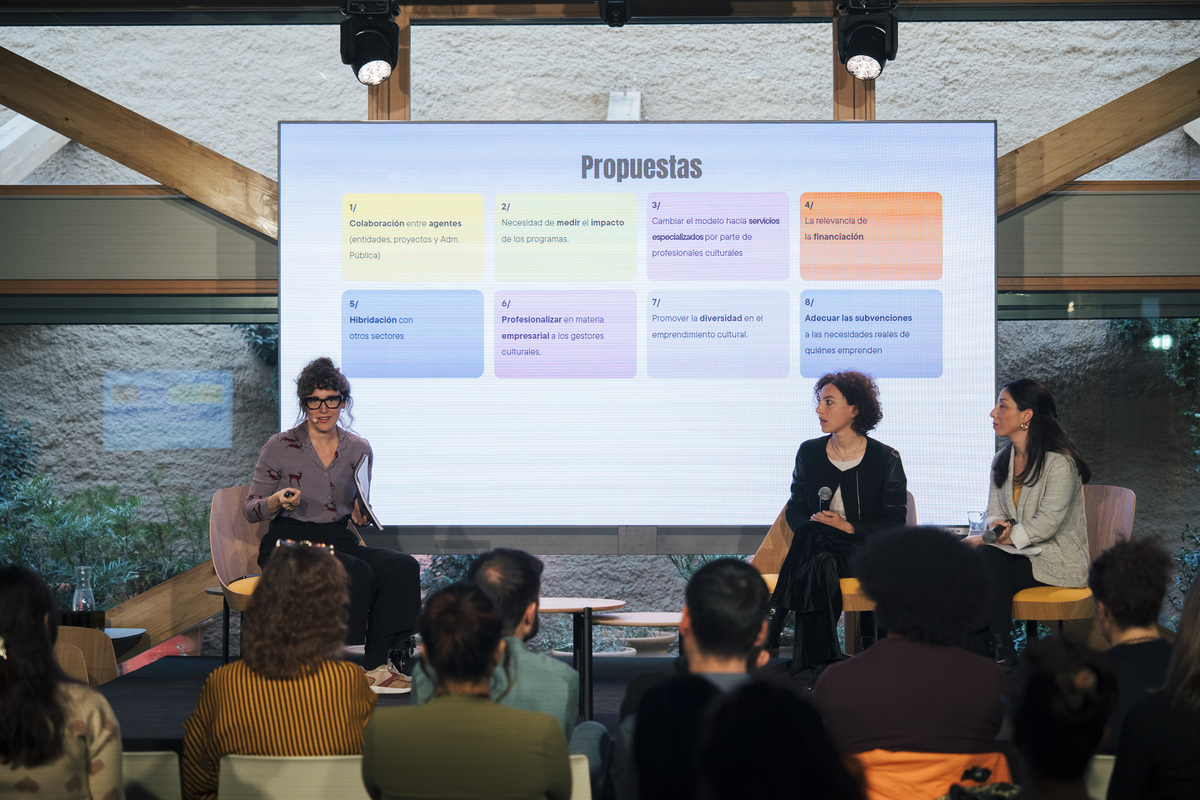
The report To strengthen cultural entrepreneurship (or how accompaniment programs can improve) is structured in three large blocks that allow the reality of cultural entrepreneurship to be addressed from different perspectives. First, the accompaniment programs are analyzed, taking into account both their characteristics and the challenges identified by those who promote them, and public subsidies are considered as tools that contribute to strengthening the fabric of cultural entrepreneurship. Secondly, the study focuses on the projects accompanied, exploring their profiles, trajectories and assessments of the support processes received. Finally, a series of proposals for improvement aimed at the three key areas are collected: public administrations, accompanying entities and cultural projects.
With this work in collaboration with the Gabeiras Foundation, we want to continue deepening the knowledge of cultural entrepreneurship, looking at both the processes and the people who sustain them. We understand that only from this exercise of shared analysis is it possible to identify improvements and continue building a more solid, diverse and sustainable ecosystem.