15 juin 2021
Join the call for food systems transformation! 13 Key Principles to Adopt


As major international meetings are planned to discuss the future of food systems, we are calling, alongside 800 organizations and individuals, for an urgent transformation to address climate, social, economic, and health challenges. An initiative led by the panel of international experts, IPES-Food, which we promoted 7 years ago.
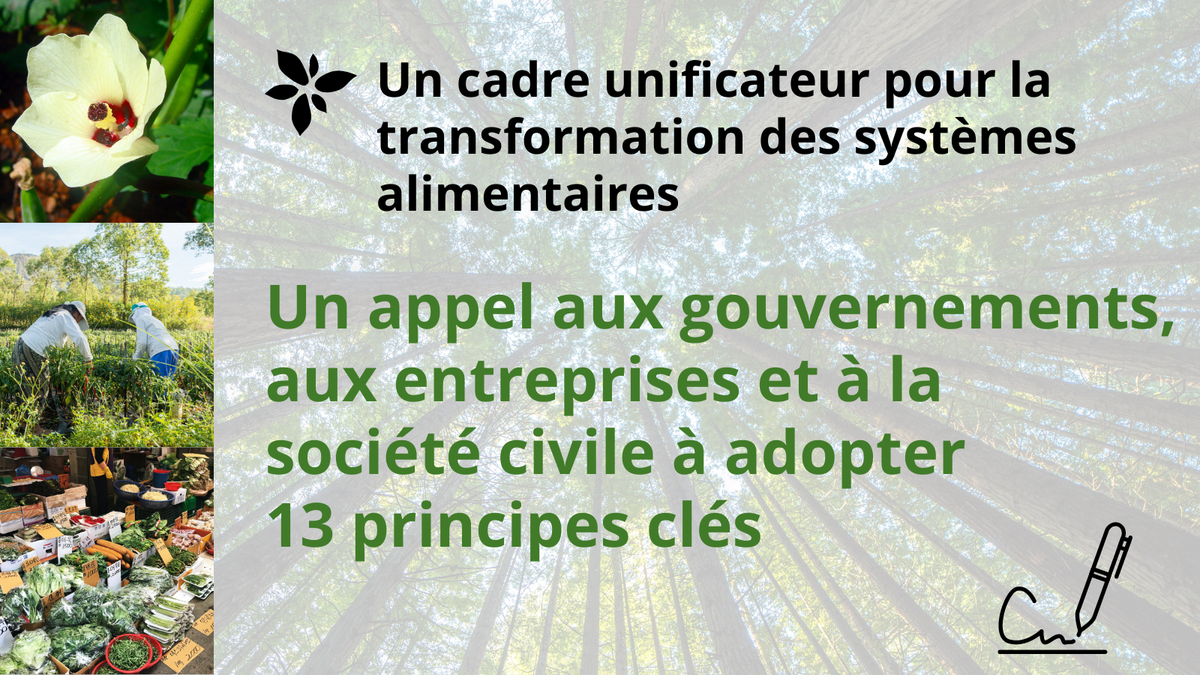
Acall for governments, private companies and civil society to adopt 13 key principles
The need to transform global agri-food systems is now recognized in order to address the climate emergency and growing environmental, socio-economic and health challenges. Today’s dominant agri-food systems – largely driven by an industrial logic of economies of scale, intensification, specialization and standardization – do not guarantee food security or adequate nutrition for all. Dangerously exceeding “planetary boundaries,” they weaken the very foundations on which they rest, destroying soil fertility and biodiversity, overexploiting natural resources, polluting soil, air and water, and contributing more GHG emissions than any other sector.
Addressing these challenges is not enough to make incremental improvements: a bold paradigm shift is needed to rethink our agri-food systems and achieve the Sustainable Development Goals, the Paris Climate Agreement and the Convention on Biological Diversity, and to respect the UN Declaration on the Rights of Peasants and Other People Working in Rural Areas.
With this in mind, a wide range of organizations and movements have come together to call for urgent transformation. The call recognises that the set of 13 principles for food systems transformation outlined in the 2019 report of the High-Level Panel on Food Security and Nutrition, must serve as the foundation for the transformation we urgently need.
«
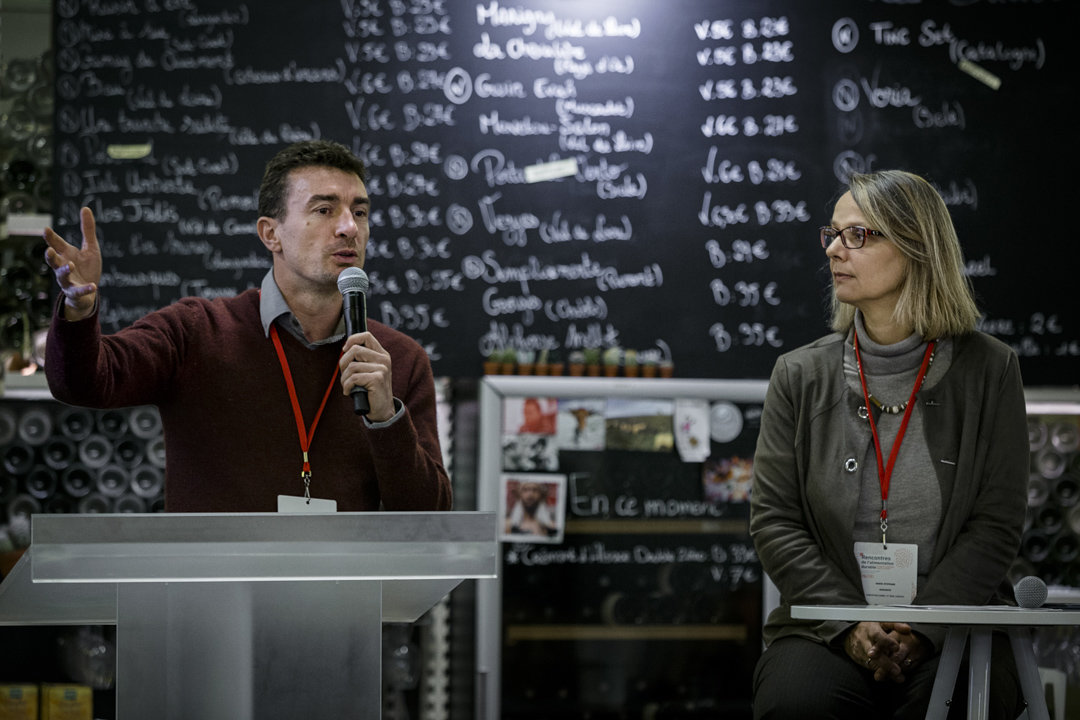
At a time when agroecology, regenerative agriculture… have become portmanteau words used indiscriminately, open doors to greenwashing, it is necessary to clarify the discourse, to put its cards on the table on the eve of the 2021 United Nations Food Systems Summit. By signing this call, we are giving our support and sending a signal to our partners, to our ecosystem in France, Spain and internationally to encourage other signatures.
»Guilhem Soutou, Sustainable Food Axis Manager
Committed for more than 10 years to Sustainable Food, we have signed this appeal, which, to date, brings together nearly 800 organizations and individuals, including CIRAD, IFOAM, and Michael Fakhri, United Nations Special Rapporteur on the Right to Food. At the heart of this mobilization: FOAM Organics International, Agroecology Europe, FIBl Europe, Regeneration international, but also IPES FOOD, an international panel of experts on sustainable food systems, the creation of which we promoted 7 years ago, as part of our support for research and the dissemination of knowledge.
Join us and sign!
To join the growing number of signatories, you can sign the call today here:
As an individual: individual
As an organization/social movement/country: organization/ social movement / country
Find the list of organizations and individuals already signatories here.
IPES Food: a unique think tank
” In 2014, we identified gaps in the international debates on food and agricultural systems and the need for independent, multidisciplinary expertise to inform and inform decision-makers, who are under economic and political pressure ,” explains Guilhem Soutou. ” Accompanied by a scientific committee, we called on Olivier De Schutter, former United Nations Special Rapporteur on the right to food in particular, who put together a panel of experts. This is how IPES FOOD was born, which the foundation has been financing since then in a structural way, while respecting their independence and governance. »
This panel brings together 24 internationally renowned experts, agronomists, environmental specialists, nutritionists, sociologists, development economists and professionals from NGOs and social movements. Its composition gives it exceptional richness, great legitimacy and a unique profile. Its transdisciplinary, democratic approach to knowledge values cutting-edge science while recognizing the importance of experiential, Indigenous, and traditional knowledge. In its work, it involves actors connected to the various stakeholders that the group seeks to connect: public authorities, companies, donors, citizen organizations, producers.
Increasingly recognized expertise
The panel focused its publication efforts on complex topics that are generally neglected by existing institutions because they are considered too politically sensitive, for example :
- From Uniformity to Diversity (2016) argues for a paradigm shift from industrial agriculture to diversified agro-ecological systems, and identifies the “locks” that block this transition.
- Too Big To Feed (2017) focuses on one of these locks – the concentration of economic power.
- Towards a Common Food Policy for the EU (2019) makes the case for a food policy that puts the transition to sustainability back at the heart of all action. It was written after three years of research, reflection and a process of collective intelligence that brought together more than 400 actors. This study was noticed by the European Commission, the European Parliament and the Economic and Social Committee to feed into the “Farm to Fork” strategy linked to the Green Deal.
His work is now widely recognized and regularly cited among the best sources of analysis by scientific bodies (Science Advice for Policy by European Academies), international bodies (European Commission, FAO, etc.), politicians (parliaments, ministries) and by the media in Europe and around the world.
Also in the news, IPES-Food and its partners launched the Glasgow Declaration for Food and Climate in the run-up to COP26 and in the context of the Covid crisis. It has been endorsed by more than 40 local and regional authorities on 6 continents, including the Scottish Government, the Indian state of Andhra Pradesh and the City of Paris. Learn more about the Glasgow Declaration on Food and Climate.
«
This scientific think tank has managed to acquire credibility and notoriety among the decision-making community but also among research and civil society. It is an indispensable channel of dialogue. For the Foundation, it is an important source of strategic thinking.
»Guilhem Soutou, Sustainable Food Axis Manager
Join us and sign! To join the growing number of signatories, you can sign the call today here (organization version):

A Unifying Framework for Food Systems Transformation: A Call for Governments, Private Companies, and Civil Society to Adopt 13 Key Principles
15 juin 2021 · PDF 11 MB
800 international organisations, NGOs and food experts join forces
15 juin 2021 · PDF 133 KB