Sustainable food
10 May, 2019
Shared workshops, an opportunity for a leap in scale


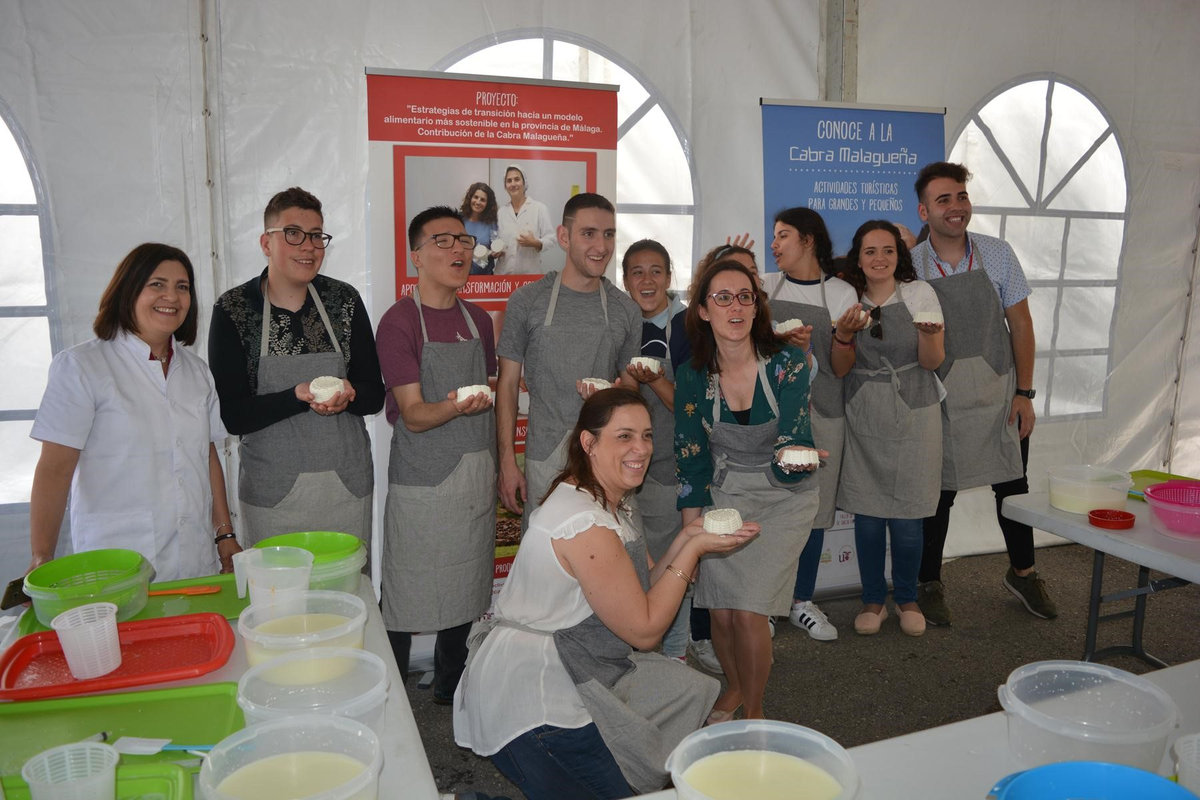
The shared workshops are spaces for the transformation of food products in which several producers participate and which allows them all to obtain a health registration and, therefore, access the markets.
For the Foundation, it is very important that they are shared spaces or for collective use, that it is the producers who elaborate, or participate in the transformation, as well as that they share, collaborate and propose economic models based on mutual support and the social and solidarity economy.
For this reason, our call supports alliances between non-profit entities, foundations and initiatives of the social and solidarity economy with local administrations, from the municipal to the regional.
It is part of our wider strategic five-year plan and targets the production community because one of our main objectives as a Foundation is to make sustainable food accessible to all. To this end, it is very important that producers manage to make a leap in scale, increase their production volume and meet the requirements required by the market.
Eduardo Morales and Juanma Micheo Puig from CABRAMA, who launched in 2016, with the support of the Foundation, a cheese factory for shared use by the members of the association, farmers and ranchers, tell us in this interview the benefits of the shared workshops in order to encourage you to participate in our call.
What is a shared workshop?
It can include numerous interpretations. Taking into account our initiative, it is an establishment in which a certain number of producers are grouped in order to transform their own raw material in the face of the impossibility, or difficulty, of doing so in their own facilities. The modalities can be very diverse, taking into account elements of an economic or even hygienic-sanitary nature. In the case of our cheese factory, the facilities had the presence of a master cheesemaker who was in charge of the production process and compliance with all the requirements demanded by current legislation.
What differentiates a shared workshop from another collaborative production and processing system?
Possibly the most widespread formula of collaborative models in the Spanish countryside is cooperativism. The main difference lies in the fact that in the case of cooperatives, producers join forces for a common transformation and marketing of their product, in addition to other advantages that the union generates (cheaper inputs, common services, etc…). The shared workshops, as understood in this call, have an impact on the transformation into a common facility while maintaining independence in terms of the product obtained and, therefore, its distribution and marketing. In this sense, the empowerment and participation of producers is promoted, who choose what product to make, qualities, sales prices, etc.
What are the benefits for consumers of being able to access products that are made in shared workshops?
Thanks to these initiatives for producers, consumers will have access to a range of products that they may not be able to otherwise. Local products and with the possibility of meeting and accessing the person who makes them. From the moment we allow producers to transform their own product and directly access consumers, we are facilitating their access to healthy and varied food, which is fairer and more respectful of the environment and people.
What examples of shared bakeries would you highlight from Spain? Does this production model have a presence in other European countries or the rest of the world?
It is not a widespread model in our country, there are very few initiatives in this area. Possibly the individualistic character of the producers, the misunderstood competition and bureaucratic and administrative difficulties have influenced the fact that there are few. In Italy, and particularly in France, there are more in the case of cheese factories. In Spain, ours is possibly the only shared work initiative launched to date in the dairy sector. As far as the processing of plant products is concerned, the difficulties are likely to be less, with more activities. The Foundation itself is aware of MaskiluKontserbak’s work in the Basque Country (preserves and jams). It could be asked if the community oil mills existing in the villages could be considered examples of shared workshops with an enormous tradition in Andalusian territory.
Now that rural depopulation has been installed in public debate. How can shared workshops stop the depopulation of villages?
The solution to this problem is complex and multifactorial. Experiences of this nature can obviously contribute to slowing down the process of ageing and depopulation, always from a global perspective and as part of ambitious initiatives that encompass multiple elements. Among these, it is perhaps worth highlighting access to certain services (health, communications), but it is also necessary to promote business initiatives that contribute to stabilizing the population by creating employment and generating economic activity. Creating new ways of working, for example by reducing dependence on fresh produce, increases the opportunities to stay in rural areas and thrive there.
How would you encourage potential candidates for this call to start a shared workshop or consolidate it?
The implementation of a model of these characteristics is very complex, it is necessary that it is a group of people who have very clear ideas and that there is a spirit of sharing and collaboration. If these conditions are met, the support of the Foundation can be very interesting to finish shaped, initiate or consolidate an initiative that goes even beyond cooperative activities. Joining this project can help consolidate its offer and penetrate new markets that under normal conditions would be very difficult to access.
Discover and submit your application in our call for "Shared workshops for a sustainable food system". Closing date May 16, 2019.
Photo © Cabrama