Socially engaged art
29 September, 2022
PLAN returns to school with many learnings and new challenges


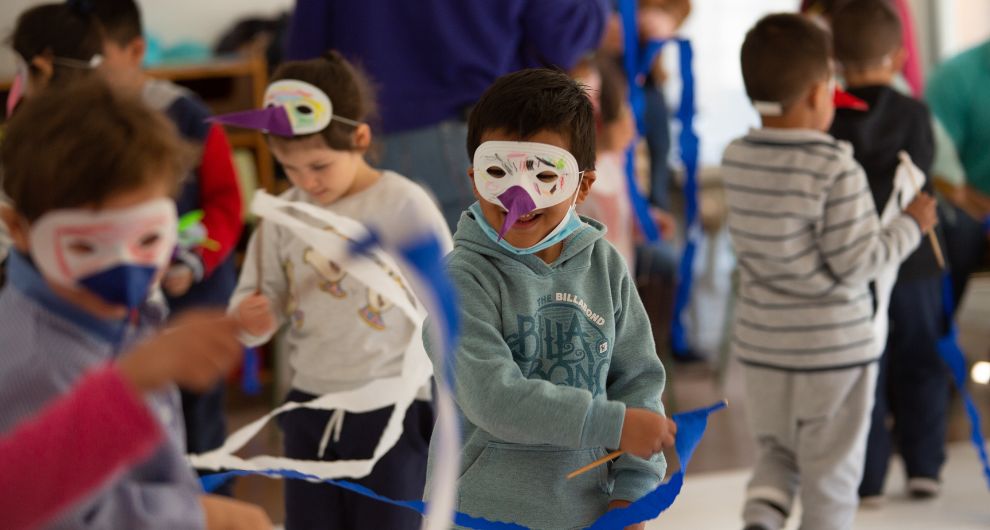
A new academic year begins and, with it, the PLANEA network, the art and school network promoted by the Daniel and Nina Carasso Foundation, is back on track by compiling lessons learned from last year and generating new initiatives and programmes in the 14 pilot centres and the 126 collaborators. The great challenge of the network for this academic year is to continue increasing the number of pilot and collaborating centres in order to create a more committed, empathetic, critical student body capable of facing the great contemporary global challenges.
A new school year has already begun and, with the return to school, the PLANEA network, which we promote from the Daniel and Nina Carasso Foundation with nodes present in Andalusia, Madrid and the Valencian Community, reopens a new opportunity to continue bringing artistic practices to public schools in a transversal, systemic way and working together with educational centers. cultural agents, institutions and artists in order to promote sensitivity and critical spirit in students to face the social challenges that currently affect us, such as the climate emergency or the ecological transition.
This 2022-2023 academic year will be the fourth of the five years of prototyping that the network has provided itself with to evaluate and compile learning, with the aim of generating significant changes in the classrooms in the pilot centers and collaborators that adopt its methodology.
There are already more than 130 pilot centers and collaborators that make up PLANEA and the return to classes is very motivating as it translates into the possibility of continuing to grow and to continue implementing the plans and programs developed in recent months together with the ministries, cultural institutions and teacher training centers of the autonomous communities in which the network operates.

“What can contemporary artistic practices contribute to the improvement of education? That is what the PLANEA network aims to discover, understanding that this improvement in education can occur in the transformation of educational spaces, in the improvement of coexistence or in the development of social and emotional skills in students”.
Pedro Jiménez, state coordinator of Red PLANEA
The calls in the three nodes will launch different programs that the chosen public schools will be able to develop throughout this next academic year. In the Community of Madrid, HAPSI (for the infant education stage), More than a wall, Mural (for primary) and Transform your school, Live Feelings and Fanzinetics (for secondary school). For its part, in the Valencian Community, will be developed A different scene (aimed at secondary schools) and Sonógraf (for Primary Education). In addition, this course is being relaunched Playing with Data: Art and Social Media, prepared by the artist Diego Díaz, aimed at secondary schools and already developed during the previous year in 19 schools. In the coming weeks, the calls and programs for Andalusia will also be released.
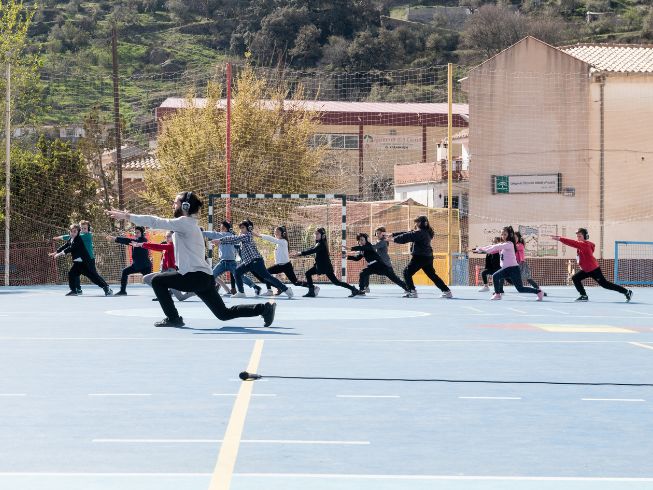
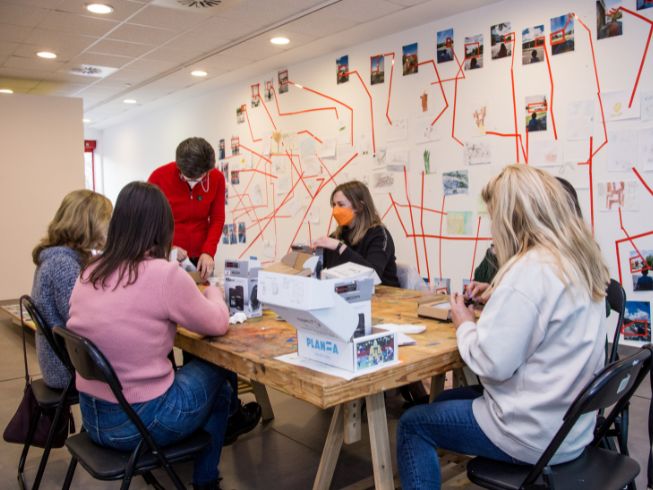
Premise for the new course: to continue sharing experiences and learning
Sharing the experiences implemented by the centres is very important for the continuity of the network and for the replicability and scaling of successful educational models and in this work the ANIDA 2 magazine, the Resource Centre and the PLANEA notebooks will continue to play a fundamental role in this academic year. During this new academic year, the second of them will see the light of day, which will have as its main research theme the intervention in the educational spaces of schools to improve the coexistence of students.
Undoubtedly, the return to school is also exciting because it allows the learning of the previous year to be put into practice and reinforced and, in this sense, as the PLANEA evaluation report for the 2020-2021 academic year carried out by Conecta13 confirmed, there are projects that are consolidating and that are taking shape and substance.
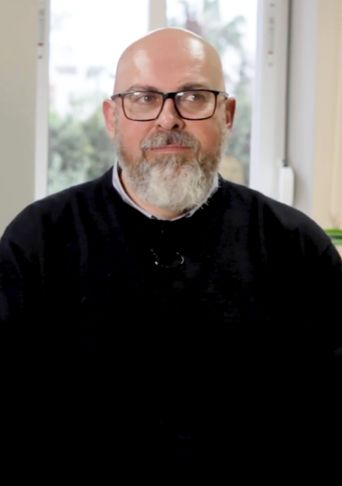
“This network goes far beyond a simple didactic proposal for the classroom. It aspires to transform spaces and to link and integrate with the community, the environment, the neighborhood…”
Fernando Trujillo, Conecta13
This report, which addresses the network from a quantitative and qualitative perspective, highlighted the positive impact that the actions carried out have on the classroom environment and on the attitude and socio-emotional development of students, developing key skills in them to learn to communicate and take care of the environment with empathy and from more critical perspectives. Thanks to PLANE, a ‘third space’ was born as a result of the encounter between two different cultures: the artistic and the educational.
The presentation of the report also preceded the PLANEA State Meeting held in Malaga in March, which brought together, in person for the first time, all the members of the network, including pilot centers, mediation nodes, collaborating agents, artists, councils and evaluation team, in order to share experiences, analyze the achievements achieved, create new connections and alliances and jointly weave the next steps for evolution and expansion to new autonomous communities.

“The artistic practices of the network add value to the educational community thanks to the joint work of all the agents: the teaching staff, the artistic body and the mediation nodes. The latter help to ensure that the artistic quality of the programmes is aligned with the curricular objectives and with the current challenges we face”.
Isabelle Le Galo, director for Spain of the Daniel and Nina Carasso Foundation
In fact, last year this broadening of horizons was already effective with the development of two programmes of Collaborating Centres in La Rioja, specifically Sound Panels of Anthropoloops Workshops and La Escuela del Garabato whose exercises and programme are already available in the resource centre so that other teachers and students can appropriate it by adapting it to their own context and experimenting together.
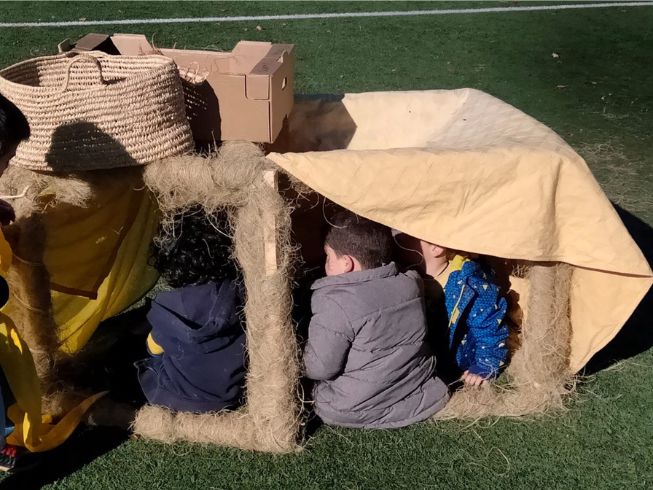
These and other projects from last year, such as creating shaded spaces in school playgrounds through climate shelters or putting into practice artistic dynamics for children to reflect on their relationship with the environment, are just examples of success stories of the network, which aspires to generalise its proposals to society and public education as a whole.
Our great challenge for this year continues to be to demonstrate that this type of initiative should not be an exception or a privilege, but that it should be an easily accessible alternative in school to generate new imaginaries and sensitivities and build a more committed and responsible student body with the world around us. From the Foundation we are happy to see the great progress of the PLANEA network and we are sure that the return to school will once again fill our backpack with experiences and resources that we will continue to share with the educational community.


