Socially engaged art
14 April, 2023
You live in an agricultural city!, an intersection of knowledge to recover the agricultural heritage of the city of Córdoba


The project You live in an agricultural city! its mission is the recovery, from the arts, sciences and humanities, of the agricultural heritage of the city of Córdoba in its psycho-cultural aspect and aims, in turn, at a new orientation of that identity to build a better space. Selected in the last edition of the Daniel and Nina Carasso Foundation’s Compose Knowledge call aimed at projects in which artists, scientists and citizens work together, in this time it has managed to offer a political tool to think of Córdoba as an example of an agropolitan city for the future.
You live in a farming town! it was born to recover the collective consciousness and reverse the situation of degradation of the Vega del Guadalquivir as it passes through the city of Córdoba and the crisis of this privileged space for agriculture. In these two years of accompaniment we have seen how this initiative of the Cordovan creative space Plata has conceived a large program of artistic actions framed in hybrid working groups of art – science – agriculture – popular knowledge that have resulted in creative processes, educational programs and a digital headquarters of transmitting the values of the project that puts transdisciplinary research as a framework to propose more sustainable city models.
To inspire other similar projects to participate in the new call for Compiendo saberes open until April 27, we spoke with Javier Orcaray, Gabrielle Mangeri and Jesús Alcaide, directors and members of ¡Vives en una ciudad agrícola!
How did you find out about the Compose Knowledge call and what has it meant for you to have the help of the Daniel and Nina Carasso Foundation in this initiative?
It was the third time that the association had applied for the call. We met her at the first edition in Spain in 2015, when mutual friends encouraged us to present a project. Without the help of the Foundation it would have been impossible to carry out this initiative since a project of this size needs great financial support. In addition to this, the Foundation’s seal is very important to us because it imprints prestige.
How does you live in an agricultural city! to create a more sustainable future for the city of Cordoba?
Although 18 months of implementation is a short time, the program has had a certain impact on the community when it comes to rethinking the territory we inhabit and how we intend to continue here. We would love to test what would happen if we could extend the project for five more years. We are immersed in the writing of a publication with the intention of collecting all the voices and experiences of the people who have participated in it.
You live in a farming town! seeks the recovery of the agricultural heritage of the city of Córdoba from a hybrid art-science-agriculture-community working group. What lessons and challenges have you encountered in this intersection and composition of knowledge?
Some research scenarios have been more fruitful than others as we have been very ambitious in some of them and, at times, we have clashed with the ability of some agents to be involved. It seems that the world has been filled with administrative tasks for everyone, leaving little time for practice, even so, a good sense of progress prevails. We have achieved, in some of our actions, the magical moment in which a conversation between several bands has no end, an infinite world of intersections between fields of research and practice that complement each other.

In line with a multitude of agents and civil society, we have managed to focus on the possibility of imagining more sustainable futures. From the creativity of its actions, this project awakens the curiosity to approach agriculture as an open and possible activity for all people. Being aware that “taking care of ourselves” begins by understanding the interdependence between everything alive, we are ‘farming’ to improve our habitat
JAVIER ORCARAY, MEMBER OF YOU LIVE IN AN AGRICULTURAL CITY!
What are the keys to developing a project that combines art, creation and organic farming?
Imagination and knowing how to surround oneself with “punks”, that is, people who want to be on the margins of certain rules and hierarchies. The key is to put in contact with that underground, those people who are usually a minority and treated as “weird” in what they do. There is a lot in common, the important thing is to find sensitive people with the intention of not stopping at routine tasks imposed by the system.
What kind of actions have been put in place around the project and what have they borne fruit?
The project included a curatorial line that has been adapted – something we always defend – to the processes of research and production. The processes are visible on our website, now we need to finish them, make a collective effort to evaluate them from different angles, edit the publication, present it, etc.
What challenges are posed in your territory to achieve the objectives of the project? To what extent can your process be replicable to other towns and cities with similar problems?
The project is definitely replicable, you just have to spend time and dedicate effort to getting to know the territory in which it is going to be proposed. It is a matter of opening our eyes and ears to what the community tells us about its history, culture and politics. Nowadays monoculture landscapes predominate, agribusiness has destroyed all our heritage and sensitivity with respect to the countryside. It is not a unique issue of the urban space, the rural space is also in crisis, we would even say more.
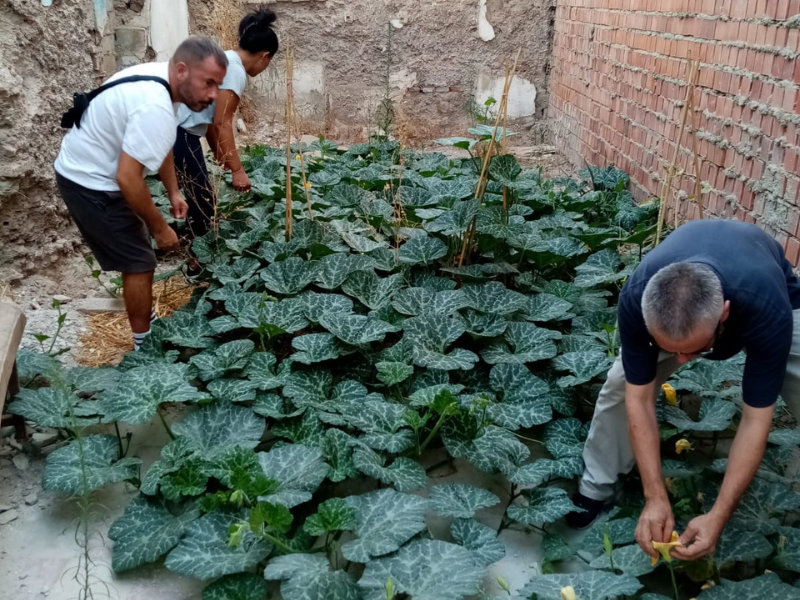

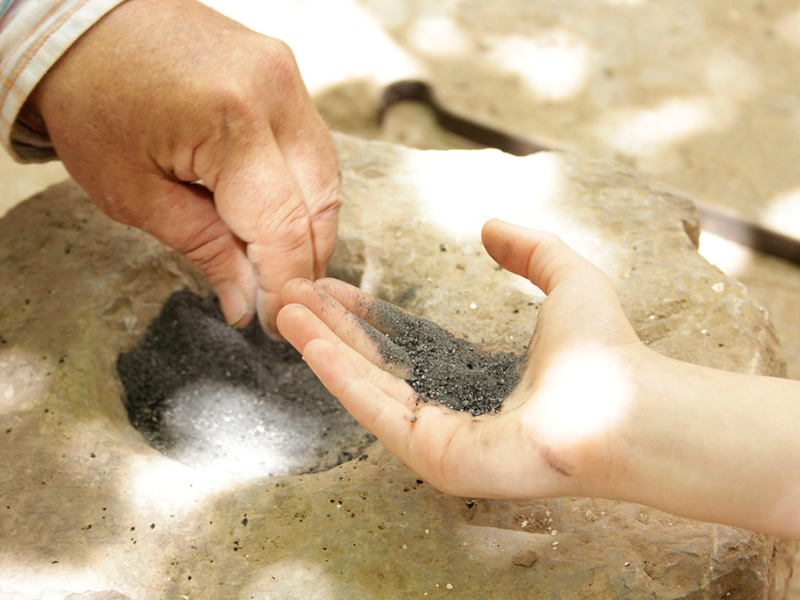
With Compponer saberes , the Daniel and Nina Carasso Foundation contributes to the scaling up of projects like this. How has the project evolved since the granting of this grant? What has been achieved so far?
With You Live in an Agricultural City! We have managed to project an image that arouses curiosity regarding the methodology, a curiosity to know how we generate those bonds that are normal for us but that are so strange to the outside. Suddenly, other institutions began to call us with the intention of showing “processes” rather than “results”. This is the case of the commission received by the TBA21 Foundation for the exhibition Abundant Futures or the Creatures Festival. Both experiences also place us in very important issues such as entering international networks where we are really strengthened by knowing that there are many groups with whom we share a passion for other methodologies, for taking care of ourselves and for generating other systems within the art world.
What are the development prospects of You Live in an Agricultural City! in the medium and long term?
We think about it every day. A year ago, when “The devastation of the wasteland” had not yet happened, we imagined that phase 2 of the project of You live in an agricultural city! It would be to turn that space into a great art-science-agriculture-community testing ground.
Today, to be honest, we would love to sit down at the table with several institutions, including of course the Daniel and Nina Carasso Foundation, to imagine where to develop a project of these dimensions. We are talking about concrete responses, about leading transformative projects on a larger scale; we are talking about the generation of a “green matrix”, something that connects the countryside with the city center, a possibility that, in Cordoba, is not a chimera.
Submit your project to the 'Composing Knowledge' call


