Socially engaged art
21 February, 2023
We present the Carasso Notebook “Composing knowledge to better understand contemporary challenges”


For the Daniel and Nina Carasso Foundation, mobilising creative, artistic, scientific and civic energies and daring to decompartmentalise research is, today more than ever, an essential condition for imagining sustainable and desirable futures. With this objective in mind, our call “Composing knowledge” was born in 2015 and to this end we also published a new Carasso Notebook to present the lessons learned from some of the projects supported so far in Spain and France in an attempt to understand to what extent and why the composition of knowledge is currently an unavoidable commitment.
Carasso Notebook "Composing knowledge to better understand contemporary challenges"
Experiences of supported projects in France and Spain
21 Feb. 2023 · PDF 27 MB
At the Foundation we believe that, in order to face contemporary socio-ecological challenges, the composition of knowledge is fundamental and a priority, that is, the promotion of cooperation networks between the artistic community and agents from other disciplines and sciences such as biology, astronomy, robotics, mathematics, physics, etc.
In a context in which the different ‘knowledges’ are completely compartmentalized and hierarchical, from our line of Citizen Art, we decided to inaugurate in 2015 the call “Composing knowledge to better understand the challenges of the contemporary world” with the aim of supporting transdisciplinary projects developed jointly by artists, scientists and, sometimes, also representatives of civil society. aware of the need to join forces and combine their skills to address relevant and urgent challenges of our contemporary world for which a single field of knowledge cannot offer answers on its own.
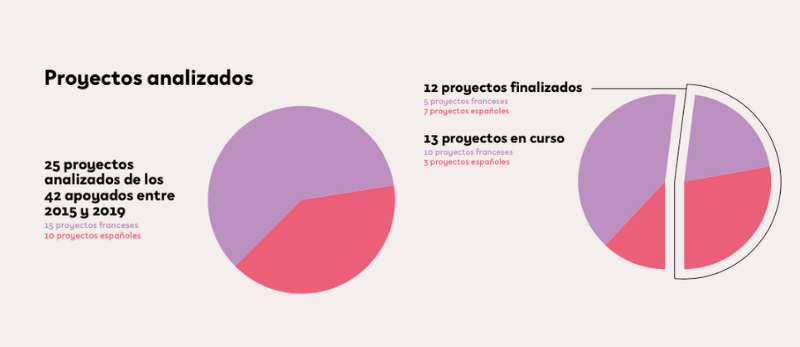
After six years of exploring this field – which we refer to generically as “art and science” – and a total of 43 projects supported in Spain and France, we have considered it necessary to make a selection of some of them in order to analyse the conditions in which they have been developed and to compile the main lessons learned from their protagonists.
This is how this new Carasso Notebook “Composing knowledge to better understand contemporary challenges” was born, which exposes the fundamental aspects behind this analysis and seeks to understand what elements characterize these projects, what they have in common within their own singularities and what value they have generated inside and outside the collectives that have promoted them. All this with the ultimate goal of serving as a key instrument so that other similar initiatives can extrapolate and replicate these experiences and results to their own actions.
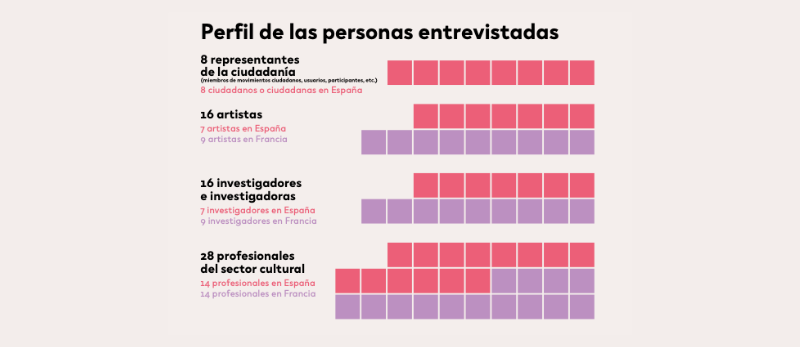
Decompartmentalizing knowledge and collecting experiences
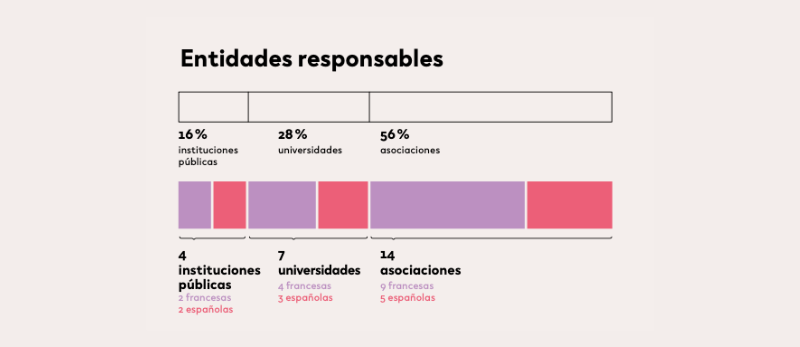
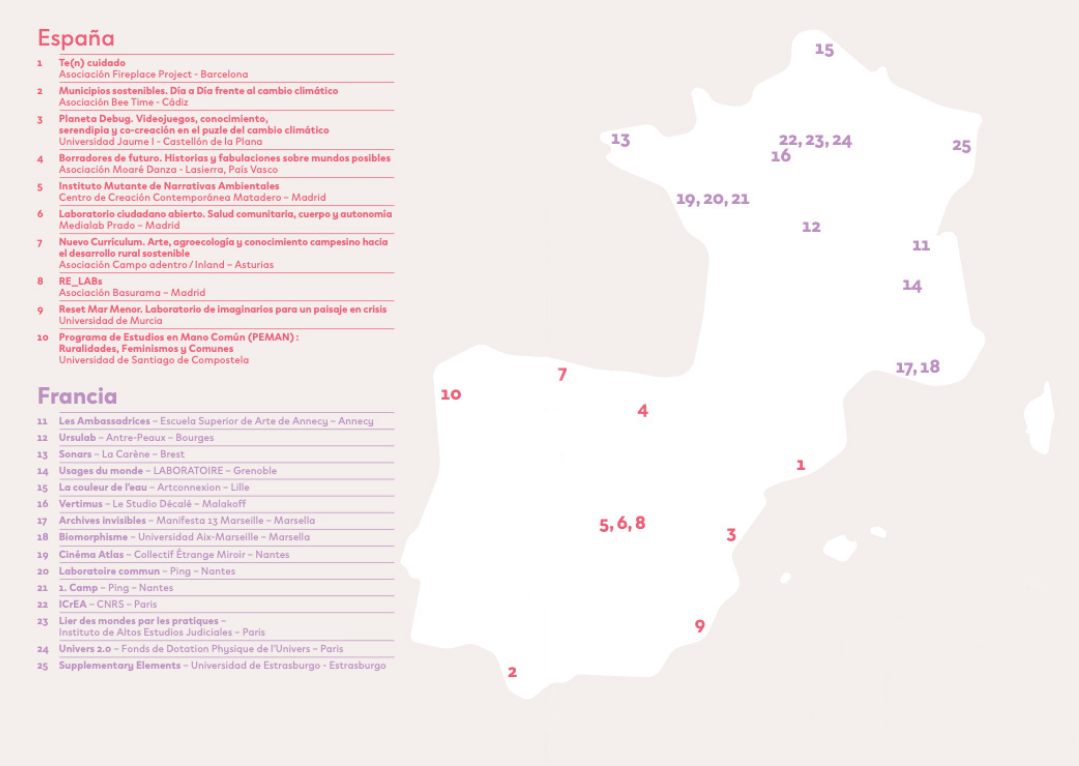
The choice of the projects analysed, 10 Spanish projects and 15 French projects, was made jointly with the Foundation’s teams, with the idea of carrying out an in-depth qualitative analysis of each of them.
The Spanish projects selected for the preparation of the Notebook have been the following:
- Te(n) care (Fireplace Project Association – Barcelona)
- Sustainable municipalities. Day by Day in the Face of Climate Change (Bee.Time Association – Cádiz)
- Planet Debug. Video games, knowledge, serendipity and co-creation in the climate change puzzle (Jaume I University – Castellón de la Plana)
- Future drafts. Stories and fabulations about possible worlds (Moaré Dance Association – Lasierra Basque Country)
- Mutant Institute of Environmental Narratives (Matadero Center for Contemporary Creation – Madrid)
- Open citizen laboratory. Community Health, Body and Autonomy (Medialab Prado – Madrid)
- New Curriculum. Art, agroecology and peasant knowledge towards sustainable rural development (Asociación Campo adentro/Inland – Asturias)
- RE_LABs (Basurama Association – Madrid)
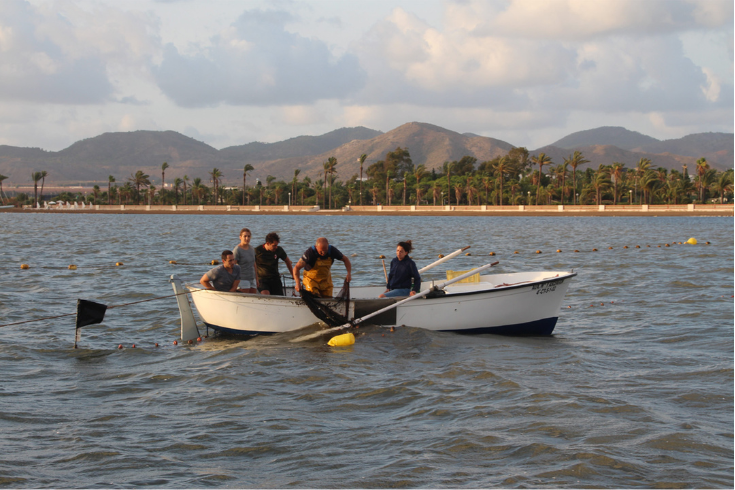
- Reset Mar Menor. Laboratory of Imaginaries for a Landscape in Crisis (University of Murcia – Murcia)
- Study Program in Common Hand (PEMAN): Ruralities, Feminisms and Commons (University of Santiago de Compostela)
On the French side, the projects chosen were:
- Les Ambassadrices (Annecy School of Art – Annecy)
- Ursulab (Antre-Peaux – Bourges)
- Sonars (La Carène – Brest)
- Usages du monde (LABORATOIRE – Grenoble)
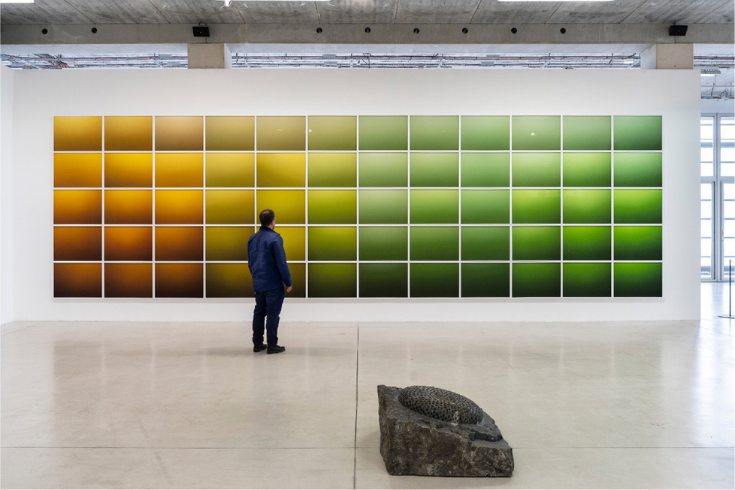
- La couleur de l’eau (Artconnexion – Lille)
- Vertimus (Le Studio Décalé – Malakoff)
- Invisible Archives (Manifesta 13 Marseille – Marseille)
- Biomorphisme (Aix-Marseille University – Marseille)
- Cinéma Atlas (Collectif Étrange Miroir – Nantes)
- Laboratoire commun (Ping – Nantes)
- Camp (Ping – Nantes)
- ICrEA (CNRS – Paris)
- Lier des mondes par les pratiques (Institut des Hautes Etudes Judicial – Paris)
- Univers 2.0 (Fonds de Dotation Physique de l’Univers – Paris)
- Supplementary Elements (University of Strasbourg – Strasbourg)
In collaboration with the Foundation, two leaders in the composition of knowledge, Valérie Pillet and María PTQK, developed a reading and analysis template based on useful questions to develop our understanding of the composition of knowledge in all its dimensions, both practical (operational, material, institutional, economic) and theoretical (conceptual, methodological) and temporal (evolutions, impacts).
Based on this template, the research for the preparation of the Notebook was deployed in two directions. On the one hand, the qualitative study of the documents addressed to the Foundation (applications, instruction reports, interim and final reports of the projects) as well as the publicly accessible documents generated within the framework of the projects themselves (websites, videos, publications, programmes, brochures, etc.). On the other hand, semi-directed interviews will be conducted with those responsible for the projects and with participants of different profiles (artists, scientists and other civil society actors).
Multiplying perspectives to expand our knowledge of the world
As general conclusions to this entire research process, which has finally materialized in this Notebook, all the people involved in the different projects, called composers of knowledge, have expressed the vitality, curiosity and appetite to continue learning generated by the initiatives in which they participate and have underlined the need to support and accompany them.
All of them also point out the importance of getting out of the routine to expand our knowledge of the world and thus address topics or areas of interest from other perspectives by sharing methods, techniques and synergies that provide relevant answers to the social problems addressed. In addition, by leaving their comfort zones, composers recognize that they are more aware of the need to take care of the conditions and modalities of work, favoring the horizontality of exchanges and listening.
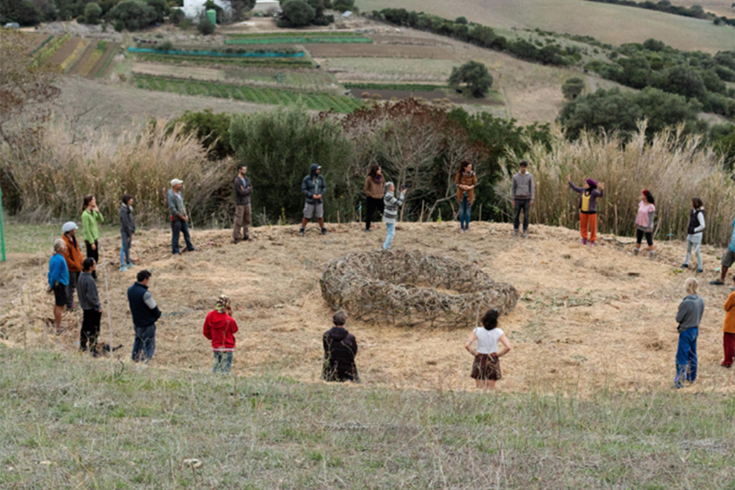
Everyone agrees that the work of composition helps to think of knowledge as connected and linked entities that are not autonomous or interchangeable, but that it is precisely the alliances that make possible their transformative intervention on reality. Likewise, the composition of knowledge produces learning that can also be useful in other areas of activity in society and in other contexts.
In addition, according to them, composing knowledge reinforces the confidence of all the people involved in the process due to their ability to act and their feeling of participation in the construction of a shared future. The actors interested in certain problems, because they affect them in their day-to-day lives, see their experiences and their knowledge legitimized, often disqualified in the face of the dominant regimes of knowledge.
As for the difficulties faced by the composition of knowledge, it has been detected that these do not lie so much in its ability to compose, but in that of having the support of the actors necessary for its existence and for the dissemination of its achievements.
At the Foundation we wanted to highlight all these realities of the projects we accompany because composing knowledge, and sharing their learning and experiences, can serve as inspiration for other similar realities at the same time that it can help to create other initiatives that, as a whole, value the possibilities of the intersections between art and science to build a better future. We will continue to be involved in this purpose by accompanying more projects with a new call for “Composing knowledge” that will open on March 9.


