Sustainable food
22 November, 2022
UnoConcinco, a platform for the transformation of the food sector


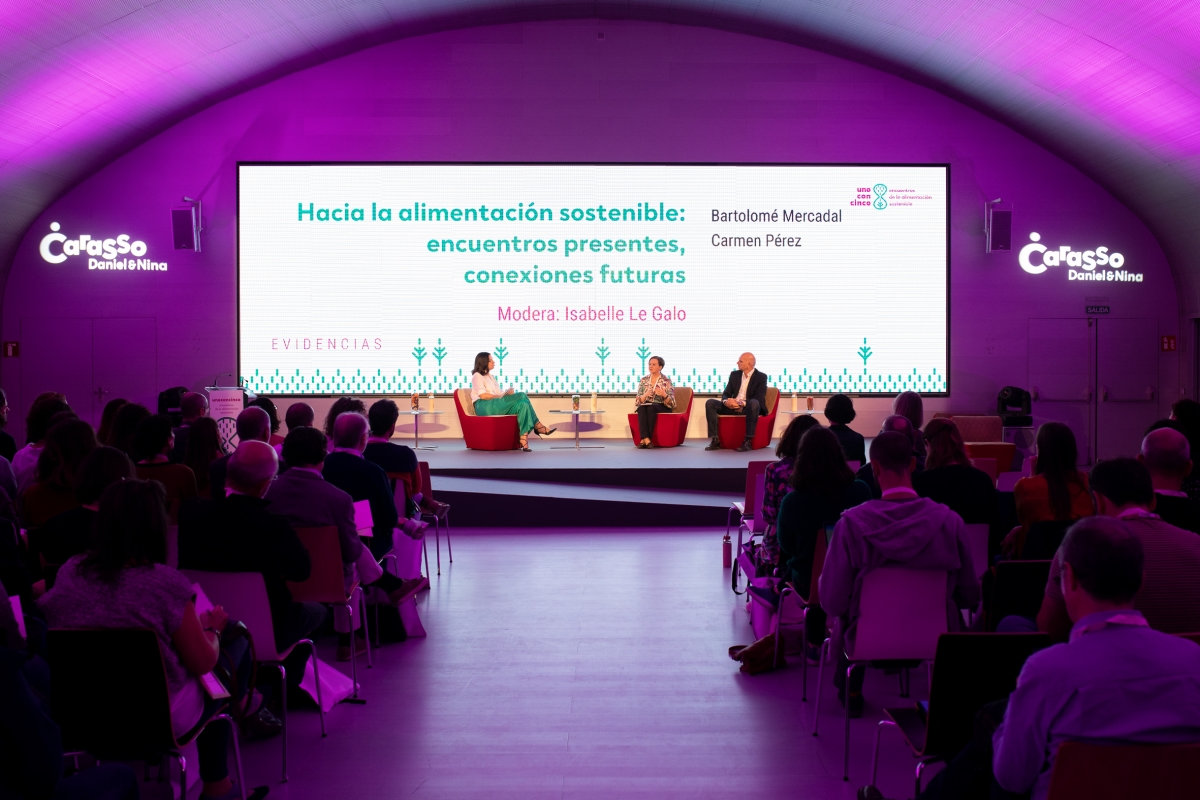
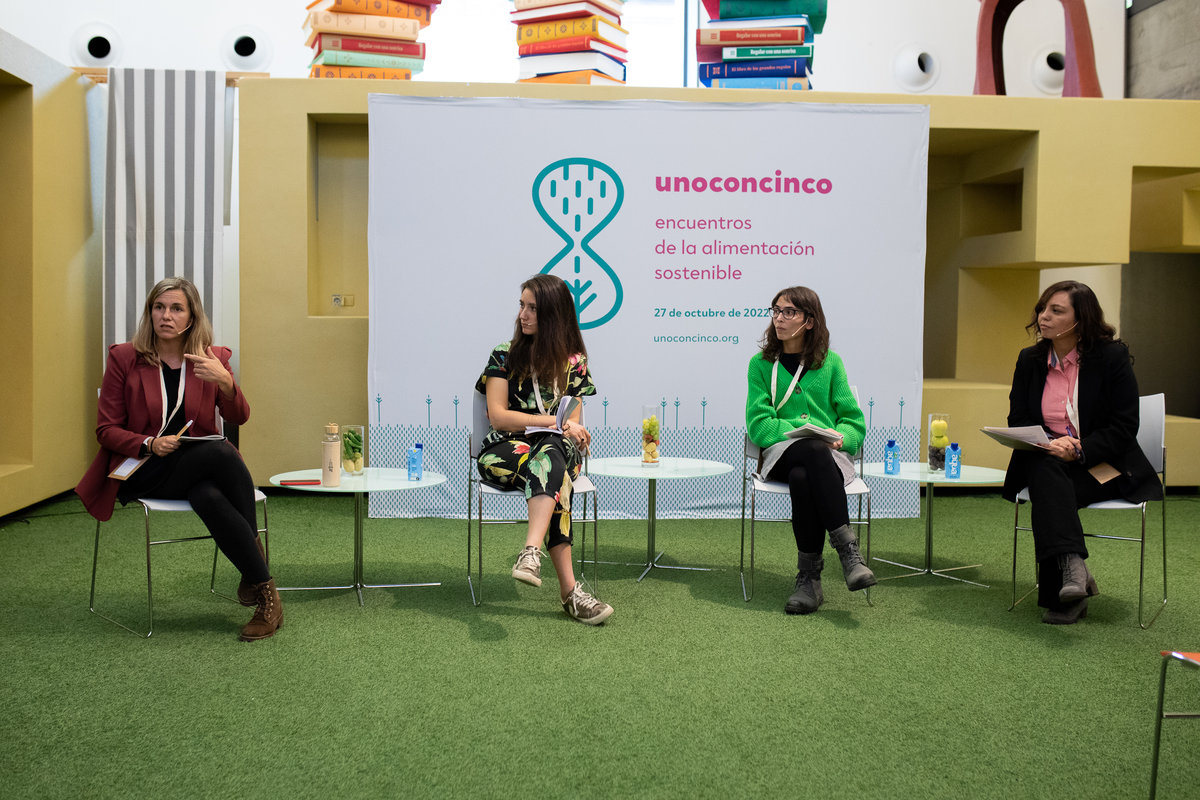
On October 27, we held unoconcinco, the first sustainable food meetings in Spain that we promote from the Daniel and Nina Carasso Foundation. The event, which was born biennially, took place at La Casa del Lector in Matadero Madrid with nearly 600 attendees (both in person and online) between actors from the sector and the media. Through dialogue and the sharing of experiences, the event sought to weave alliances around the same purpose: the transition to sustainable food.
Throughout the day, the professionals who participated in the different sessions of unoconcinco recognized the complexity and multidisciplinary nature of sustainable food. They also highlighted that we have the tools and knowledge necessary to navigate and overcome difficulties. Among all, the need to limit the increase in the global average temperature to 1.5 ºC and also the need to build alliances were highlighted.
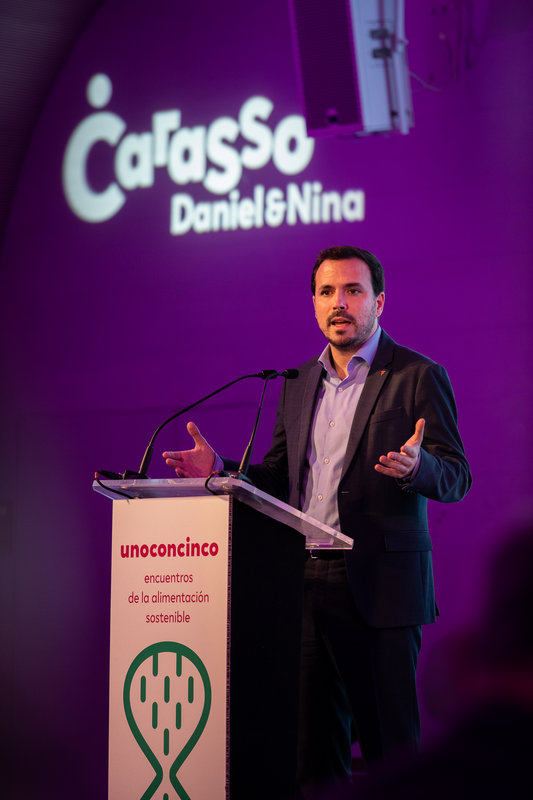
The opening ceremony was attended by Alberto Garzón, Minister of Consumer Affairs, who pointed out that the time has come “to make big changes to meet the Sustainable Development Goals”. In this sense, he assured that there is a “generalized consensus in the scientific field but not in the public sphere, and that is where we have to be able to bring scientific evidence to promote the transition to healthy consumption.” In conclusion, the Minister of Consumer Affairs urged that “food as a commodity has to be overcome by food as a right”. And, to do this, it is essential to commit to healthy diets, responsible production and the reduction of food waste.
A mosaic of expert voices spoke clearly about the evidence, challenges and solutions we have in our hands to move towards a fairer and greener food system for people and the planet. In this sense, Isabelle Le Galo, director for Spain of the Foundation, said that “unoencinco was born to attest that there is more and more systemic knowledge that determines that food is linked to climate change. We have to commit to the health of the planet and people and we have to move forward with optimism because we know that sustainable food has the capacity to meet all the SDGs”.
The same scientific evidence that has shown that we must act quickly also gives us clues about how we can address some of these challenges. In Spain, according to Purificación González Camacho, Deputy Director General of Food Promotion of Spain, of the Ministry of Agriculture, Fisheries and Food, “we are moving away from the Mediterranean diet consumption model and we must focus on recovering the value of the food we have and the producers behind what we consume”.
Evidence and challenges
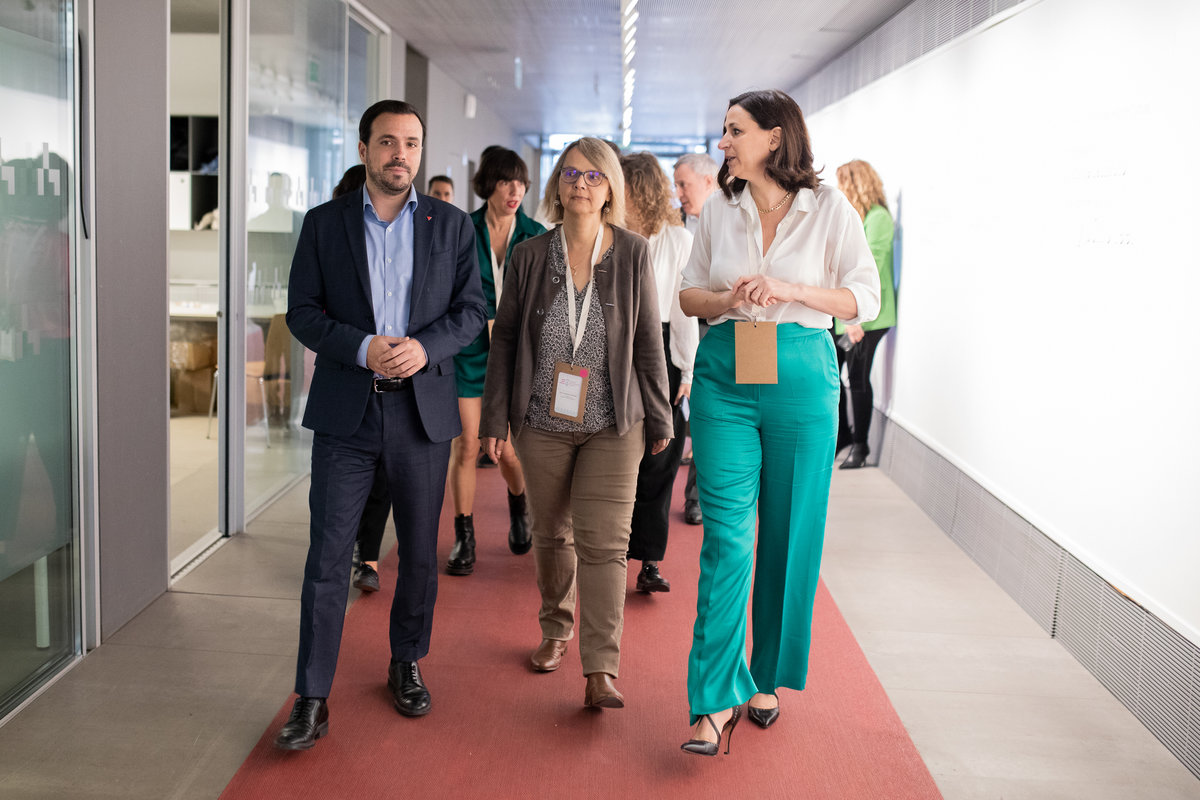
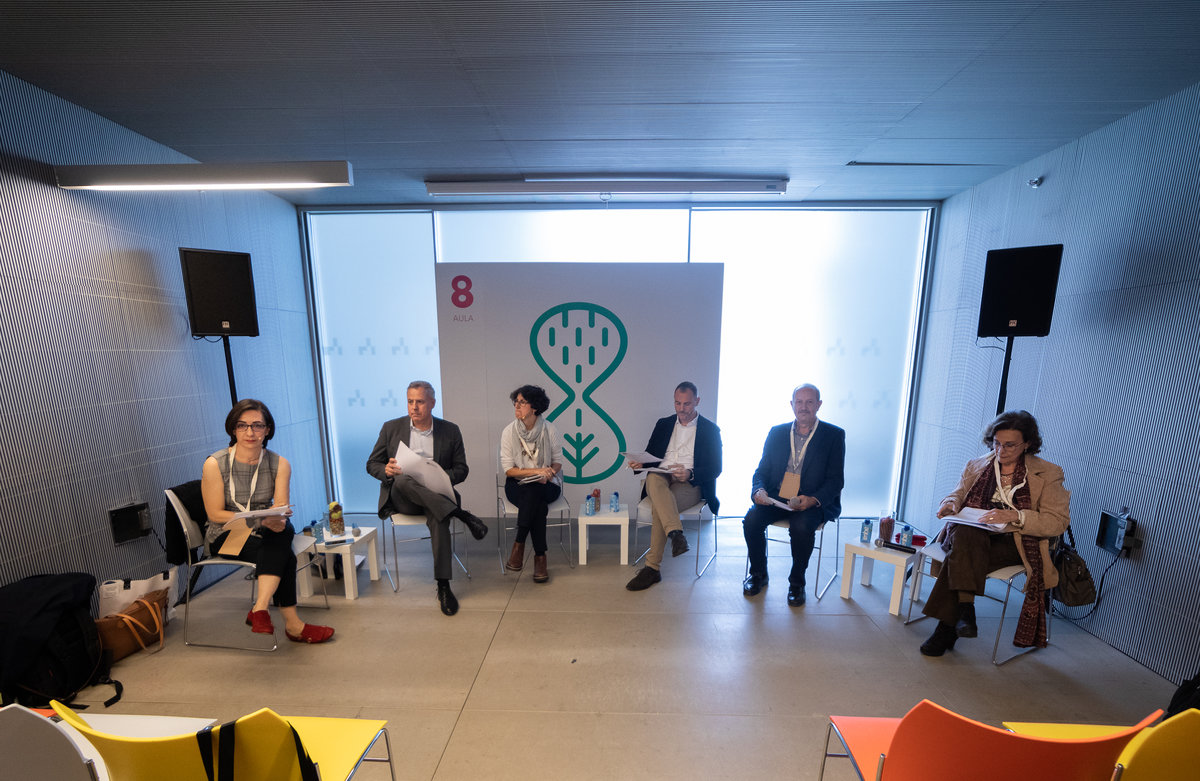
The day was divided into three large blocks dedicated to addressing challenges, evidence and solutions through dialogue. Based on the evidence, Bartolomé Mercadal, commercial director of the Camp de Menorca Cooperative, and Carmen Pérez, president of the Spanish Society of Community Nutrition, began a study by advancing that it is not only about thinking about greenhouse gases or the use of water, but also about the increase in the depopulation of our fields or the need to fix people to their territory. Of course, “it is necessary for consumers to have the healthy option at an affordable price and, at the same time, for the producer to receive a fair price for his work,” Mercadal said.
These first opening words gave way to round tables, mostly composed of five speakers and a moderator, and workshops where issues such as the role of the food sector as a pillar to build a society that puts both people and ecosystems at the center were addressed.
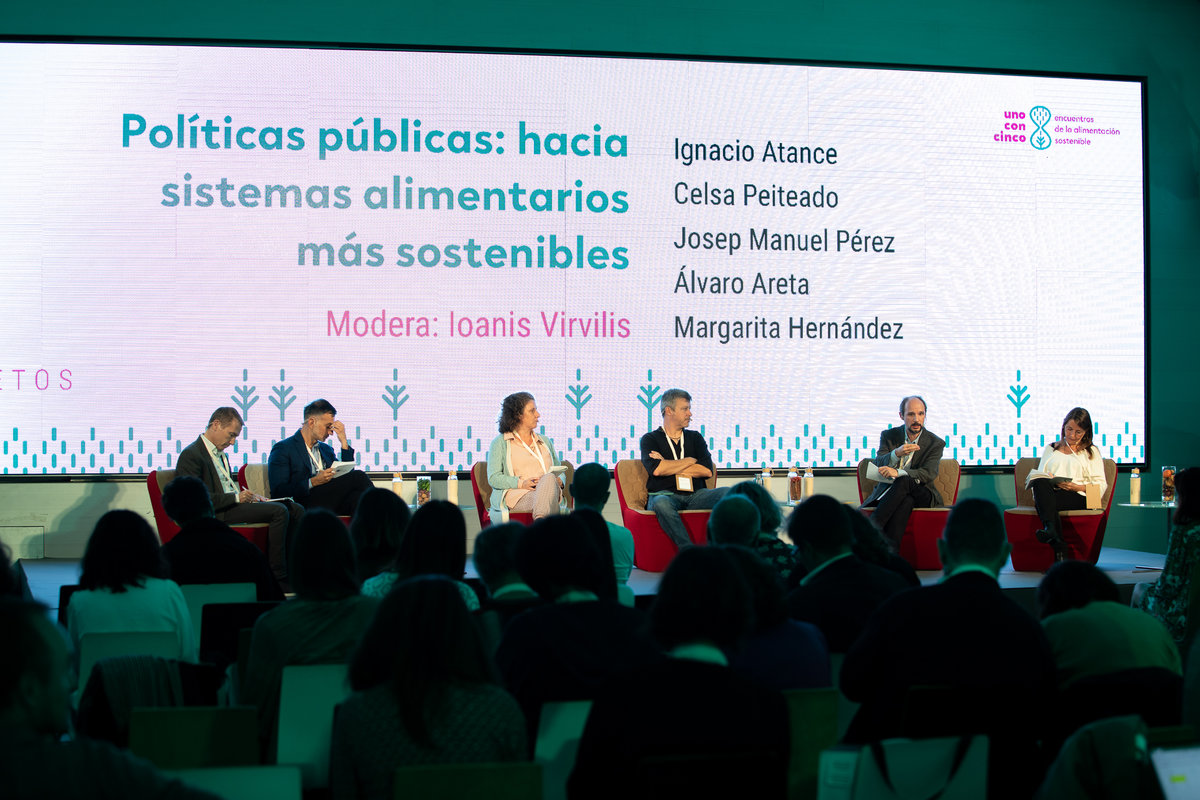
In a context such as the current one of health, economic and now also food crisis exacerbated by a war in Ukraine that has put food insecurity on the table, public policies are a lever to promote change. Precisely, in Public Policies: towards sustainable food systems , some measures in favour of sustainability at the local, regional and state level were announced, such as those promoted by the Valencia City Council, which decided to preserve the region of l’Horta with the defence of the orchard of Valencia against urban growth, or Ecocomedores de Canarias.
Of course, generational renewal, the European Green Deal or From Farm to Fork were some of the strategies that were put on the table. However, one of the most immediate measures, in the words of Celsa Peiteado, of the Coalition for Another CAP, is to “recover nature, protect the quality of soil and water, reduce pollution and promote agroecology to be in harmony with nature”.
Under the umbrella of the question : What role does food play in the ecological and just transition? it delved into how sustainable food can become a tool to achieve and promote the SDGs. To give visibility to the perspective of livestock farmers, Mikel Kormenzana, from the Association of Livestock Farmers Bedarbide, said that “the solution lies in the small and close, in the local product, but alliances between the producer and consumer sector are needed”.
There is little doubt about the role of food in health. In this context, it is necessary to know, as stated by Rafael Escudero, Secretary of Consumer Affairs and Gambling of the Ministry of Consumer Affairs, in Food, a determinant of the health of people and ecosystems that in Spain there is a public health problem that has to do with obesity and childhood overweight. To avoid this, we must educate and value the decisions we make as individuals: “How we eat, where we eat or where we buy are decisions that have a great impact,” concluded Enrico Frabetti of the Spanish Federation of Food and Beverage Industries.
Many professionals spun their voices to contribute ideas that help us achieve all the Sustainable Development Goals, such as access to food and sustainable production, the eradication of hunger or how to deal with extreme situations such as a pandemic.
Propose solutions
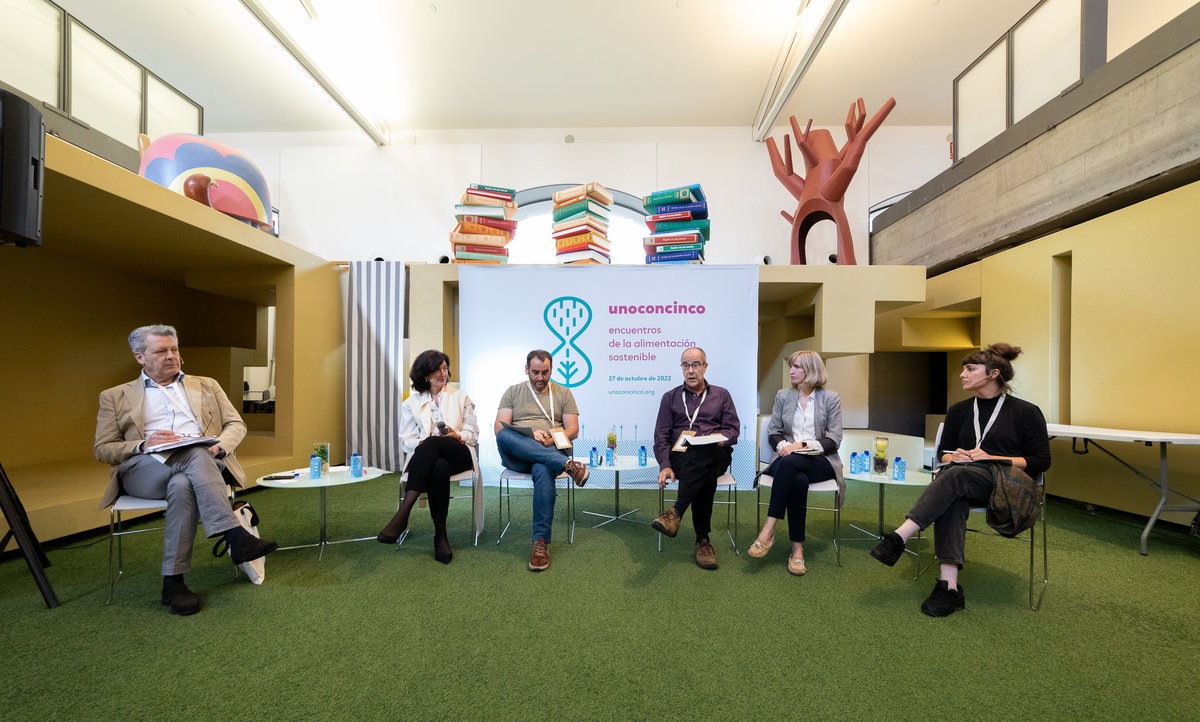
After a break to taste the menu prepared by the Red Chef 2030, which took place at La espina, a space that also served both for the breaks and for the coffees that were held in parallel under the denominator of ‘A coffee with…’ in which different professionals from the sector shared their experiences. Shortly afterwards, unoconcinco embarked on the final stretch by delving into possible solutions based on experiences in the field of digitalisation, impact investing, research and innovation.
In this sense, Jesús Barreiro participated in the round table Research and innovation to guide the food transition, where he highlighted that the Joint Research Centre of the European Commission focuses on setting the long-term political agenda to anticipate the challenges of five or ten years from now and Alicia Cardona shared the work they do from the Center for Ecological Research and Forestry Applications CREAF to help address the problems of each territory with the aim of recovering the quality of the soils and biodiversity. In the loss of biodiversity, in fact, we have not only lost wildlife habitats but also, as Raquel Ajates, winner of the Daniel Carasso Fellowship, pointed out, 80% of cultivable seeds.
However, what do we know about the state of food insecurity in Spain? How do we measure the situation of food inaccessibility? In the dialogue Right to Food and SDGs, Ana Moragues stressed that a study shows a harsh reality of being far from zero hunger and being able to guarantee the right to food in Spain, and highlights the need to develop effective actions.
One of the measures that can serve as a lever isimpact investing, as was evident in Impact Investment in Sustainable Food, where investment funds such as Quadia or Creas were announced, demonstrating that investing in initiatives with a systemic approach in the food sector with a high social impact is necessary. On behalf of Creas, Lara Viada said that “in impact investing, additionality is key. We are looking for companies that are really capable of transforming their sectors, that seek systemic change, even if they are not profitable or their profitability is long-term.”
Participatory workshops
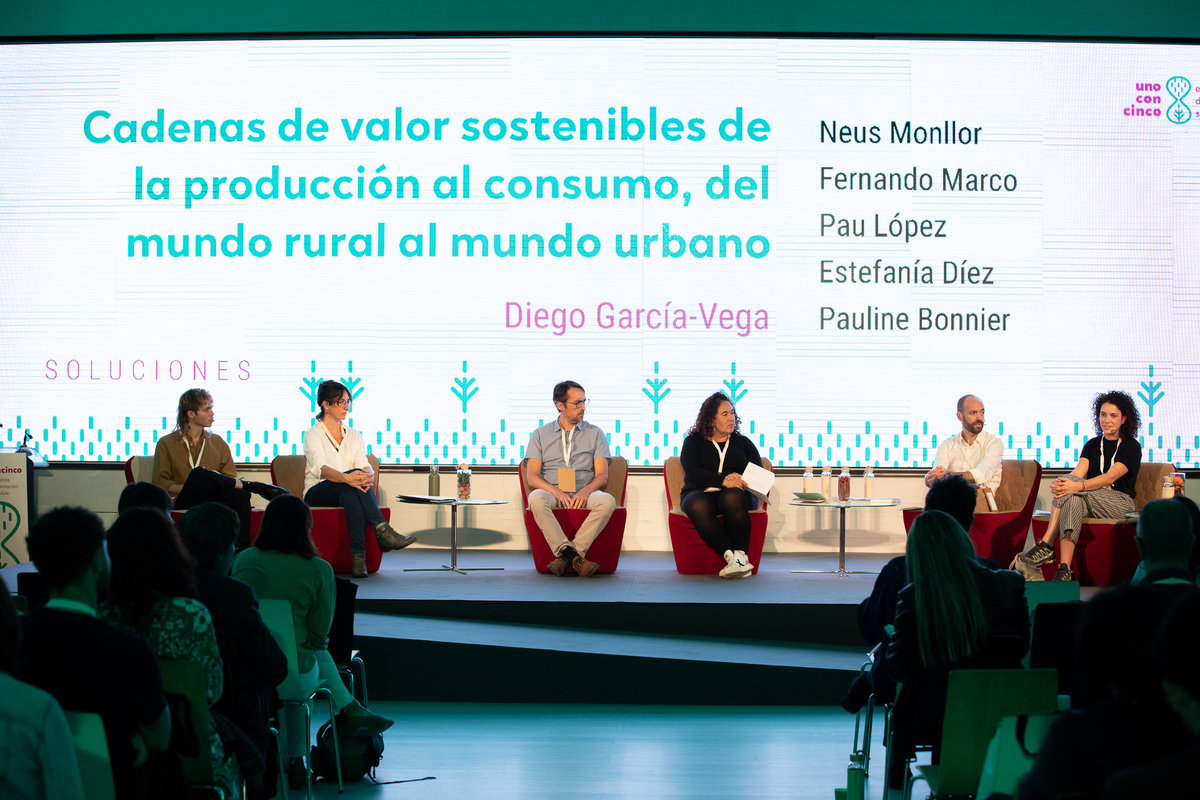
Throughout the day, three participatory workshops were held. The first was carried out by Zirriborroak and revolved around digitalisation. Through a series of collective dynamics, it was possible to imagine possible future scenarios of food. The second focused on sustainable value chains and shared the visions and experiences of associations such as the Network of Agricultural Test Spaces, for whom the challenge is that of generational renewal and progressive incorporation into the sector, the Viver Cooperative or VallaEcolid, whose spokeswoman, Estefanía Díez, said that her challenge is “to achieve a solid and committed project of producers, producers and shops in Valladolid and in the territory of Castilla y León”.
The third focused on the media to reflect on the role of the media in informing and raising awareness among citizens about sustainable food and the role of journalists in a new media horizon of traditional media, new digital native media and social networks.
In short, unoconcinco brought together a wide variety of expert voices working from different perspectives to weave alliances and work collaboratively. “With this event we wanted to build a will for change and urgency to accelerate the transition,” stressed Marie-Stéphane Maradeix, general director of the Daniel and Nina Carasso Foundation. “Today, with unoconcinco we have begun the commitment by uniting visions and approaches to build more resilient systems in the face of uncertainties. Undoubtedly, unoconcinco will be a space for dialogue, learning and inspiration.”
Undoubtedly, we are excited to have generated a space for dialogue in which we will jointly face the challenges. And we will do so every two years accompanied by a wide variety of actors and professionals in the sustainable food sector.
unoconcinco was a unique event that sums up all our efforts to build a greener, fairer and more inclusive society through Sustainable Food and Citizen Art. The latter also had, of course, a leading role in the meetings with the artist Álex Peña, who based on a second-hand vending machine designed a vending machine with the purpose of highlighting the sustainable food produced in various projects supported by the Foundation. Music was also the protagonist of the closing of the event with the mixture of rhythms from different cultures of Antropoloops.