Sustainable food
18 December, 2025
Albarrio grows: new horizons for food that takes care of our communities


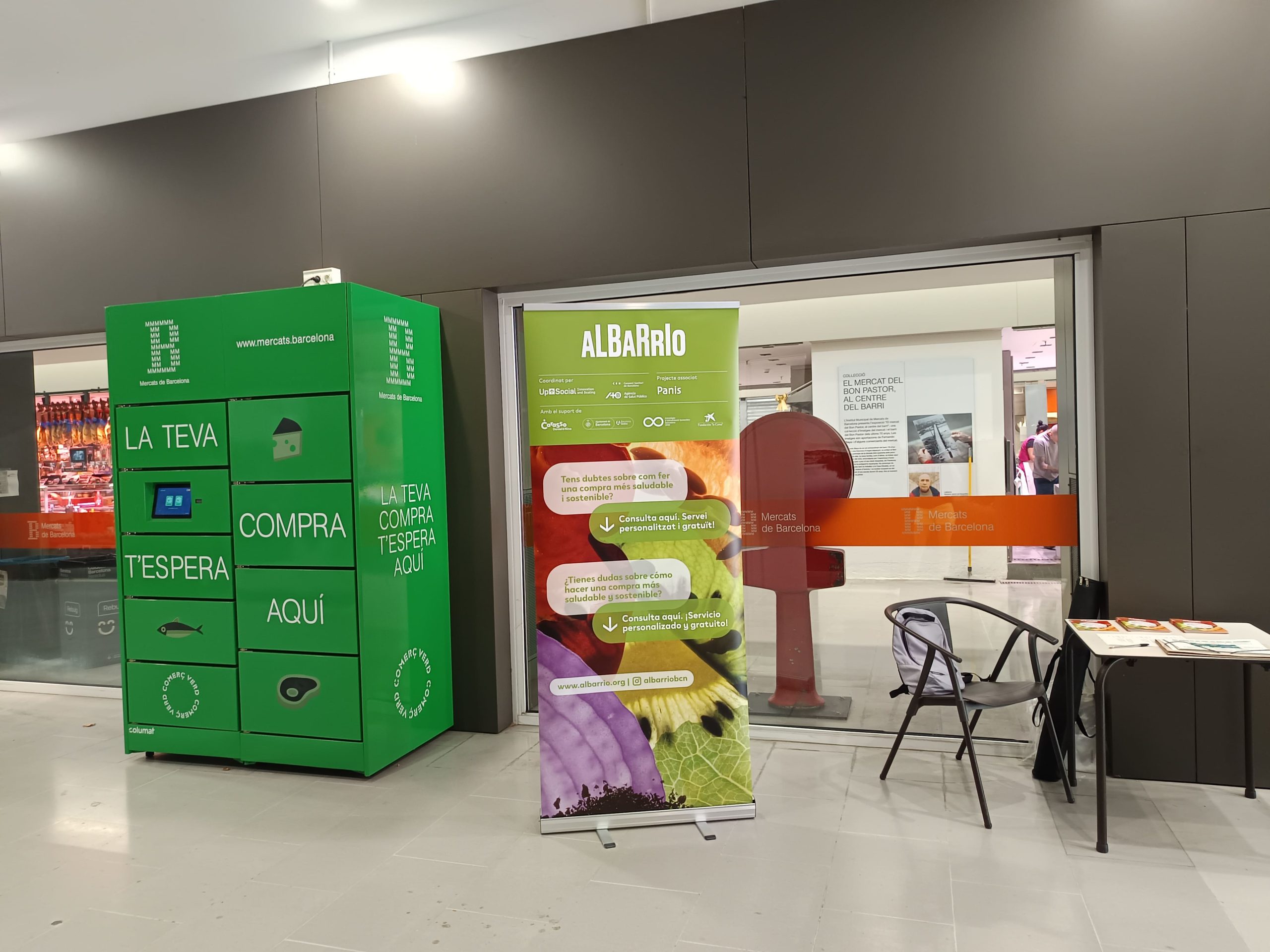
At the Daniel and Nina Carasso Foundation we firmly believe that food is a powerful tool for social transformation. For this reason, we promote initiatives such as Albarrio, which continues to expand its seed of change by promoting greater adherence to healthy and sustainable food consumption patterns.
This year a new stage has begun with the Albarrio 2025 Call, in which two new territories have been welcomed: Salobreña and Vitoria-Gasteiz. These municipalities join Barcelona, after a first pilot project in the Baró de Viver and Bon Pastor neighbourhoods in collaboration with the Barcelona Public Health Agency and Barcelona City Council, and Zaragoza, in the Oliver neighbourhood. In this way, it is demonstrated that, when health and sustainability are at the heart of our neighborhoods, we are capable of building fairer food systems.
This growth is the result of working with the Network of Municipalities for Agroecology and a selection process in which we have discovered local projects with inspiring potential. The incorporation of Salobreña and Vitoria-Gasteiz is a milestone in our goal of scaling this model, adapting it to the uniqueness of each territory but maintaining a common vision. Each of the four municipalities has a local entity that functions as a liaison with the community: Nusos in Barcelona, Ecodes in Zaragoza, Urban Green Club in Salobreña and Bionekazaritza in Vitoria-Gasteiz.
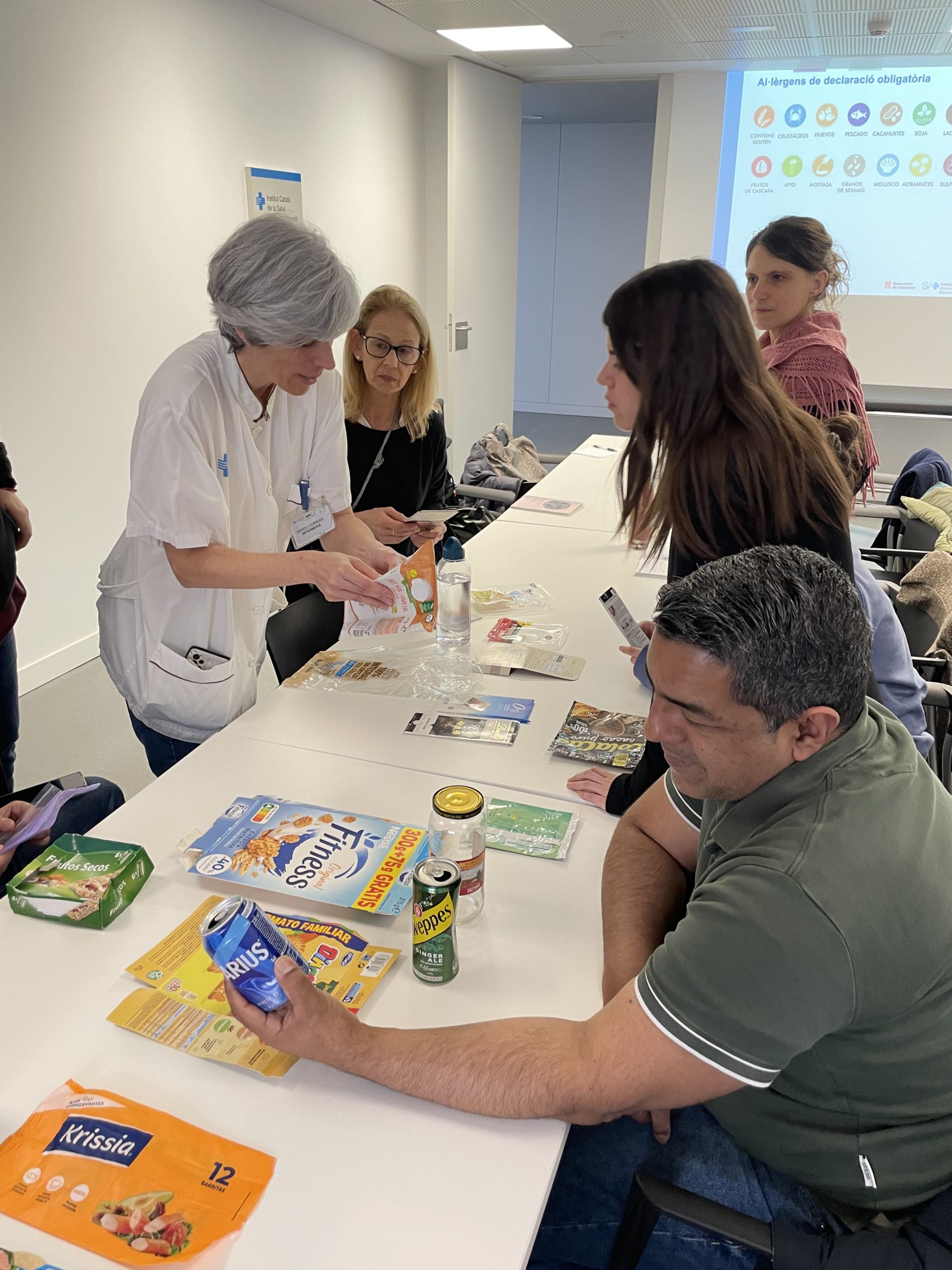
Implementation in the Baró de Viver and Bon Pastor neighbourhoods in Barcelona.
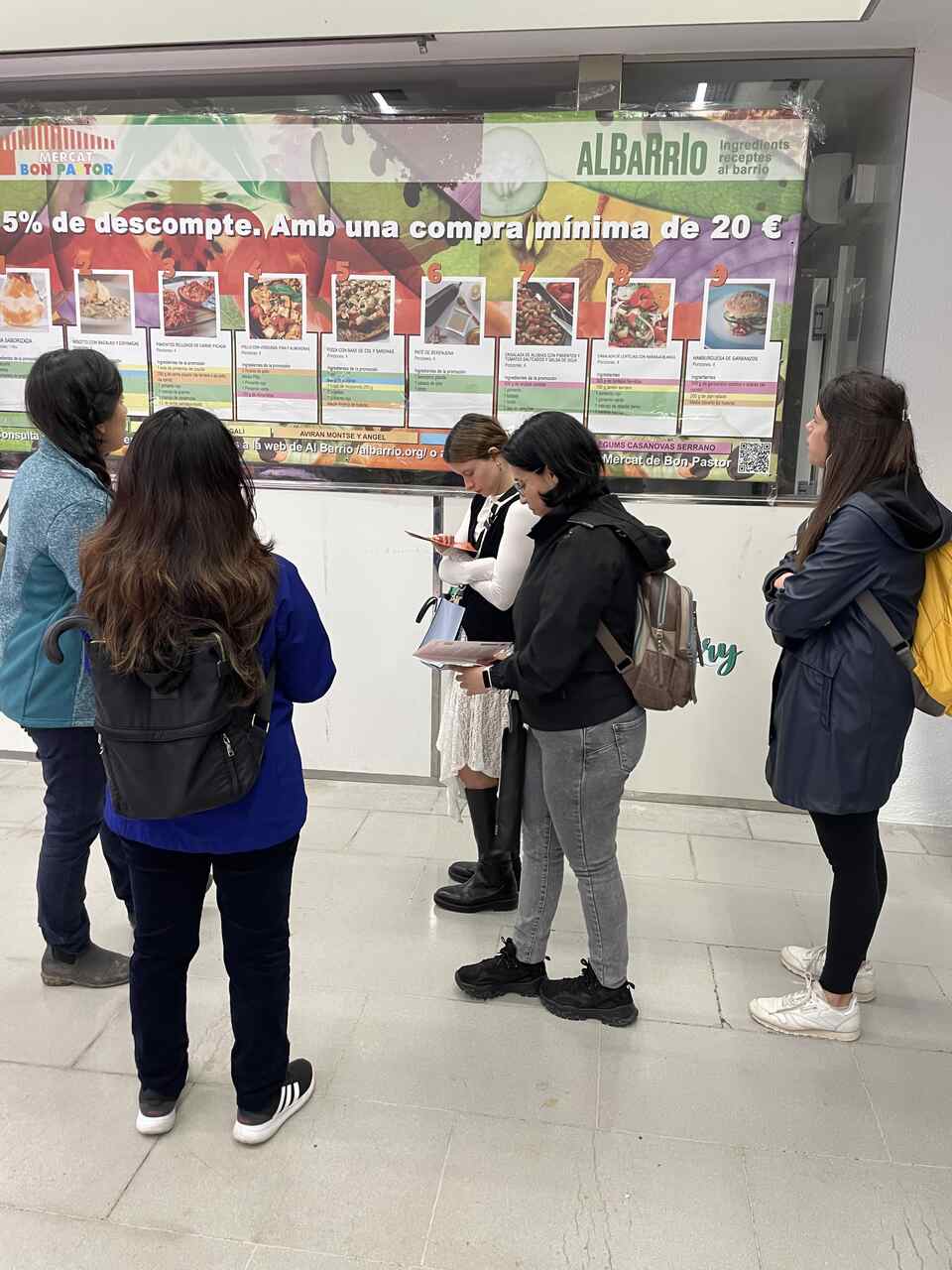
Implementation in the Baró de Viver and Bon Pastor neighbourhoods in Barcelona.
In this way, we look to the future with optimism thanks to the positive results of our pilot experiences, where the community has not only participated, but has taken ownership of the process. For the Foundation, this initiative is an invitation to reconnect with what nourishes us, to value local commerce and to strengthen human bonds. We are convinced that, by activating the trusted leaders of our neighborhoods, we are sowing the health of tomorrow.
How does the Albarrio model work?
Albarrio transforms food through closeness and trust. The model operates in three fundamental stages over two years: first, co-design with the community to understand its needs; second, the training of local referents (staff from health centers, markets, schools, associations, social services, libraries, pharmacies or local NGOs); and, finally, activation of these references in campaigns that inspire citizens. Using health as a lever for change, this initiative connects the supply of sustainable food with local demand, creating a virtuous circle that benefits both people and the planet.