Socially engaged art
29 July, 2020
A year of PLANEA: art highlights its role in social transformation through school


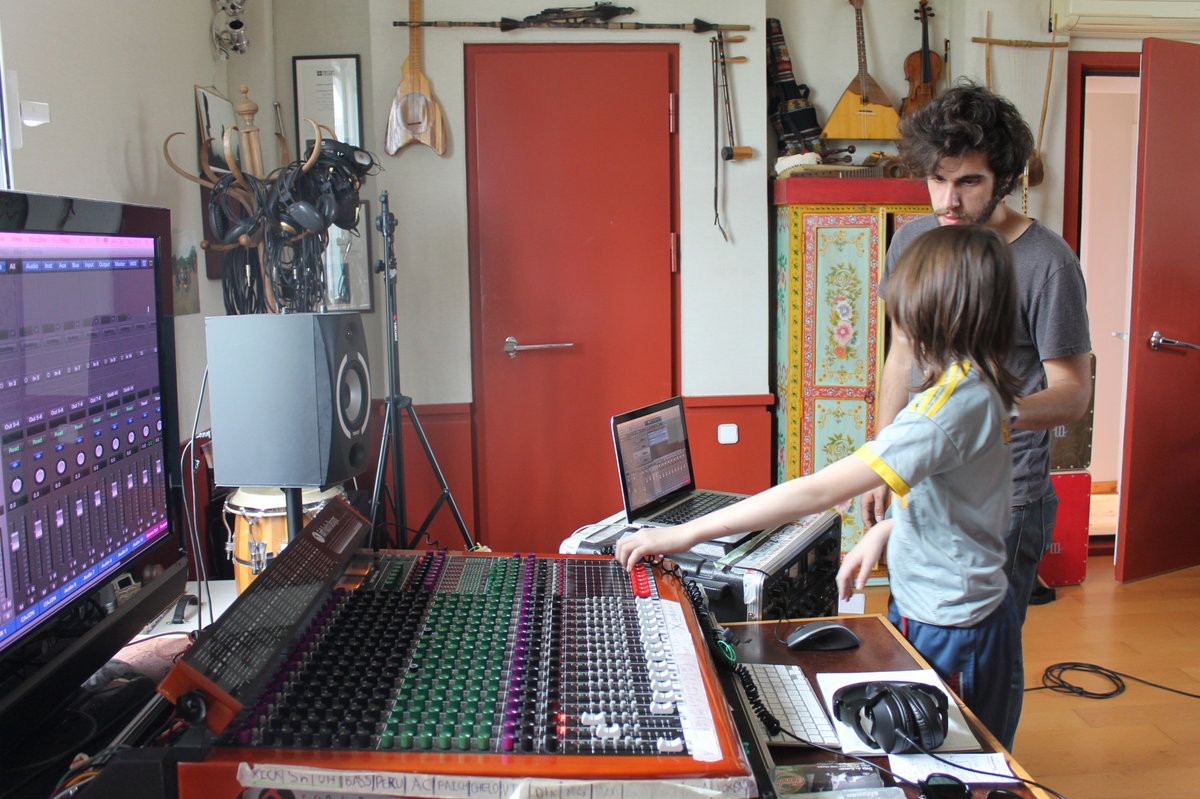
PLANEA, an art and school network, celebrates one year since its launch. During this school year it has been consolidated as a useful tool to incorporate art into the educational sphere, understanding it as an essential and transversal component. Its power of social transformation has been evident in the progress made with teachers, students and families, while the network has shown in recent months its ductility and ability to adapt to the unforeseen situation generated by COVID-19.
A year ago and with a vocation for continuity in the very long term, the PLANEA network began its journey with the aim of expanding and making the transformative practices of art in teaching and, in particular, in public schools commonplace.
PLANEA, the birth of a tool for the future
From the Daniel and Nina Carasso Foundation we have promoted this network, counting on the valuable work of ZEMOS98, who has assumed the role of coordinator at the state level. In addition to them and as mediation nodes, PERMEA and Pedagogías Invisibles, agents with whom the program was conceived from the beginning, have also worked. In the joint work, we established the objective of placing citizen art as a fundamental element in the face of the challenges we face in our daily lives and that together determine the global challenge of the next generations.
Thisvision is the result of several years of work supporting very diverse art and school projects in which we have collected numerous learnings. From there, and thanks to our experience in artistic residencies in schools and institutes*, we have shaped PLANEA. We are aware that, in order to be truly transformative, art and school practices have to be developed in the long term and work in a deep and transversal way – that is, without being limited to a specific experience in the classroom of plastic expression, but serving the entire educational curriculum. PLANEA has thus begun to make tangible the usefulness of art in the different stages of the educational process, providing students, teachers and families with the resources to address the challenges – climate, social, political and systemic – of today’s society.
The objective is, over the next five years, to carry out experiments in art education that are replicable, through the generation of “Art and School Plans” capable of setting objectives in accordance with the center’s projects. In this way, the transformation of schools, cultural institutions and competent public administrations will make it visible that art is not an accessory, but a transversal and necessary element to generate citizen awareness and address the challenges facing our societies. For PLANEA, art is an element that should be present throughout all school stages if we want to contribute to a change in the systemic model.
“Of course we value art for art’s sake,” says Isabelle Le Galo, director for Spain of the FDNC, “but at this time, in which we are going through serious climate crises and social injustice, art is a space of political imagination that we cannot deprive ourselves of if we want to invent caring and healthy societies for all.”
PLANEA, a network of synergies and collaborations
From this premise, we have worked hand in hand with the Ministries of Education of different Autonomous Communities in seven pilot centers, which during this year have highlighted the role of art as a tool for the development of critical spirit and social transformation. Thus, during this year of journey and combining strategy with concrete actions, the network has been established in a series of public schools and institutes in Andalusia, the Valencian Community and the Community of Madrid.
The task of ZEMOS98, PERMEA and Invisible Pedagogies as nodes of mediation between institutions and schools has been one of the most innovative tools and has proven to be irreplaceable.
“In this first course of its history, PLANEA has brought us a lot of enthusiasm and satisfaction, which come hand in hand with the efforts invested in the network,” says Carlos Almela, head of the Foundation’s Citizen Art Program in Spain, who also highlights the tangible results of the work carried out. “In schools and institutes, both the teaching team and the families and students have incorporated art into the day-to-day life of the center based on the specific challenges they detected inside and outside it. This has allowed us to promote projects such as Dance and not gender at the CP Santa Teresa (Valencia), Bioclimatic architecture at the CP San José Obrero (Seville) or the itinerary of Fanzine ecofeminista at the IES Menéndez Pelayo (Madrid)“.
In parallel, the network has been taking shape thanks to work with other key actors. “This has been achieved through meetings with artists, meetings with Ministries and with the Monitoring Commissions in each Autonomous Community,” explains Almela, who adds: “Some of these fruits can already be savored, such as the new website or the training Shall we play? for infant teachers that we have co-designed together with the Reina Sofía Museum“.
To ensure proper monitoring of the network and its scalability, during the five implementation courses the independent and specialised Conecta13 team will work to evaluate the implementation of this initiative. From the Foundation we are convinced that this evaluation will show how the transversal use of art in education has a tangible influence on the development of curriculum competencies, in addition to improving coexistence and the quality of life of the educational community. The results of this evaluation will be public and will be presented year by year to all the agents involved in the network and to any interested party.
A new and unexpected educational scenario
The development of this first year of PLANEA has been decisively influenced by the unforeseen situation caused by COVID-19 and the confinement of recent months. In this context, the classrooms have been emptied, leaving the education system with an uncertain future, to say the least, in which it is not yet known exactly what the return to schools will be like.
This new reality has placed PLANEA in a completely different panorama from the one that existed when the school year began. While the network’s priorities may have been relegated, the network is designed to continually rethink its course. Thus, at this time, reflection is more necessary than ever to dream and plan what are the possible paths in the conjunction of art and school. It is also now that artistic thought cannot only be a complement to the educational curriculum, but a claim to “know how to see” the world as it is.
“It is worth highlighting the response to the pandemic by the centres, which have understood that PLANEA is not a luxury for good times, but an open tool, in constant reflection and, therefore, mouldable to the needs of each context“, stresses Carlos Almela. “Projects such as the one on the cartimaactua.es website show that, when the school does not turn its back on life, educational communities know how to face unprecedented situations such as the one we are going through with commitment, tenacity, work and a lot of art“.
PLANEA has a clear desire to participate in the reconstruction of the world resulting from the pandemic, building networks that bring together the different agents involved and assuming the roles that, according to the situation, correspond to the program.
A future of replicability, monitoring and consolidation
In this new context, PLANEA will continue working to find the most replicable prototypes, which will help grow the art and school network throughout as many public schools as possible in the country.
In this way, the concrete actions that have been carried out throughout this first year will be developed and will continue to bear fruit over the coming months. This is the case, for example, of teacher training, which aims to open spaces for collaboration with various cultural institutions, as is the case of the ¿Jugamos? programme carried out this July, and the case of Atropoloops, which will take place next October at the CEIP San José Obrero in Seville.
The resource center, which will be available online from September, will be an open repository focused on the relationship between art and school that will have manuals, didactic units, guides, tutorials, experiences and useful materials to replicate the processes. In addition to having the productions made in the schools and institutes of the network, this repository will be enriched through calls for participation and a P2P review system. All available resources will be free and freely licensed.
Along the same lines, with the aim of making the models replicable, a PLANEA Notebook will be published in the fourth quarter of 2020, which will follow in the wake of the Carasso Notebooks. This first Notebook will propose a review of the administrative, organizational and educational levers that help to sustain educational innovation projects, particularly in the artistic field.
PEGASE, PLANE’s French brother
PLANEA has its French counterpart, the PEGASE programme, which we have also developed from the Foundation. This programme, which has the collaboration of the Académie de Versailles (a territorial body under the Ministry of Education), also seeks similar objectives, understanding art as a fundamental tool in education to build citizenship.
The 2019-2020 academic year has been the second year of implementation for the French brother of PLANEA, bringing together nearly 3,000 students, 85 teachers and 44 cultural structures through five educational centers. Teams have had to innovate, incorporating remote work during confinement, so that creation and exchange have also been able to continue. PEGASE puts at the centre the success of the students to achieve their objectives, but also citizen commitment, transversality and coexistence in the educational community.
Implementation: upcoming workshops
During this summer, PLANEA has opened the registration periods for two of its next workshops: Shall we play? and Anthropoloops
Play? Artistic Research Processes in Early Childhood Education is focused on the field of teacher training. It is a training activity at the state level in which a research group linked to the Museo Nacional Centro de Arte Reina Sofía has been formed. The results obtained by this research group will become part of the PLANEA Resource Centre and will be freely accessible on its website.
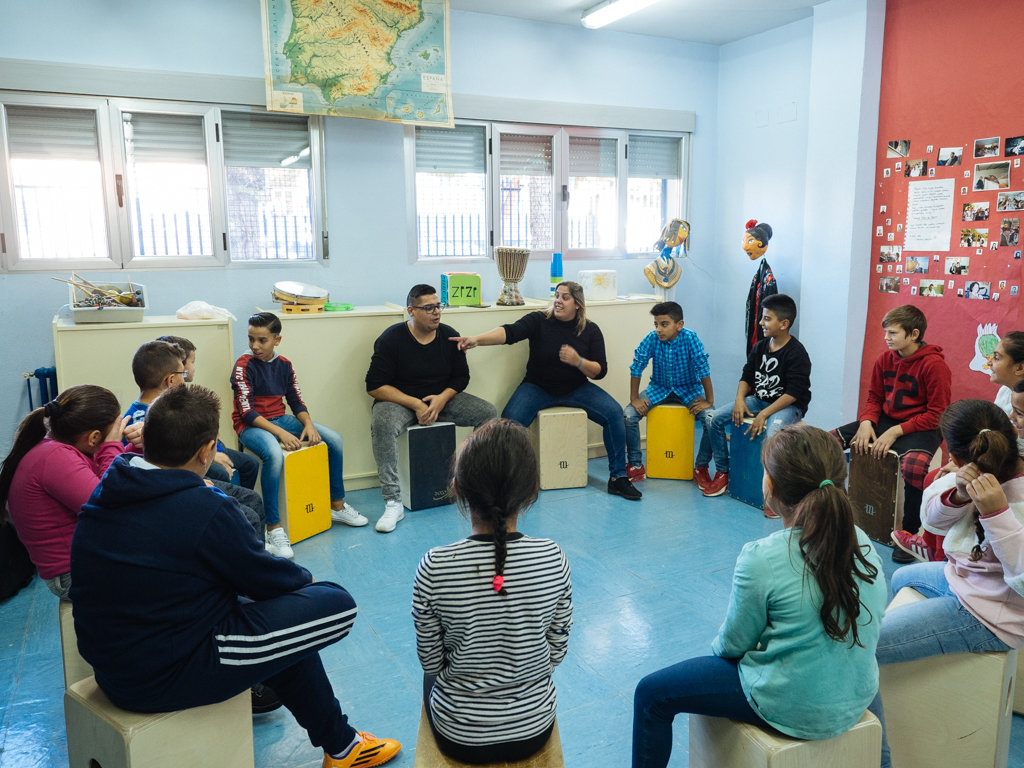
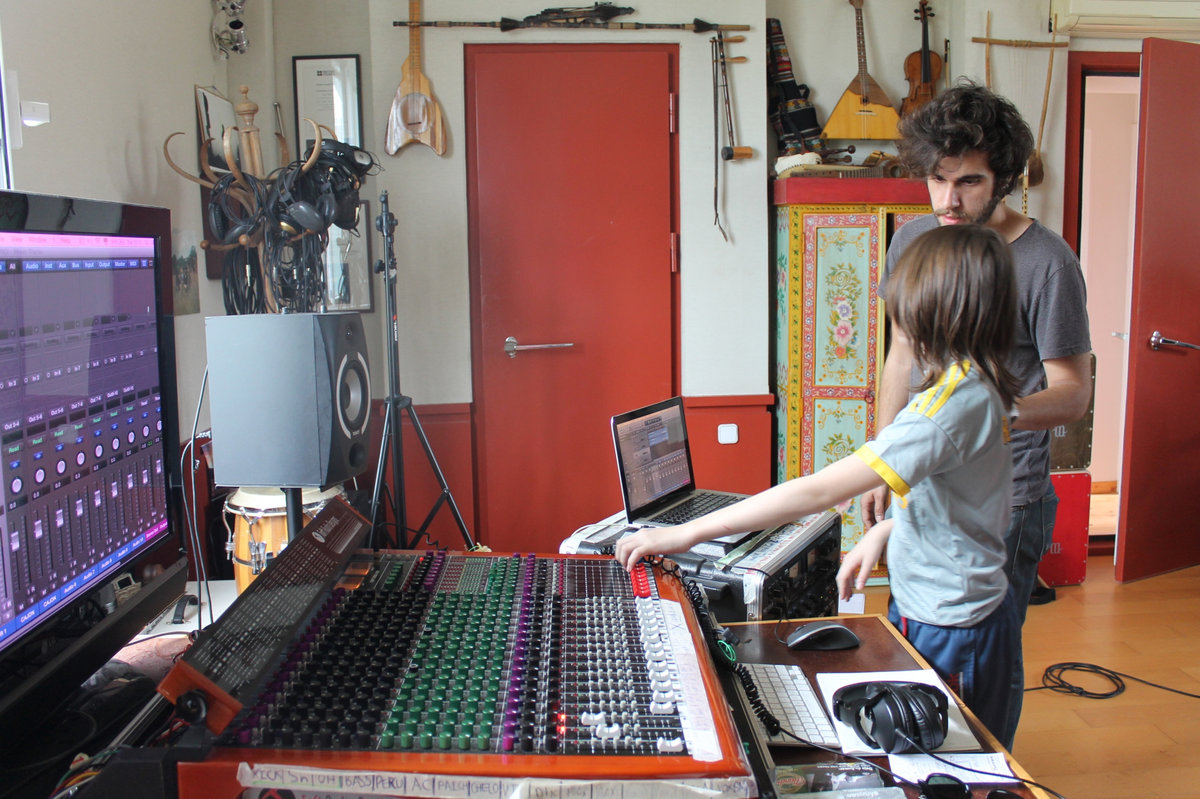
The Antropoloops workshops have been developed at the CEIP San José Obrero in Seville over three years. These workshops are based on remixing as a practice that uses memory and archives as raw material, making it a cornerstone of digital culture, both in music and in the visual arts. It is thus configured in these workshops as a tool to build bridges between different cultures and also between different moments. Remixing is constituted as a social practice of recognition of the common in the different. The ultimate goal is to embrace changes and revolutions that lead to a more inclusive school, where learning methods have points in common with artistic practices. Based on the learnings of Antropoloops and the educational team of the center involved in the project, this training will take place in October in Seville. It will be attended by teachers from any pilot centre in the network and other interested educators or artists. If you are interested, the registration period is open until September 28. To attend, you just have to fill in the self-enrolment form, which you will find here. Places are limited and will be filled in strict order of receipt of enrolments.
*More information about our “Art and Education” learning:
2017 : Video of our call Keys
2018 : Art and School
Meeting 2019 : Art and School
Notebook Our “Art and Education” program


