Socially engaged art
10 November, 2023
Art and School Day: Inspiring New Futures through Art and Culture


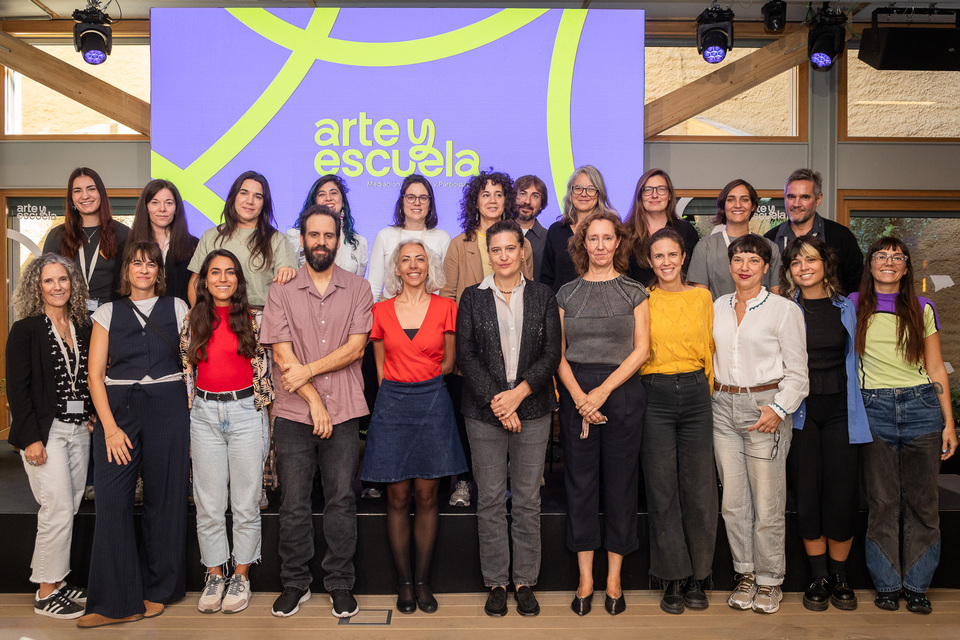
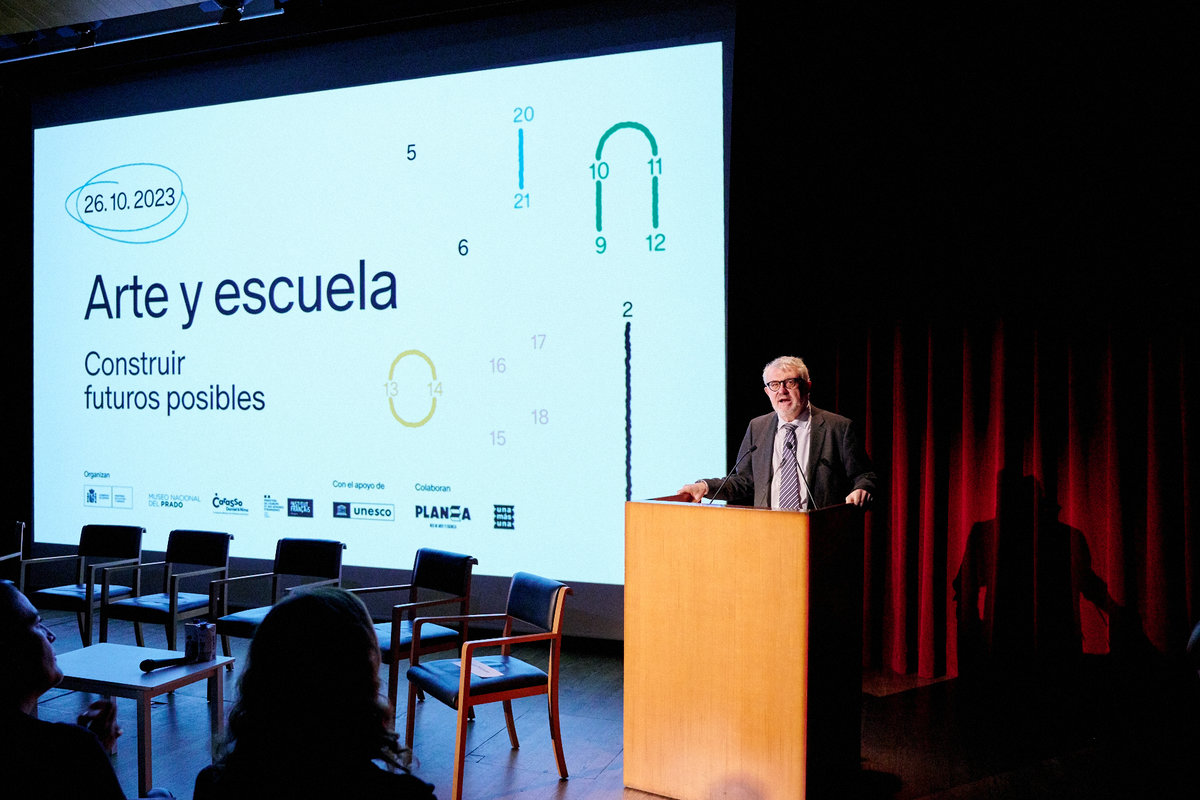
Aware that art education develops memory, the ability to understand and creativity, preparing children to enter adult life, the Foundation organized on October 26, in collaboration with the Prado Museum and the Institut français de España, the Conference “Art and School. Building possible futures”, a meeting to strengthen the indispensable presence of art in the educational system through joint reflection in different discussion tables on public policies, collaboration networks and the presentation of successful experiences in public education.
The Conference “Art and School. Building possible futures” that we held in Madrid on October 26, organized in collaboration with the Prado Museum and the Institut français de España, brought together various national and international professionals from the fields of education, culture and public administrations with the aim of sharing ideas to build an effective artistic and cultural education policy. to imagine together other possible futures and to strengthen the indispensable presence of art and culture in the educational system.
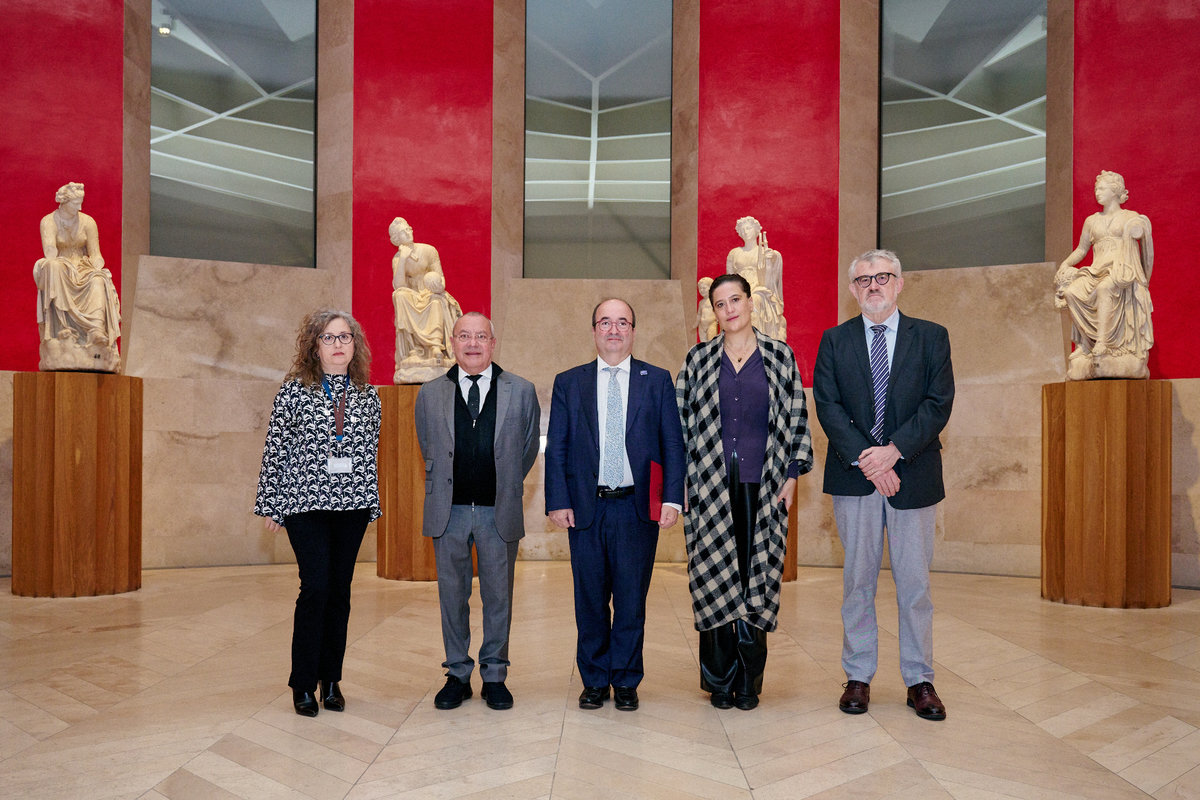
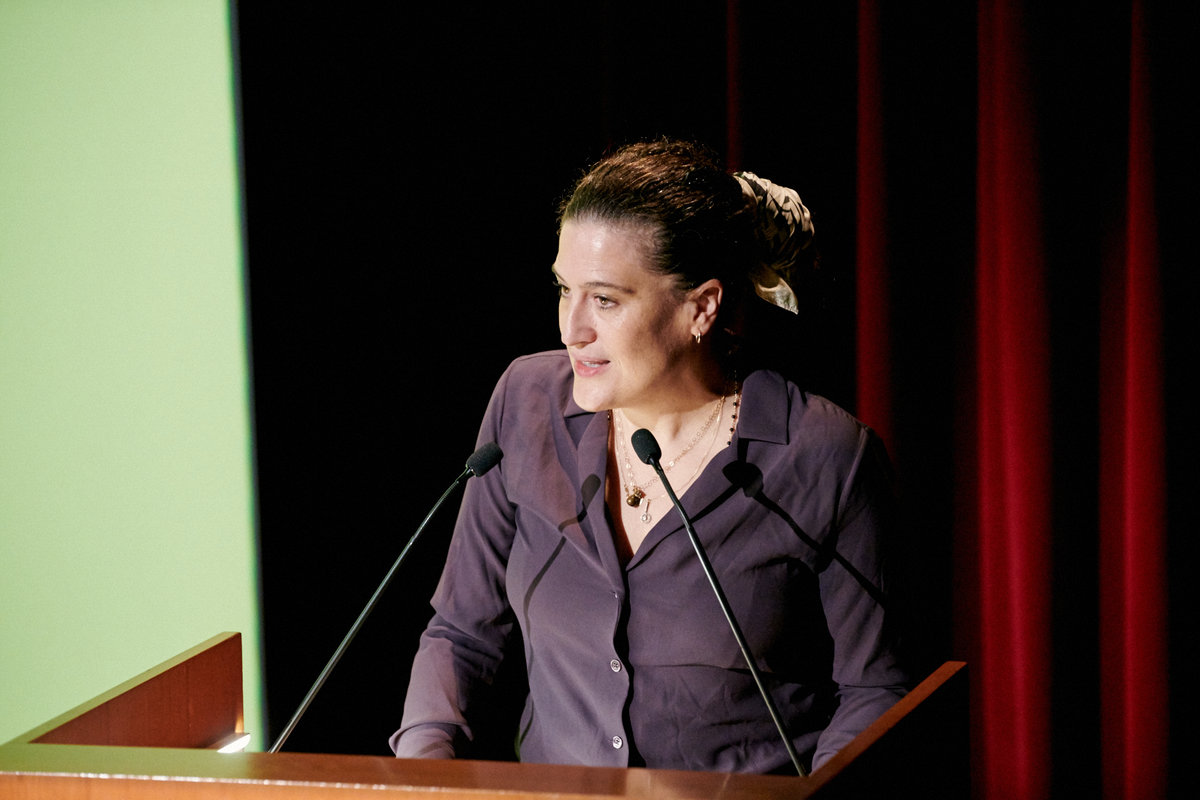
La Jornada, avalada por la UNESCO, se llevó a cabo en el Auditorio y el Claustro del Museo del Prado con la moderación de Mara Peterssen, periodista del programa La Aventura del saber de RTVE, y fue inaugurada por Miguel Falomir, director del Museo del Prado, Lucia Casani, directora general para España de la Fundación Daniel y Nina Carasso, Paola Leoncinni, directora de Políticas Culturales y Desarrollo de la UNESCO, Jean-Michel House, Embajador de Francia en España, y Miquel Iceta, Minister of Culture and Sport of the Government of Spain.
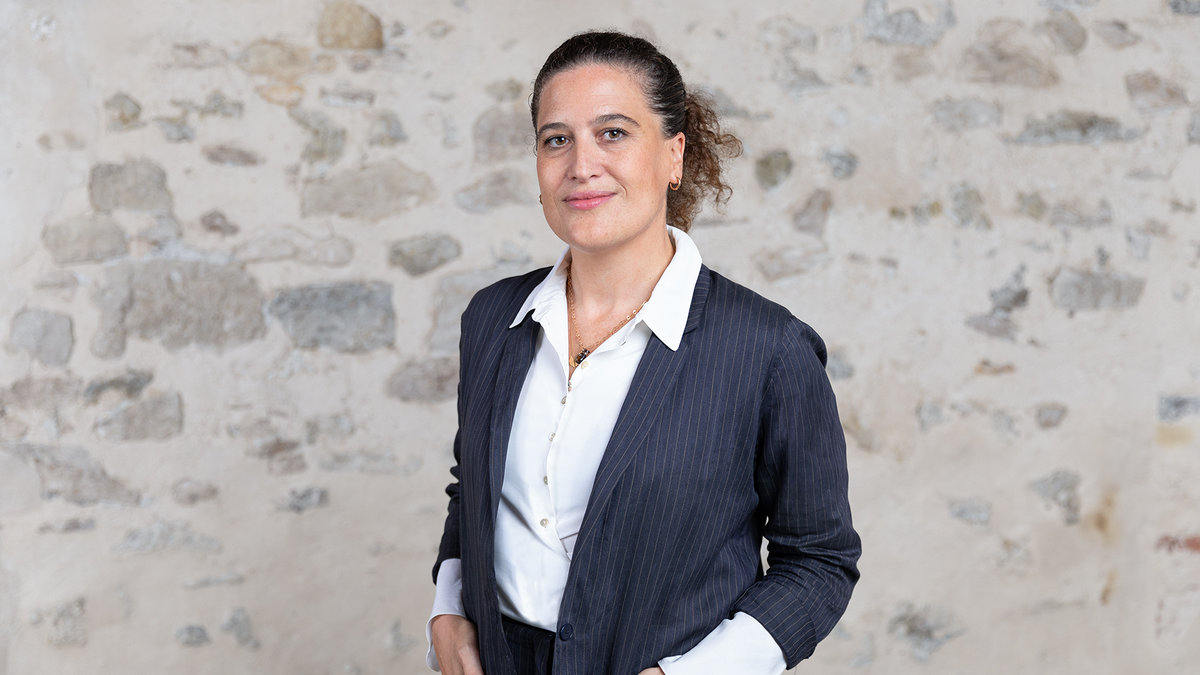
“Art education and culture are not an option, they are a necessity, something fundamental for a promising future. Collaboration between cultural institutions and schools is essential in this regard”
Lucía Casani
General Director of the Daniel and Nina Carasso Foundation
In his speech, Iceta underlined “the importance of art and culture in training and education since only art imagines answers to questions that we do not know and helps citizens to think critically to transform reality”.
After the institutional welcome, the program began with Marie-Christine Bordeaux, Vice President of Culture and Scientific Culture of the University of Grenoble Alpes and member of the Higher Council for Artistic and Cultural Education and the Scientific Council of InsEAC (France), and Sara Brighenti, Deputy Commissioner of the National Plan for the Arts of Portugal, who presented some experiences promoted by the public sector in their respective countries.
Marie-Christine Bordeaux presented the Artistic and Cultural Education Reference – PEAC of the French Higher Council of Programmes that allows to contribute to the construction or strengthening of associations between professionals or agents of education (both inside and outside school hours) and those of the different cultural and artistic fields mobilized around three pillars: the acquisition of knowledge, artistic and scientific practice and the encounter with works and objects of heritage, places of culture and artists and other professionals. “The ability to associate is a fundamental element in developing art education. Litigation is a waste of time and meaning that fundamentally affects children and young people,” said Marie-Christine Bordeaux.
Sara Brighenti, for her part, explained Portugal’s National Arts Plan, a cultural project with 10 years of experience and a very large territorial scale that is carried out transversally in the academic curriculum not only with the aim of multiplying young talent, but also with the goal of developing skills for life in society. to promote a sense of belonging and cultural democracy, to empower individuals, to value links with the territory and to allow everyone to participate together in decision-making. “Culture is not to adorn life, it is part of life. Schools are cultural centers and cultural institutions are educational territories,” said Sara Brighenti.
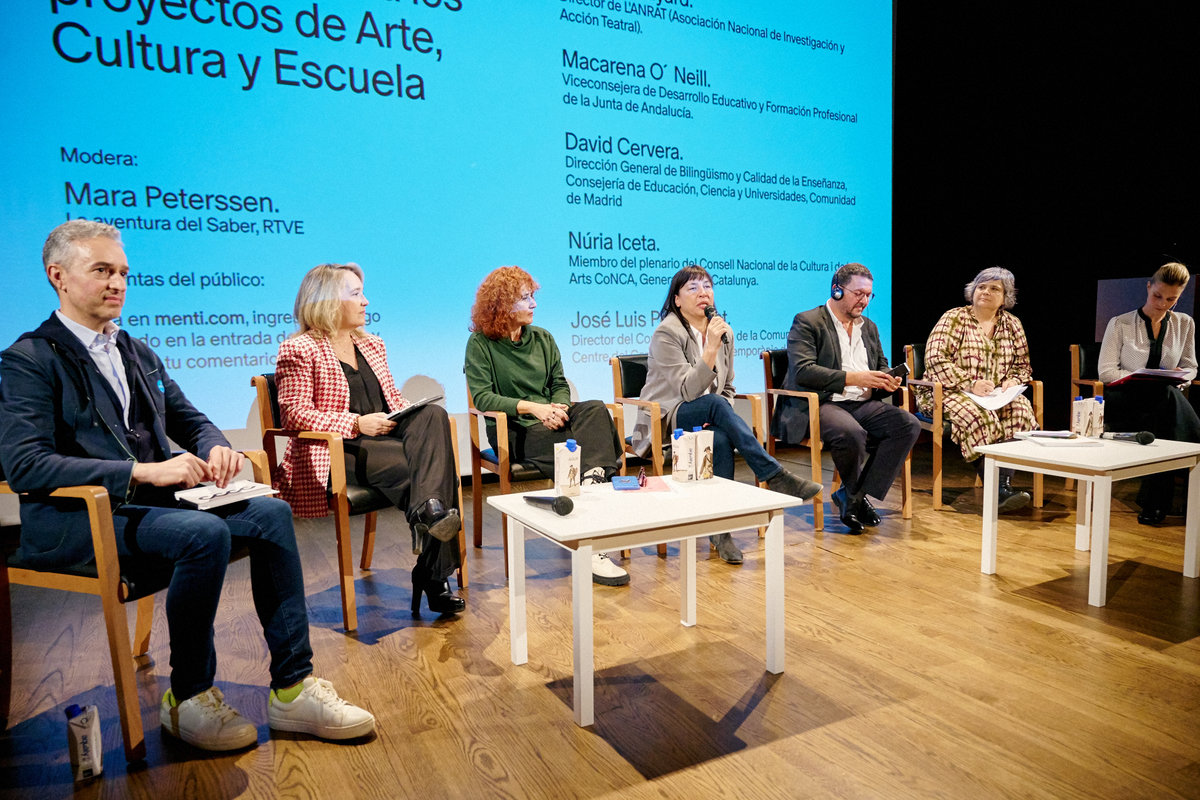
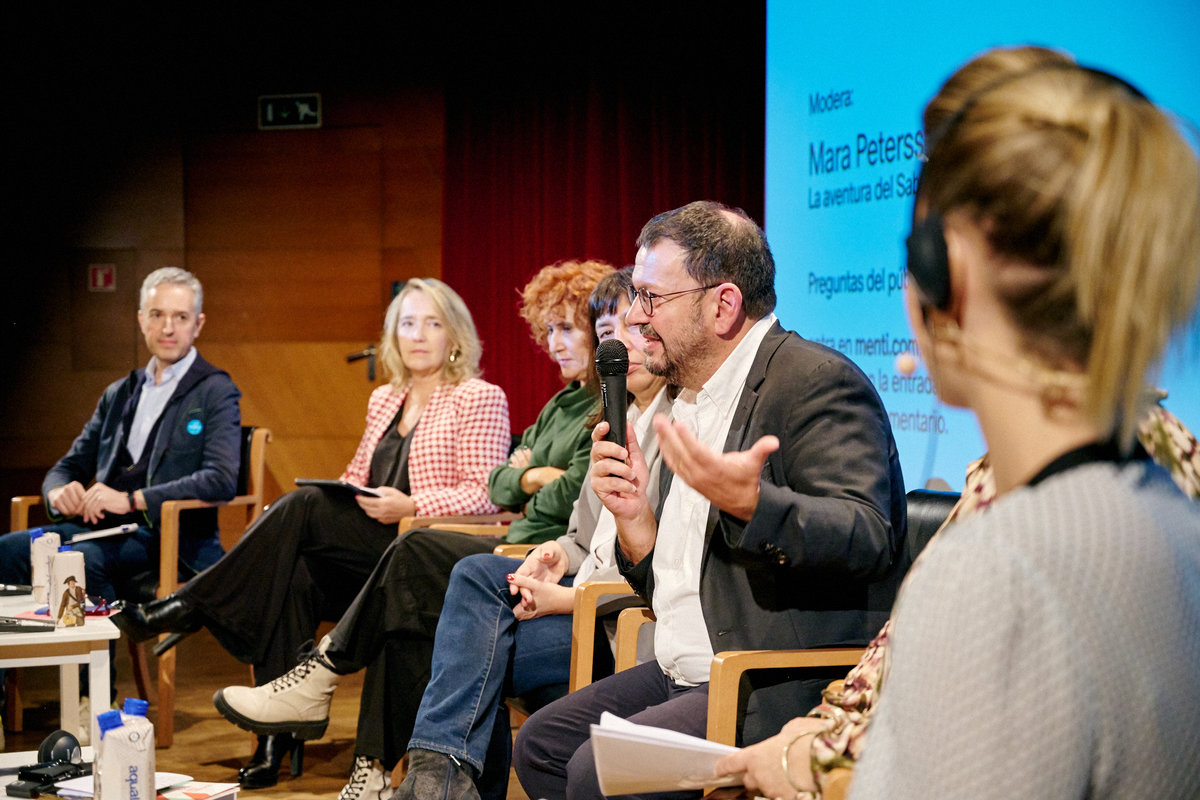
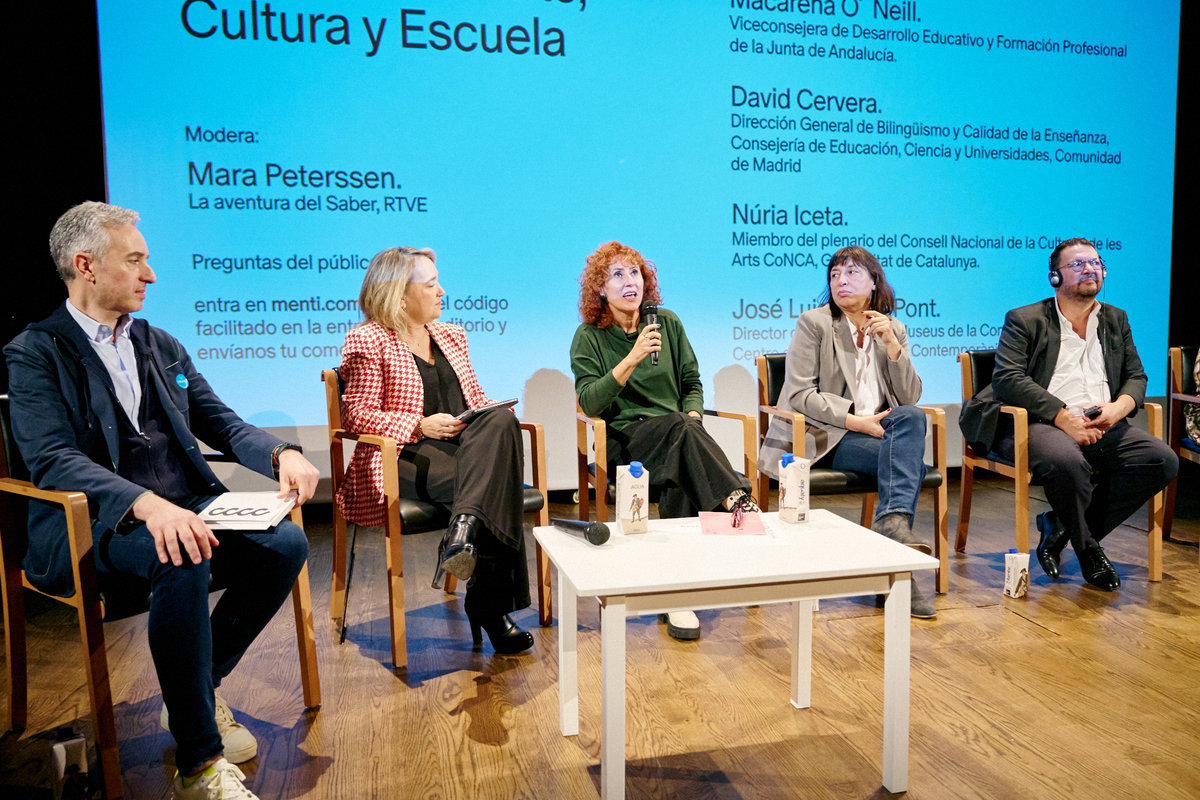
The roundtable Public policies as the basis for change for Art, Culture and School projects, invited institutional representatives of the highest level with the capacity to contribute ideas, suggestions and reflections on proposals that are already underway, and that introduce artistic practices in the classroom from a new dimension.
Philippe Guyard, director of the National Association for Theatre Research and Action, explained the work of L’ANRAT that develops theatrical practices in schools based on three pillars: seeing, doing and interpreting. “A body that practices theater, thinks better,” he said.
Helena Ramos, Deputy Director General of Academic Planning of the Ministry of Education of Spain, pointed out the challenges that the government faces for the effective introduction of art in schools, such as, for example, the creation of teachers with global competence and the transformation of educational centers into open spaces that cooperate with each other generating synergies. “Subjects in school should not be watertight compartments, since all of them are essential for the development of the individual.”
For their part, Macarena O’Neill, Deputy Minister of Educational Development and Vocational Training of the Junta de Andalucía, and Malena Rubio, support technician of the Subdirectorate General of Innovation Programs of the Community of Madrid, discussed the projects that are being carried out in their respective autonomous communities in the field of art and school.
In the first case, the promotion of initiatives that work with and through flamenco in the school curriculum from infant to high school stands out. “Flamenco, intangible heritage of humanity, is the cultural manifestation that generates the most social fabric in Andalusia,” said Macarena O’Neill. In the second case, in the Community of Madrid, programs such as DESLIZAR, together with the Prado Museum; PLANEA, an art and school network that we promote from the Foundation; or LÓVA, an initiative that promotes opera as a vehicle for learning.
Núria Iceta, member of the plenary of the National Council of Culture and Arts CoNCA, of the Generalitat de Catalunya, also highlighted the progress made in this Community by highlighting the Forum of Arts and Education held in 2022 with the aim of sharing experiences and formulating concrete proposals to generate educational policies on the arts from which a Charter of the Arts to Education emerged. with recommendations for the administrations and commitments by them.
José Luis Pérez Pont, director of the Consortium of Museums of the Valencian Community and Centre del Carme Cultura Contemporània de València, wanted to underline how the public administrations are allocating a significant amount of their budget to large exhibitions but are forgetting about education and mediation. “With what we do from the Consortium of Museums of the Valencian Community we manage to turn the school into a cultural center, taking artistic practices to the centers, letting the artists speak and working horizontally with the students,” he explained.
The Conference continued with Networks, programs and plans that universalize Art, Culture and School projects, a second round table that, in this case, presented those projects that are valuing artistic practices in a transversal way from a transformative perspective.
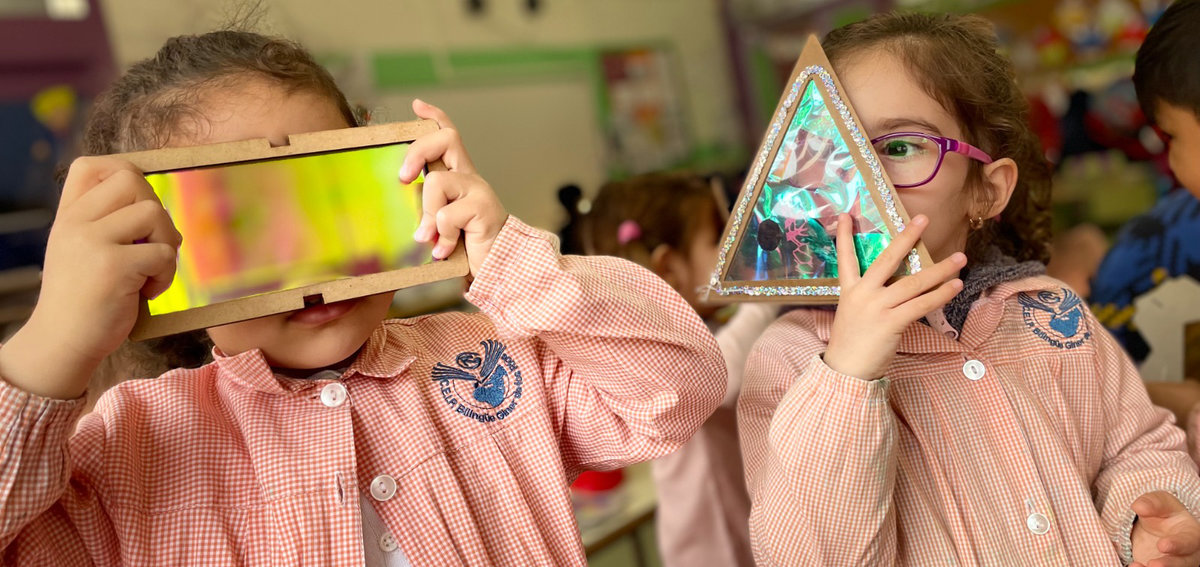
Ana Moreno, General Coordinator of Education at the Museo Nacional del Prado, presented DESLIZAR, a project she is promoting with the support of the Community of Madrid and the collaboration of the Art Explora Foundation, to accompany the educational community and build knowledge through art through collaboration between professionals from various disciplines. “The DESLIZAR project hopes to generate links with the museum and that the students feel that the museum is theirs and that they are also part of the museum,” he says.
Marta Velázquez, head of studies at CEIP Huerta de Santa Marina (Seville), told how they have applied PLANE’s artistic programs in their school , something that has led them to understand each other between different levels (infant, primary, secondary…) and to begin to see and understand education in the same direction. “When you’re dreaming alone, it’s just a dream. When many dream together, it is the beginning of a new reality,” he shared in his speech..
For his part, Rufino Ferreras, head of the Education area of the Thyssen-Bornemisza Museum, showed the attendees what MUSARAÑA consists of, a community of teachers, museum educators and creators interested in researching and seeking new ways of working around art and education. “It is also a shared space and a meeting place between the museum and schools, which has been defined as a space of trust and a support network among its members,” he explained.
Marie Ameller, delegate of the Department of Reading Promotion of the French National Book Center, described some of the initiatives carried out in France to integrate the habit of reading among young people, including writers’ residencies in schools, camps and recreational centers. “It’s about students meeting writers so that they know that behind the books there are people.”
Fran MM Cabeza de Vaca, artist and secondary school teacher, made visible the precariousness that exists in the artistic sector and proposed “listening” as the best way to bring art to the classroom; and, Patrick Facchinetti, general delegate of l’Archipel des Lucioles detailed what this device consists of, which encourages students to go to the cinema to see films that a priori they would not go to see and then reflect on topics of interest social.
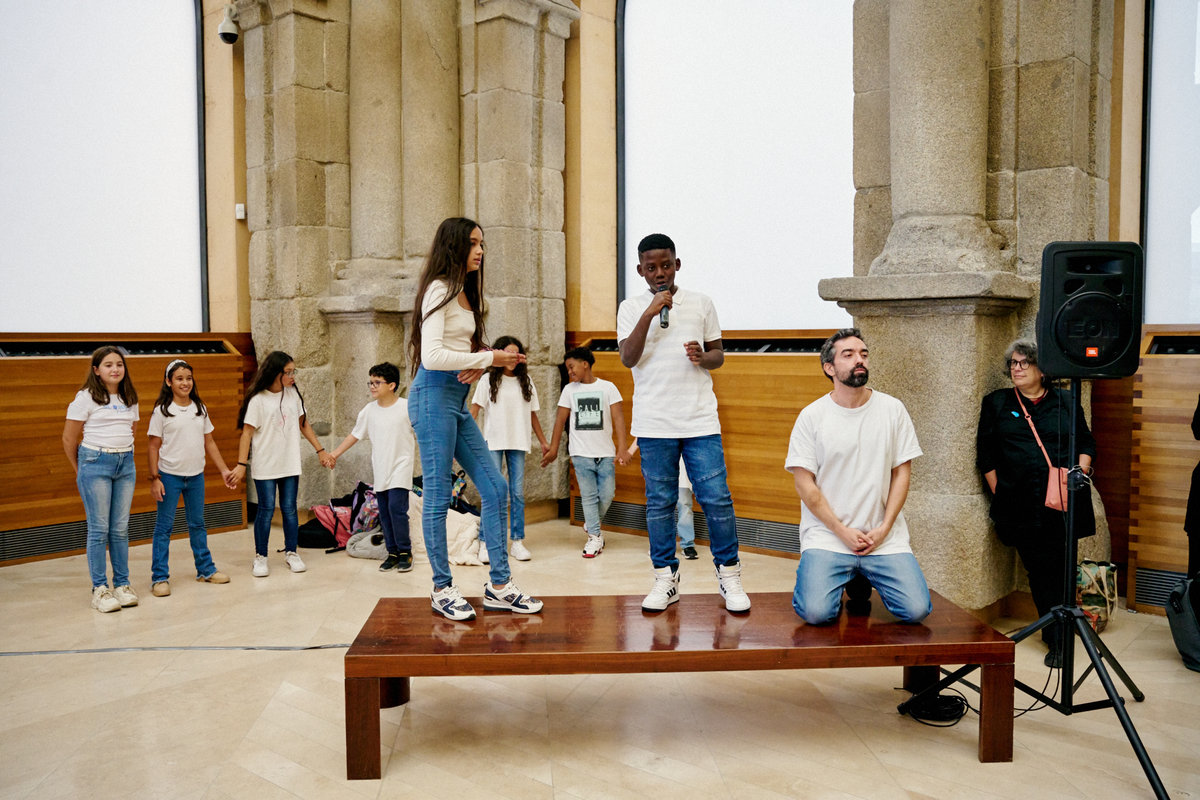
The Conference ended with the artistic and educational action “Drama in Education” promoted by Cross Border and the students of the CEIP República de Chile (Madrid), an example of the project that has been promoted in the last year as part of PLANEA, which encourages joint reflection through theater.
Undoubtedly, this day has left us with great hopes and reflections such as the importance of training teachers in art education, carrying out political and institutional pacts in art and school for a long-term development of this subject or the need to promote these programs so that today’s children are adults interested in and passionate about culture.