Socially engaged art
20 May, 2024
Closer to the full integration of arts education into the education system


For the Daniel and Nina Carasso Foundation, the International Week of Arts Education – which has been commemorated since 2011 every year in the fourth week of May – is an opportunity to remember the positive impacts that the teaching of culture and the arts have on the integral development of students, and its scope as an element of social cohesion.
Cultural and artistic education is at a transcendental moment in countries such as Spain, where it already has great social support and is moving towards greater integration into the education system. The fact that there is a clear recognition of its potential as a factor of personal and social development, in addition to its potential as the backbone of change that allows us to address the current challenges of society, encourages us to continue on this path and to generate alliances.
However, the principles of art education that might seem obvious are not reflected in the educational policies of many countries around the world. Hence, the changes aimed at promoting greater artistic education in Spain are valued.
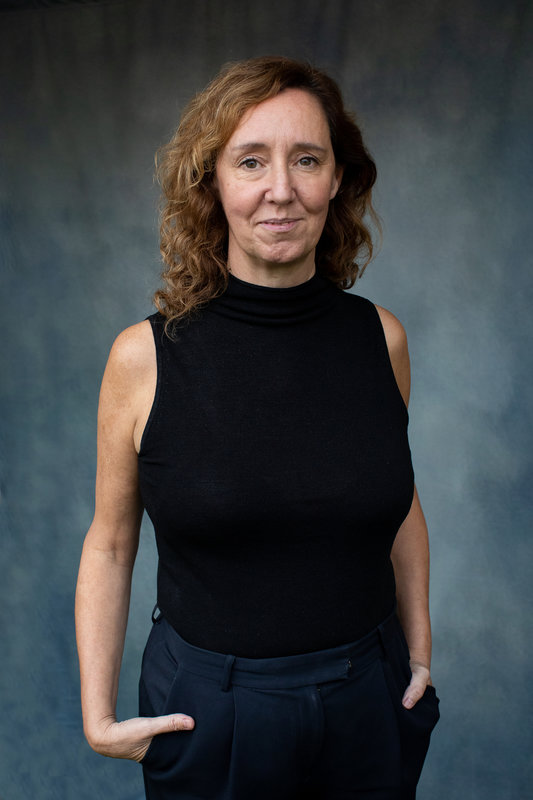
There is much evidence of the decisive role of the presence of art in the educational system. Their role in the development of people and our society is internationally recognised and we are at a transcendent moment to contribute to their integration in the different educational environments and learning contexts.
Pepa Octavio de Toledo
Responsible for the Citizen Art line of the Daniel and Nina Carasso Foundation in Spain
There are numerous proposals, initiatives and plans presented in the last year in Spain, both at the state level and in some Autonomous Communities. In them, the integration of culture and the arts in the educational system is proposed, far beyond art subjects, their incorporation as a transversal school tool and artistic practices at the different levels of formal education.
In some cases, UNESCO’s “For Culture and the Arts in Education” framework is taken as a reference, which serves as a guide for shaping and concretizing cultural and artistic education, so that significant steps are taken along this path and, even more, progress is made in its institutionalization by governments.
In addition to highlighting the role of culture and art in education, this framework explains how to address mainstreaming in the education system, how to create future skills for students, how to contribute to peace and sustainability. It also addresses socio-economic inequalities in education. All of these factors are of great interest to people who occupy decision-making positions related to educational policies.
In this sense, the positive impact of the numerous art and school projects promoted or supported by the Daniel and Nina Carasso Foundation is already a reality. Initiatives that have an impact on transversal practices capable of generating positive changes in students, teachers and social agents close to schools. Among them, and on the occasion of the International Week of Arts Education, we want to share a selection of projects that exemplify how the arts generate greater citizen awareness and make it possible to address the current challenges facing societies with various resources.
Planters, from the ConArte International Association, is an initiative that works with artistic pedagogies to reduce tensions resulting from cultural diversity and introduces learning processes linked to the arts by artists and teachers in schools in Catalonia.
The schools and institutes that are part of the Planters project carry out one hour a week of performing arts, dance or music (string orchestra or ukulele ensemble) with a team made up of teachers and active artists who work in a coordinated manner. Each participating group carries out a two-year cycle, during which the creative process in which students, teachers and artists are co-creators is publicly shared.
The Vibras project, part of the alliance between the Tomillo Foundation and the Kubbo Association, seeks to generate a space for community development in the Madrid neighbourhoods of Usera and Carabanchel, in Madrid, through artistic creation: musical, freestyle, urban dances and a school of musicality.
With this project, work with young people is focused on transversal skills such as critical thinking, collaborative work, self-knowledge or active citizenship.
The Cross Border Project addresses social problems through theatre and trains teachers through artistic-pedagogical projects in the classrooms of their schools. It emerged in New York as a personal project of the playwright and stage director Lucía Miranda.
Made up of a group of artists who work in the field of theater, education and social transformation, it is an action of cultural and social innovation, composed of a theater company, a school of applied theater and a kitchen.
LÓVA (The Opera, a Learning Vehicle) is a project that converts primary education classrooms into opera companies over the course of a complete academic year in which students take on the different functions of a production of this musical genre, create and premiere their own opera in performances in which they do not have the help of adults.
LÓVA is integrated into the curriculum and aims to develop key competences. It is always done during school hours and, in addition to the primary level, its methodology has been adapted to the rest of the educational stages: infant, ESO, special education, baccalaureate, as well as to various social environments such as cultural associations, day centers or prisons.


Finally, one of the most consolidated commitments of the Daniel and Nina Carasso Foundation in the field of art education is PLANEA, an art and school network, made up of educational centres, agents and cultural institutions that are committed to using artistic practices in public schools in a transversal way, located in the territories and with a vocation for generalisation and permanence.
Of the many projects that are currently being carried out in the pilot centres of the network, two stand out:
“The school upside down” is a proposal developed at the educational center La Vereda de Güejar Sierra (Granada), which proposes to transform its spaces into places that invite artistic creation through architecture, design, plastic arts and emotional communication, and they achieve this thanks to methodologies that make the educational community the protagonist in the design and improvement of new play spaces.
“Mobile Adolescence” takes place at the Bovalar Secondary School in Castellón and provides a safe space for students to explore and reflect on their relationship with technology. All this, through the creation of a visual archive that documents their perceptions and serves as a testimony of the complexity of this vital stage.
Along with the concrete projects and aware of the importance of generating spaces for debate and reflection, the Daniel and Nina Carasso Foundation organized last October the Conference “Art and School. Building possible futures”. At this event, national and international professionals from the fields of education, culture and public administrations addressed ideas to build an effective artistic and cultural education policy, as well as to strengthen the indispensable presence of art and culture in the educational system.
In this way, and from different approaches and disciplines, school and art come together for the development and enrichment of the lives of children and young people. In this sense, institutions, the education sector, the cultural community and society must collaborate and continue to create synergies to achieve an arts education that responds to the current challenges of the world. These practices will be the protagonists at the next Mondiacult 2025 summit in Barcelona, where work will continue to continue promoting art education.


