Socially engaged art
09 April, 2021
Community Culture, response in times of crisis


In the last year we have learned to transfer relationships, affections and knowledge to the digital sphere, with the mediation of a screen. A time in which all face-to-face activity has been disrupted, but in which we have seen how culture allows us – even in adverse circumstances – to better understand our reality. In this turbulent context, the aid from the Emergency, Solidarity and Recovery Plan, the Foundation’s programmes and the projects of the “Alliances for a Cultural Democracy 2020” call, born in the context of the pandemic, are now beginning to bear their first fruits by providing examples and lessons of the highest value.
Art has enormous potential to become an engine of citizenship and democracy. One of the ways of conceiving art as an engine of change is revealed when it has a participatory dimension – to varying degrees, from interaction to co-creation – making cultural life contribute a fundamental value to the construction of the common good of a neighborhood, a municipality or even a country.
The citizen as an active agent of the artistic and cultural activity of a community is included in the Universal Declaration of Human Rights (Paragraph 1, art. 27) or in the International Protocol on Economic, Social and Cultural Rights (art. 15.1, a).

“Participation in the cultural life of a society, as a fundamental human right, is extremely valuable. By taking up this dimension, international treaties also propose a roadmap for public policies to guarantee the right to culture.”
Cristina Sáez, project coordinator of Arte Ciudadano
The type of programmes, projects and actions that we have been promoting from the Foundation through the Citizen Art line encompasses all artistic disciplines, seeking to generate and strengthen social links, develop sensitivity and encourage critical thinking. The variety of artistic projects supported is very high, thanks to an experimental approach to art and culture as unique resources in the face of contemporary challenges. Our way of supporting them is not limited to financing, but we also provide support in which we share our previous experiences. From these learnings we would like to talk about the value of a set of artistic practices, such as participatory art or community culture, which, due to the intrinsic fragility of their structures, must be taken care of.
Culture to face social
challengesIn these difficult months, the projects we are working with have made an effort, each from its place of action, not only to promote culture in the affected community, but also to involve this community in the creation, production and dissemination of a cultural offer adapted to its interests and concerns.
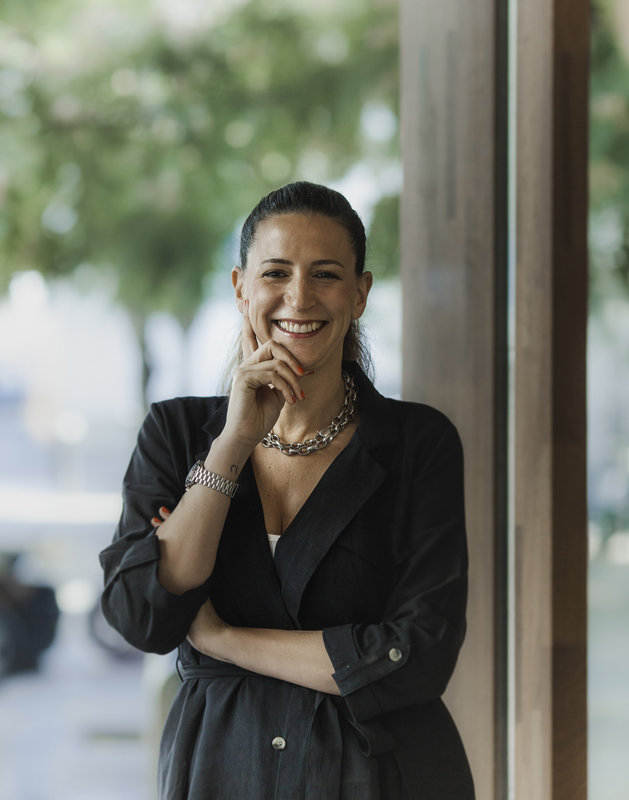
“From the Foundation we support artistic projects that build from dialogue and diversity. Many of them are directly participated in by citizens who find in them a useful and efficient way to work on the problems that affect them. Today, the understanding of the world becomes even more complex and pain profoundly affects society. That is exactly where a community artistic program accompanies, heals and empowers.”
Isabelle Le Galo, director for Spain of the Daniel and Nina Carasso Foundation.
Access to culture for women deprived of liberty, stage creation with adolescents or musical education in communities at risk of social exclusion are cultural practices that exemplify some of the community initiatives that we have accompanied in recent years.
This type of cultural practices, which focus on participation (whether mediation or education activities, community culture projects, applied arts workshops, etc.), generate spaces where, through art, diversity of opinions, contexts, interests and knowledge meet among the people who are part of them.
Along with experiences such as these, the Foundation also supports the generation of networks in the cultural sector that favour the sharing and systematisation of their learning, the recognition of these participatory cultural practices and that multiply the capacity of citizens to dialogue with cultural decision-makers.
Projects such as the Network of Spaces and Agents of Community Culture, Culturarios. Humus de iniciativas culturales en el campo or the CUENCO Network propose new ways of connecting cultural agents, sharing knowledge and working together to make visible the great diversity of participatory initiatives that are developed in our country, contributing decisively to the care of the diversity and plurality of cultural expressions that are designed from and for citizens.

“We conceive art as a transformative tool, as a trigger for the questioning of the present, the creation of new imaginaries and the search for alternatives that allow us to imagine and build an inclusive and sustainable future for all people and for the planet.”
Carlos Almela, head of the Citizen Art programme in Spain
A participatory art has many faces, forms and places and contributes to fostering the conditions for an informed, attentive, useful, courageous and empathetic dialogue. At times like these, when resources are scarce, this type of less conventional practices are called into question at a time when their social utility is at its maximum. At the Foundation, we believe that protecting the immense possibilities of culture as a driver of change and ensuring universal access to it will help our society achieve a better, inclusive and sustainable future.
Photo credits: Red CUENCO / The voice that nobody hears / The Cross Border Project / Colectivo Llámalo H / DaLaNota / Basurama


