Socially engaged art
15 April, 2025
Dying cool questions the taboo around death by hybridizing art and science


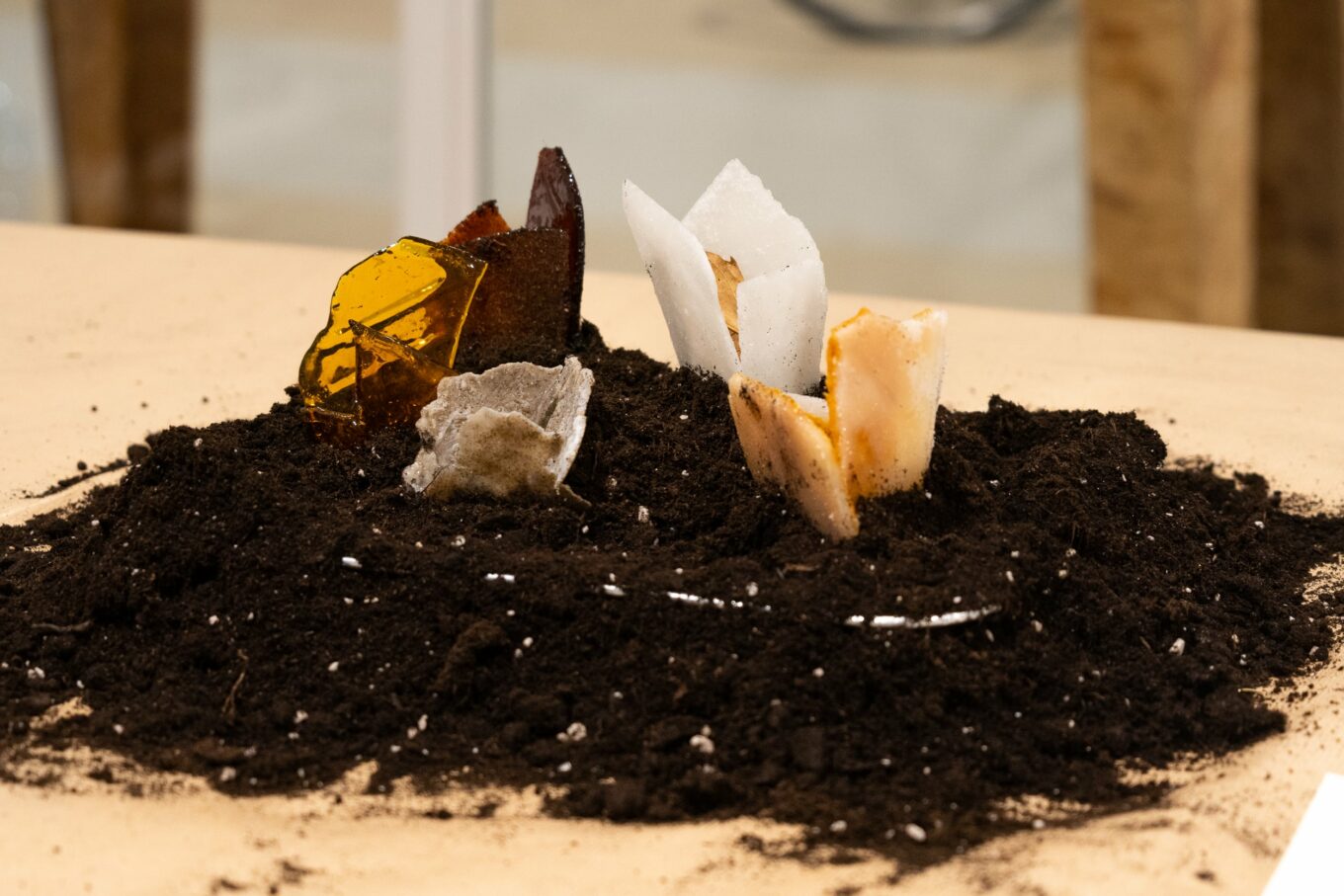
We talked to the DU-DA collective and the biologist Jordi Miralles about the Dying Cool project , which aims to promote ecological awareness and environmental sustainability, as well as transforming the narrative around the concept of death. The project was selected in the fifth edition of our call Composing knowledge to imagine and build sustainable futures , which is aimed at initiatives in which artists, researchers from any scientific discipline and citizens collaborate to address the ecosocial challenges of the present.
In this time of accompaniment, activities and actions have been carried out with design students, with students or with the citizens themselves, they have also approached other projects with which they are collaborating, such as Ecologies of hops or a trip to the United States has been recorded in which the ecosocial relationship and dying has been investigated. To inspire other projects in view of this year’s call for Composing Knowledge to Imagine and Build Sustainable Futures, we spoke with the DU-DA collective, formed by Clara Piazuelo and Sarai Cumplido, and with the biologist Jordi Miralles.
How did you find out about the Compose Knowledge call?
Composing Knowledge is a well-known call within the artistic context in which we work. In fact, we had already applied for the previous call with another very different project with which we became finalists, but we did not win. The following year we tried again with Morir guay and we succeeded.
What has it meant to have the help of the Daniel and Nina Carasso Foundation in this initiative?
A radical qualitative leap. On the one hand, in our structure, since we were previously autonomous and now we have been able to formalize our contracts. This has translated into a lot of stability and a great learning in how to manage a project from the point of view of management. On the other hand, it has allowed us to expand our network of expert collaborators, scale the project and take it to other areas that are not ours such as architecture, design, living arts or biology.
During the time of the project, with which agents have you collaborated to hybridize art and science?
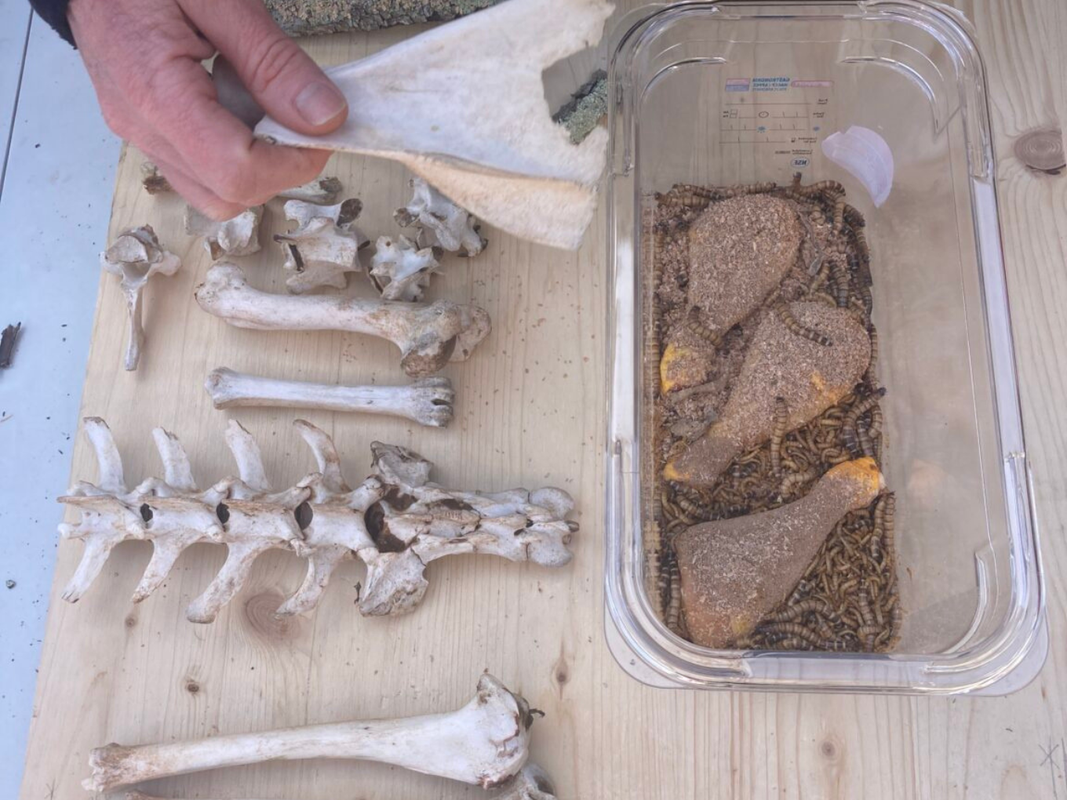
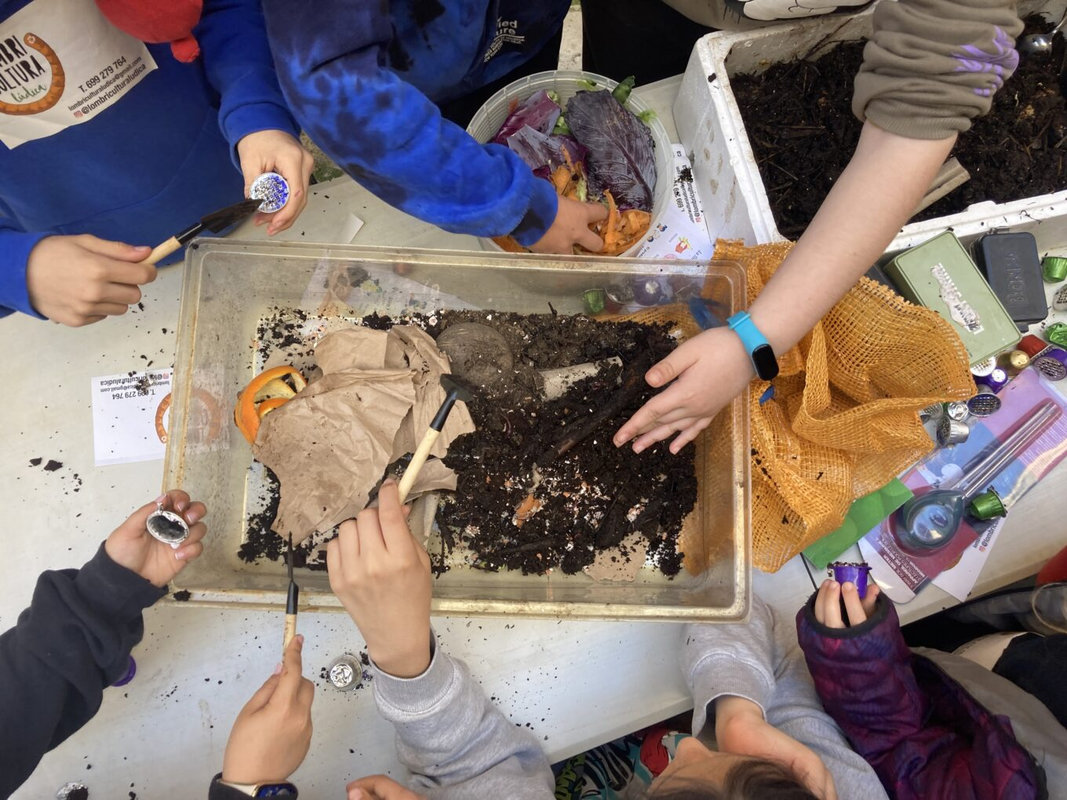
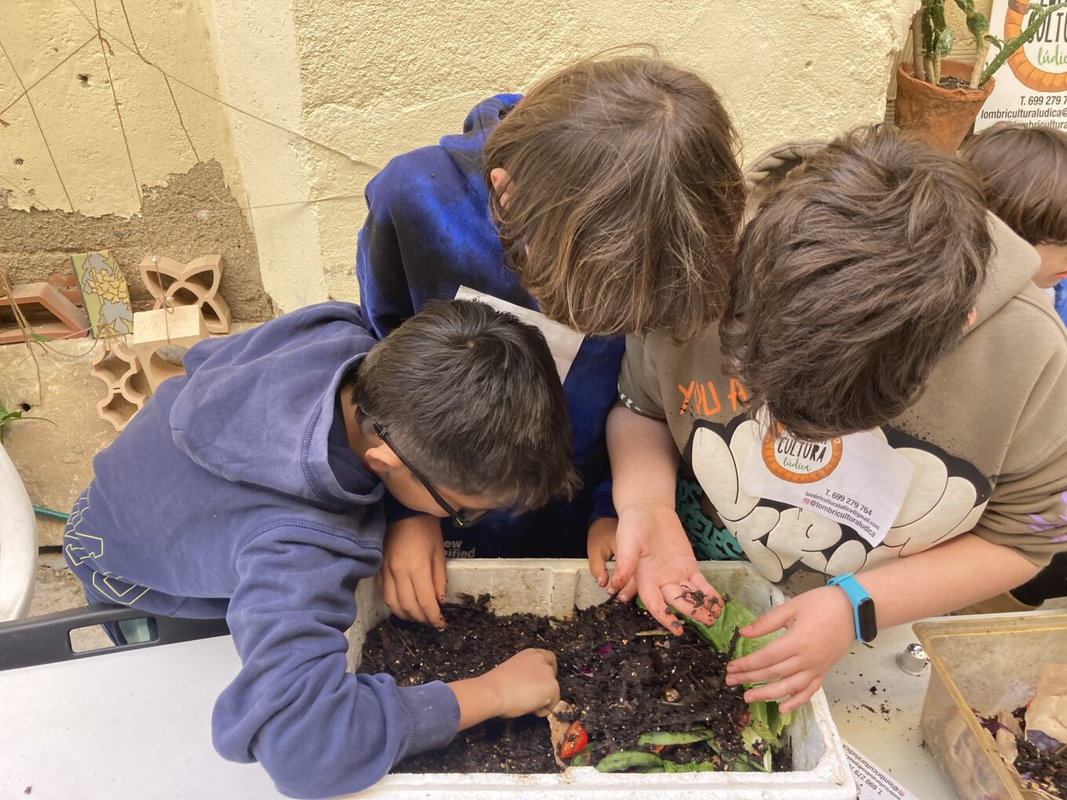
Especially with Jordi Miralles, he is a biologist and activist, he collaborates with us on a regular basis. It was very interesting to do with him ‘The School of the Beyond‘, a program of workshops for children and adolescents, around the notions of loss, rupture, farewell and transformation with an emphasis on natural processes. Jordi taught us the difference between putrefaction, decay and fermentation through direct observation. Thanks to a more scientific approach, we were able to understand what happens to death from a biological point of view, to change to non-human scales, to understand the complexity of life that is born from that which dies, to reconcile with mortality and to understand the cyclicality inherent in life.
How does Dying Cool contribute to creating a more sustainable future?
Death is a profoundly ecological and political issue. In our territory, ecological funerals are not yet legal, and death generates a negative impact on the environment despite being a natural process. Traditional funerals, whether through burial or cremation, are a significant source of carbon emissions. Toxicity comes from the varnishes of coffins, from padding with synthetic textiles, from clothing, from the foams of floral crowns and from the use of formaldehyde and other similar chemicals in thanatopraxy. We die in the same way we live: manipulated by industry to consume unnecessary and polluting products, generating an ecological footprint, disconnected from the earth and the cycles of life.
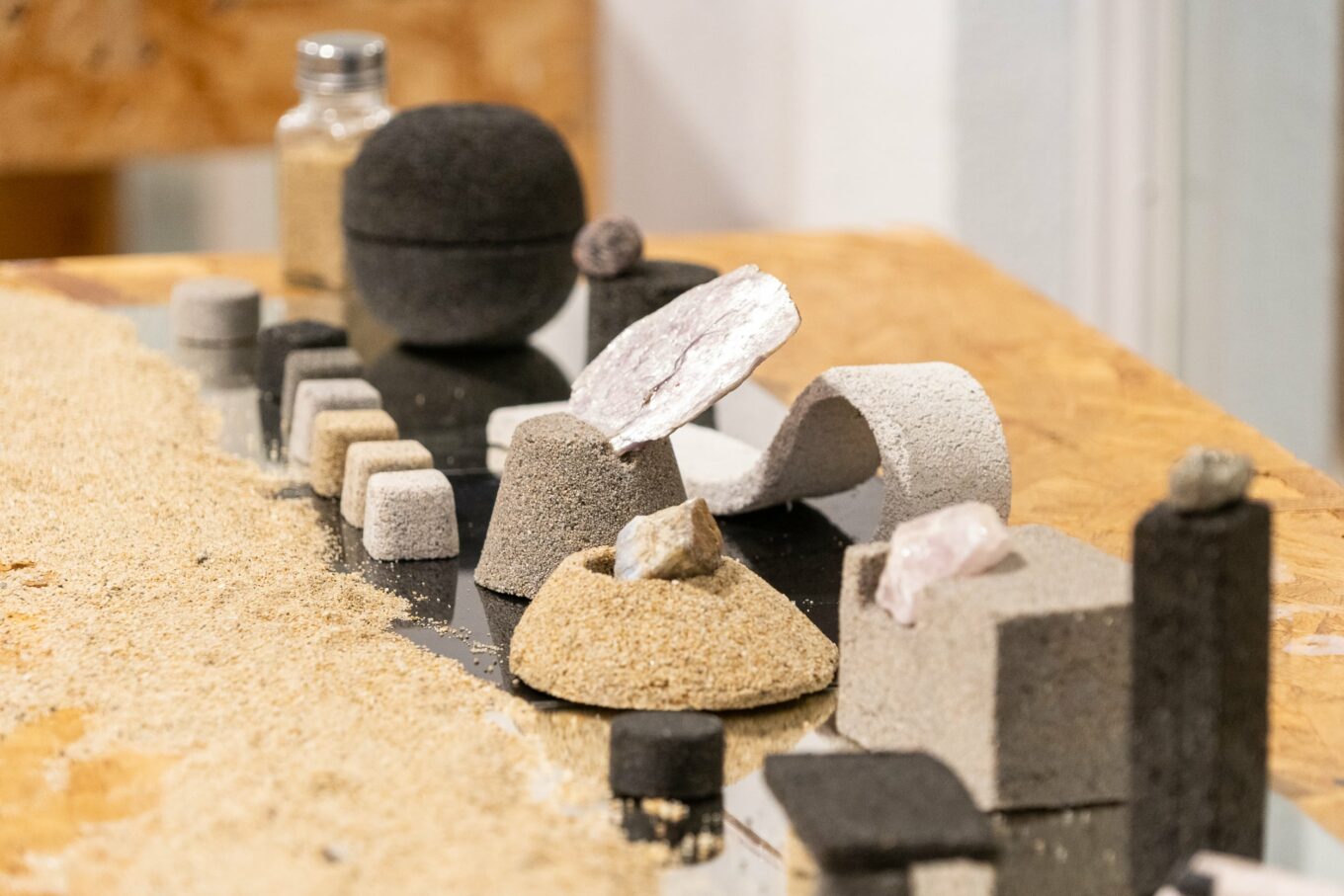
We believe in the power of artistic research to generate new realities that can help repair the planet and the relationship between the global south and the global north. We are interested in experimenting with waste and km 0 bio materials, and with regenerative materials, which not only ensure environmental sustainability, but also reconstitute it. We have also worked on artistic proposals that can inspire more sovereign and ecological funeral ceremonies, for example, in the exhibition ‘Your body, the offering. From the plant the party‘. With this installation, which includes the prototype of a biodegradable and open source coffin, we wanted to open a conversation about the funeral industry and expand the imaginaries of what is possible.
Morir guay is a project that seeks to rethink the prevailing discourses around the concept of death. From what perspectives has this objective been approached?
From an ecofeminist, critical and situated perspective. Ecofeminist because it understands death as part of an interdependent cycle between human and non-human beings, questioning the separation between nature and culture. Critical because it denounces the funeral industry and its commodification of death, questioning how it has turned mourning and rituals into consumer products. It also discusses the environmental impact of conventional funeral practices and the medicalization of the end of life, opening up space to imagine other ways of dying that are more conscious, accessible, and sustainable. And situated because it starts from specific contexts, recognizing that the practices and meanings of death vary according to history, geography and power relations.
What are the keys to developing a project that combines art, creation and ecology in relation to dying?
The first key is to have the necessary resources, since it is still a very taboo subject, and which also questions the status quo of the funeral industry, it is not easy. On the other hand, addressing the question of how to redesign death requires a holistic approach, it is essential to adopt an interdisciplinary approach that integrates knowledge from different areas and for this we have had collaborating experts in several fields. It is also key to incorporate a critical and speculative perspective that questions the dominant narratives on death, opening space to imagine alternatives outside the industrial and commodified logic. To carry it out, communities, experts and personal experiences have been involved so that the proposals are meaningful and situated. The ritual and symbolic dimension plays an essential role, art helps us to create new languages and forms of farewell that respond to the emotional and cultural needs of each context. Finally, experimentation, curiosity, and play are powerful tools for opening up difficult conversations and facilitating a more accessible and transformative approach to death.
What kind of actions have been put in place around the project and what have they borne fruit?
The first action was in December 2023 with a group of students from the “Design Research” master’s degree. ‘Speculative Design Laboratory for Eco-Funerals‘ was based on the questions: Can design generate practices that encourage greener funeral ceremonies? What objects do we need in our farewell rituals and what other materials can be designed?
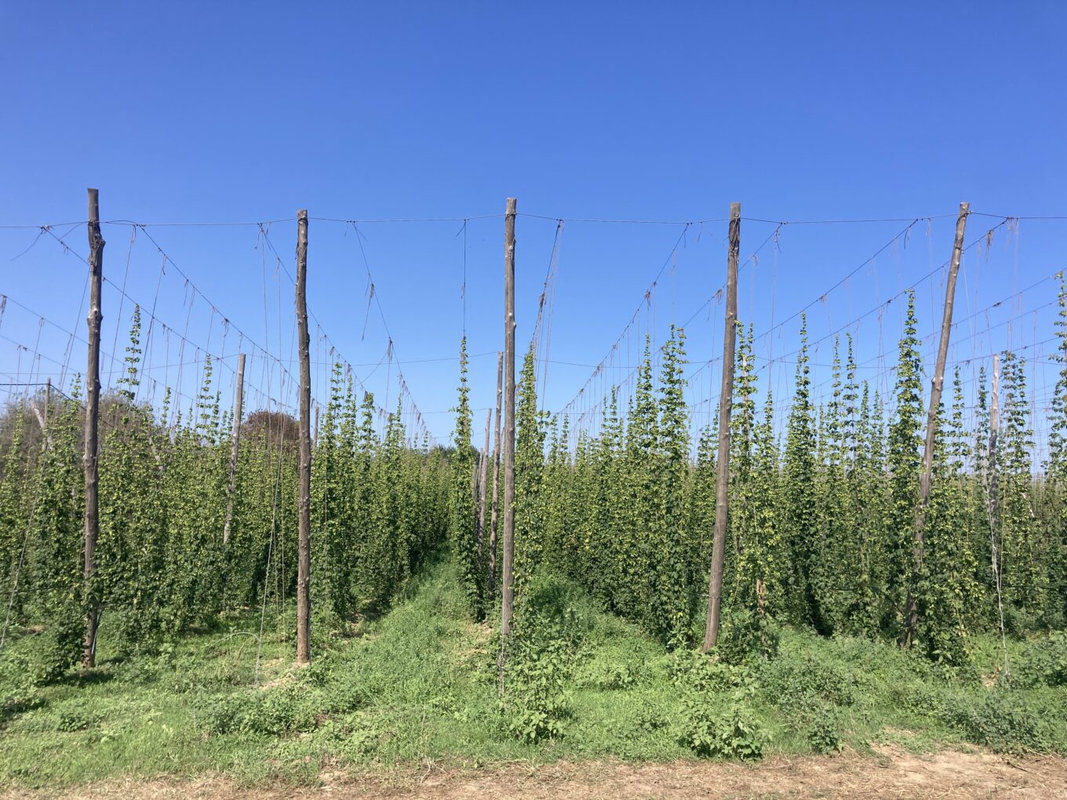
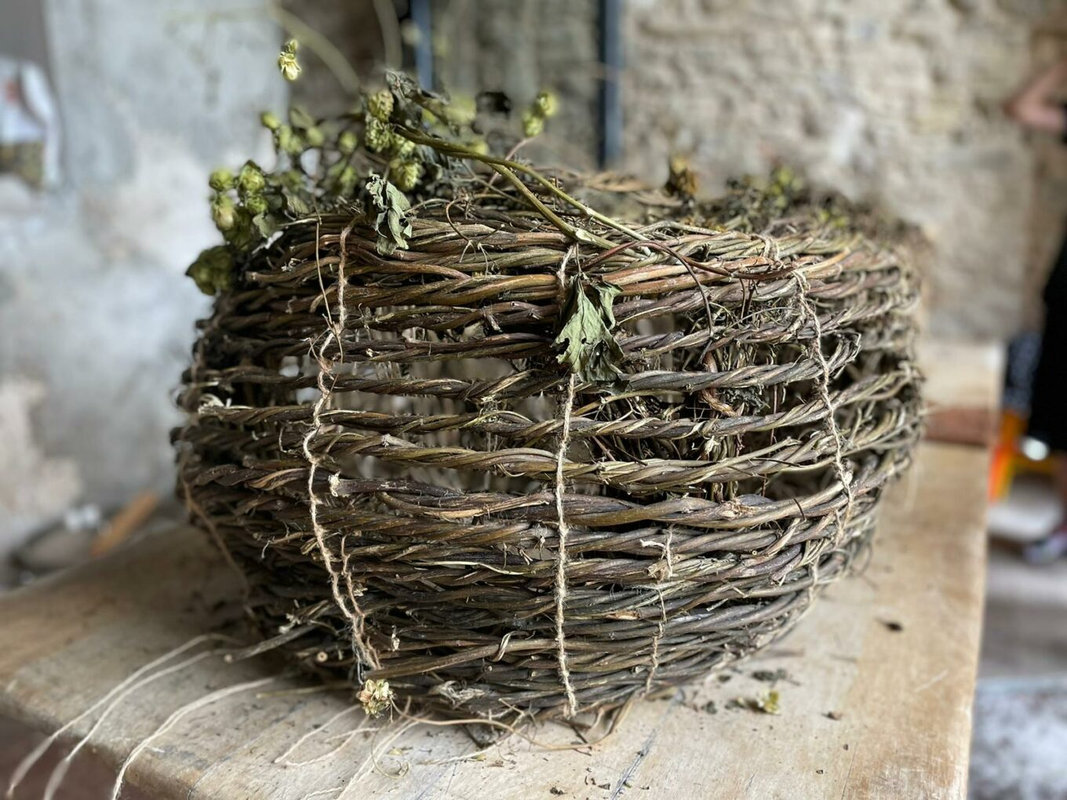
This line of research around materials continued in 2024 with the ‘Biomaterials Research Laboratory with the Hop Plant‘ in Mieres (Girona), under the premise of prototyping a biodegradable coffin made only from the plant’s waste. The result was part of an installation that was exhibited in the exhibition at the Santa Monica Art Center. In 2024 we also carried out ‘The School of the Más Acá‘ to approach death with curiosity and from a non-adult-centric perspective. That same summer we traveled to the United States, where ecological funerals are legal, there we generated audiovisual material that can be seen in the traveling exhibition ‘Flowers will be born from this flesh’ and is being edited as a documentary feature film.
In 2025 we are carrying out the Tanatolab, a program of meetings in which we show content from our audiovisual archive and give practical tools to relate to death with greater sovereignty and from an ecofeminist perspective. Finally, we are experimenting with performative languages and with the most personal part of the research, which we have called ‘If blood is life‘. This action will premiere in autumn 2025 as part of the ‘Making Stories’ cycle.
What challenges are posed for the processes to be replicable among citizens?
The main challenges are accessibility and economics, as many ecological and community alternatives around death are still expensive or difficult to implement within the current funeral system. There is also the challenge of regulations and bureaucracy, legislation varies according to the country, but in ours they are not yet legal. Another obstacle is the cultural change and the persistence of the taboo around death, which is why it is essential to generate spaces for dialogue and intergenerational pedagogical projects to normalize these conversations. In addition, for these practices to be sustainable over time, it is necessary to build support networks that facilitate the accompaniment, organization and transmission of knowledge.
What are the prospects for the development of Morir guay in the medium and long term?
During this process, lines of implementation and really interesting collaborations have been opened that allow us to look with optimism and great enthusiasm at the future development of Morir guay. Currently, we are designing the project that will allow a greater informative and pedagogical impact, it is a school that will also be a digital platform and an active community from sharing knowledge and training in relation to the cycles of life and death, and more sovereign and ecological ways of coexisting.
We are also editing a documentary film from all the material shot on our trip in search of references in the US last summer. The entire editing team is very motivated with the cinematic possibilities of the material, so we are very happy and grateful.
Submit your project to the call for 'Composing knowledge to imagine and build sustainable futures'