Sustainable food
25 May, 2021
Health, a fundamental dimension in sustainable food


Sustainable food must not only be environmentally friendly, but must also be sustainable in its economic, social, human and health dimensions. We begin a series of articles in which we make visible the links between food and other contemporary challenges and how they can help us build other possible and better nourished futures.
At the Daniel and Nina Carasso Foundation we work with the conviction that the major health problems and, most likely, the proven risk of health collapse in the future, are the consequence of an unsustainable and balanced diet. This is driving us to launch initiatives such as the Alimentta think tank, the La Mesa social lab or the “Hemengoak – De Aquí” Menus project in Pamplona (Navarra).
Ludwig Feuerbach’s phrase “we are what we eat” has been repeated ad nauseam, but it has not ceased to be true since the philosopher wrote it in the nineteenth century. Today it is truer than ever because not only at an individual level we are what we eat, but – in the context of the climate emergency – food is a key point at a social and environmental level.
Numerous scientific studies have shown that a large part of the diseases in the developed world come from an incorrect diet (IPES-Food, 2017; Olea, 2019). We are referring to problems that go far beyond hypertension, cholesterol or obesity, the other great pandemic of our time. Science has shown in recent decades that highly processed foods also contribute to an increase in thyroid problems, infertility or a higher incidence of diseases such as cancer. The abuse of sweeteners, flavour enhancers and salt, the use of pesticides that remain in the final product or the excessive use of plastics in packaging – which end up becoming microplastics in our oceans and in our food – have a direct impact on our health and our planet (Olea, 2019; Bollaín Vicente, 2019).
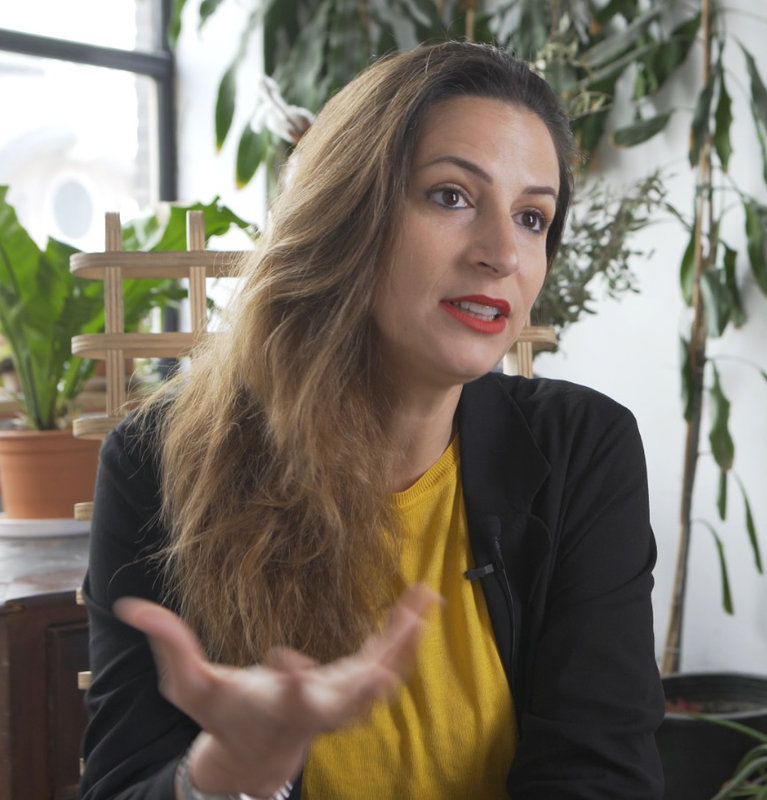
“The health problems derived from ultra-processed food in long production chains have a strong economic impact on public health systems, which will be forced to assume a drastic increase in food-related diseases that, today, we still have time to tackle.”
ISABELLE LE GALO, DIRECTOR FOR SPAIN OF THE DANIEL FOUNDATION AND NINA CARASSO
Faced with this model, at the Daniel and Nina Carasso Foundation we dedicate our efforts, from the Sustainable Food line, to promoting the transition towards sustainable food systems, not only at an environmental level but also socially and humanly. A sustainable diet is, by definition, healthy since this is one more dimension of sustainability.
From this perspective, in 2018 we promoted the creation of the Alimentta think tank , whose first fruits are beginning to sprout. This initiative arises from the need to promote multidisciplinary and systemic research in food to support the generation of knowledge that contributes to the development of a more resilient and fair food system. We strongly believe in the importance of research to develop solutions that allow us to build a path that concerns us all.

“The links between food and health are close and deep. Taking care of our health requires taking care of our diet and, ultimately, our ecosystems. When we choose sustainable food, we are committed to food derived from production systems that are respectful of the environment and people, from production to consumption”.
Pilar Martínez, Sustainable Food Project Coordinator - Spain
We have also reinforced this commitment through the launch of the first edition of the Daniel Carasso Fellowship, an initiative to support research in sustainable food in Spain, aimed at young researchers, of any nationality and discipline, who want to develop their project in a Spanish research centre or university.
Contributing to change with expert knowledge: Alimentta’s experience
We can all create value in the food chain if we take into account the health of people and the sustainability of ecosystems in our decisions. We are talking not only about consumption decisions, but also about production and extraction, as well as distribution and governance models that, together, shape the food system.
The Alimentta think tank faces this challenge by providing expert and multidisciplinary knowledge so that everyone’s actions contribute to the development of a food system that resolves the dysfunctionalities of the current model.
Alimentta’s driving force is made up of experts in seemingly distant, yet highly complementary disciplines that allow them to span the food chain. This diversity of approaches allows knowledge to be contrasted, adding rigor to the information they produce and disseminate. Through different working groups, they promote holistic research on food, without forgetting the fundamental role that food plays in relation to health, incorporating experts in medicine and nutrition into their research team.

“All of us, producers and health workers, agree that food transformation is urgent, understood as a wide range of unprecedented measures taken by all sectors and at all levels of the food system in order to normalize healthy diets based on sustainable food systems. Health and sustainability must go hand in hand.”
Nicolás Olea, Professor of Radiology and Physical Medicine at the University of Granada
One of the initiatives they are currently working on is the proposal of the sustainable Mediterranean diet, for the planet and people’s health in the long term, taking into account the current state of pollution of local productive ecosystems and the ways of producing food in the Mediterranean context.
> Discover the resources available on their website
> Read the article “Diet as a healthy, sustainable and responsible act”

Healthy and sustainable food for the little ones: Hemengoak menus
To change the way we eat, it is also necessary to promote new approaches through education and how we have acquired the eating habits that we must change (FAROS, 2016). Early childhood is the ideal time to influence the diet of the future, the time to start complementary feeding. The project ‘Menus Hemengoak – ‘From Here’, which we accompany together with the Pamplona City Council, was born with the idea of offering, in the food of all municipal nursery schools in Pamplona, sustainable, organic, fresh, seasonal and local quality products. Through a systemic approach, the project promotes healthy eating habits for children from 0 to 3 years old and their families, while contributing to the articulation and strengthening of the sector of small local agroecological producers.
Following the signing of the Milan Pact by the Pamplona City Council, the council committed to developing inclusive, safe food systems to preserve biodiversity and, at the same time, mitigate the effects of climate change, but also to promote new eating and health habits to fight against non-communicable diseases associated with inadequate diets.
From this commitment was born the Hemengoak Menus – Hence initiative, a project that we accompany from the Foundation during its implementation and that has applied a program to transform the food model offered in municipal nursery schools (from 0 to 3 years old) in Pamplona.

“If children get used to eating well and parents and their families know how to get children to eat well, this in the long run is going to yield and children are going to eat better, healthier, and so are their families.”
Edurne Ciriza, pediatrician. Navarre Association of Paediatrics
The objective of this initiative has been to improve the diet of children through a healthier and more sustainable menu. The menus, designed by Menjadors Ecologics and endorsed by the Navarre Association of Paediatrics, propose a basis that promotes a good relationship with food, from early childhood, giving them the possibility of tasting and becoming familiar with nutritious and environmentally friendly ingredients, at a time of growth that will decisively mark their eating habits of the future. At the same time, continuous work has been carried out with the families integrated in the project, through paediatric advice, talks and informative brochures that allow them to understand the benefits of a sustainable diet on the health of their children.
> Learn more about Hemengoak Menus – From here
> Check out the “Guide to healthy and sustainable meals with the family”

For universal access to sustainable food: the social lab La Mesa
In this context, it is also essential to ensure food security, which is developed in two aspects: food safety, which refers to the certainty that what reaches our plate is safe and good for our health; and food security, which addresses the ability to access such healthy food for all people and, especially for those who are in conditions of poverty and social exclusion.
There are numerous treaties, agreements and jurisprudence that endorse the right to health and adequate food, from the Universal Declaration of Human Rights (art. 24) to the International Covenant on Economic, Social and Cultural Rights (art. 11) or the voluntary guidelines for the right to adequate food approved by FAO in 2004. Unequal access to healthy and sustainable food – also known as food insecurity – is a consequence of social differences and makes them even more evident and, in addition, has an impact on human dignity (Díaz-Mendez, 2018). This has been the object of study of the social lab La Mesa, an initiative that is based on collective intelligence to provide solutions that address the problem of access to food and promote its implementation.
The Roundtable is based on a cooperation methodology that encourages the meeting of different actors to address a specific problem identified and find solutions through multidisciplinary collaboration.
The implementation of this initiative is based on an identified problem: the access of vulnerable populations to sustainable food, especially groups of women in charge of families in situations of economic vulnerability. As a result of this challenge, a joint research and reflection work was launched to understand the causes of this limitation, which is not always linked to economic issues, and to identify the different levers of possible changes that can contribute to reversing this situation, such as public policies or education.

“The Roundtable as a collective work process aimed at achieving impact results is being a very enriching experience. Firstly, because it facilitates the exchange of approaches to solve a problem, as well as building a joint action agenda between actors who usually do not coincide in their work environment, which is essential when proposing initiatives with a systemic approach”.
Viviana Urani, coordinator of the social lab project La Mesa at UpSocial
Through an international mapping of innovative initiatives that address access to sustainable food, two were selected: Food Corps and Health Leads. While the former focuses its development on the possibilities of education through contact between young people and children in schools to improve their nutrition, Health Leads is based on the close link between food and health, turning family doctors and other health personnel into prescribers of healthy and sustainable food. favouring the change of eating habits and preventing diseases directly linked to food, through recommendations that integrate not only environmental aspects but also the rest of the determining factors throughout the value chain of sustainable food systems.
Over the next few months, the implementation of the selected initiatives will be addressed to test their transformative potential and adaptation to the Spanish context.
We are aware that the transition to sustainable food presents numerous challenges and necessarily involves achieving more participatory democratic forms that address – from scientific knowledge – current problems, to ensure the health of people and ecosystems in the medium and long term.
Ultimately, the consequences of food systems on our health are complex and deeply interrelated. If we deepen our knowledge of how this link between health and food works, we will know how to tackle these problems. To this end, the Foundation has developed a programme focused on this close link, making visible the problems of the current system and the health, social and economic consequences of this reality.
Bibliography
Bollaín Pastor C, Vicente Agulló D. 2019. Presence of microplastics in water and their potential impact on public health. Spanish Journal of Public Health.
Díaz-Méndez C. 2018. Poverty, malnutrition and food deprivation, some tools for its analysis. In Health and the Right to Food. Well-being, equity and sustainability through local food policies. Valladolid, Spain: Fundación Entretantos and Network of Cities for Agroecology.
FAROS – Sant Joan de Déu. Coord. Trabal, A., 2016. Guide to a healthy and balanced infant diet.
IPES-Food. 2017. Unravelling the Food–Health Nexus: Addressing practices, political economy, and power relations to build healthier food systems. The Global Alliance for the Future of Food and IPES-Food.
Molero Cortés, J.; López García, D; Arroyo, L. (Eds.), 2018. Health and the Right to Food. Well-being, equity and sustainability through local food policies. Valladolid, Spain: Fundación Entretantos and Network of Cities for Agroecology.
Olea Serrano, N. 2019. A Poorly Learned Lesson: Human Exposure to Endocrine Disrupting Pesticides (EDCs) and Their Health Consequences. Alimentta.
© Photo credits: CDC, Dan Burton, Elaine Casap, Esther Wechsler, Iñigo de la Maza, Lucas Vasques and Megan Thomas on Unsplash.