Sustainable food
08 April, 2024
KmTierra: one more step in Territorialized Food Systems


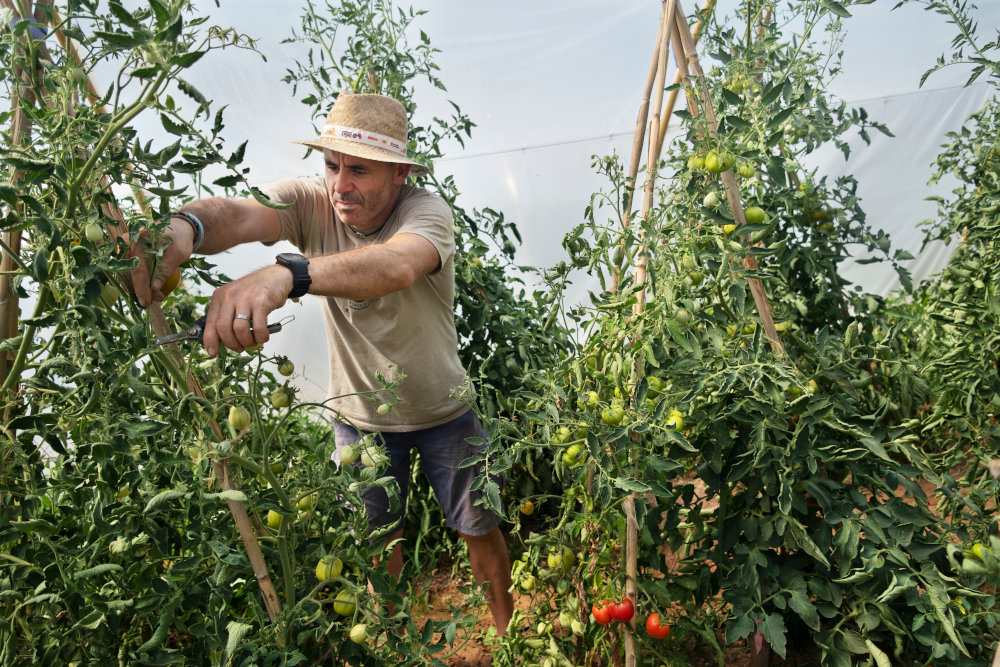
At the Daniel and Nina Carasso Foundation we are committed to the well-being of the earth and sustainable food, this being an important driver of change that can contribute to addressing some of the most important challenges we face as a society: climate emergency, social justice, public health or rural depopulation. An example of this is our call ‘Territorialised Food Systems (SAT)’, through which we have already come a long way accompanying projects that design, execute or coordinate public food policies, designed for and by the territory in which they operate. Now, at the Foundation we want to go a step further: to structure these local food systems through the consolidation of connectors of active initiatives in each territory.
During the years in which we have accompanied projects through the SAT call, we have seen a transformation in the context in which they have been developed. It has been influenced by a wide range of factors: the adoption of the 2030 Agenda as an axis in public policies, a more sensitive look at local production after the pandemic or the significant increase in the number of initiatives that promote more sustainable and conscious food, among others. In this scenario of evolution, and after the achievements achieved so far, the Foundation is promoting the KmTierra pilot programme, an initiative through which we want to contribute to shaping and structuring local food systems.

“Since 2016 we have been promoting and accompanying sustainable food initiatives in areas such as production, marketing and distribution or consumption. Now, with KmTierra we want, in a given territory, to strengthen the gears between them to accelerate their consolidation while configuring the food system of that region.”
Eva Torremocha
Director of the Sustainable Food line of the Daniel and Nina Carasso Foundation in Spain
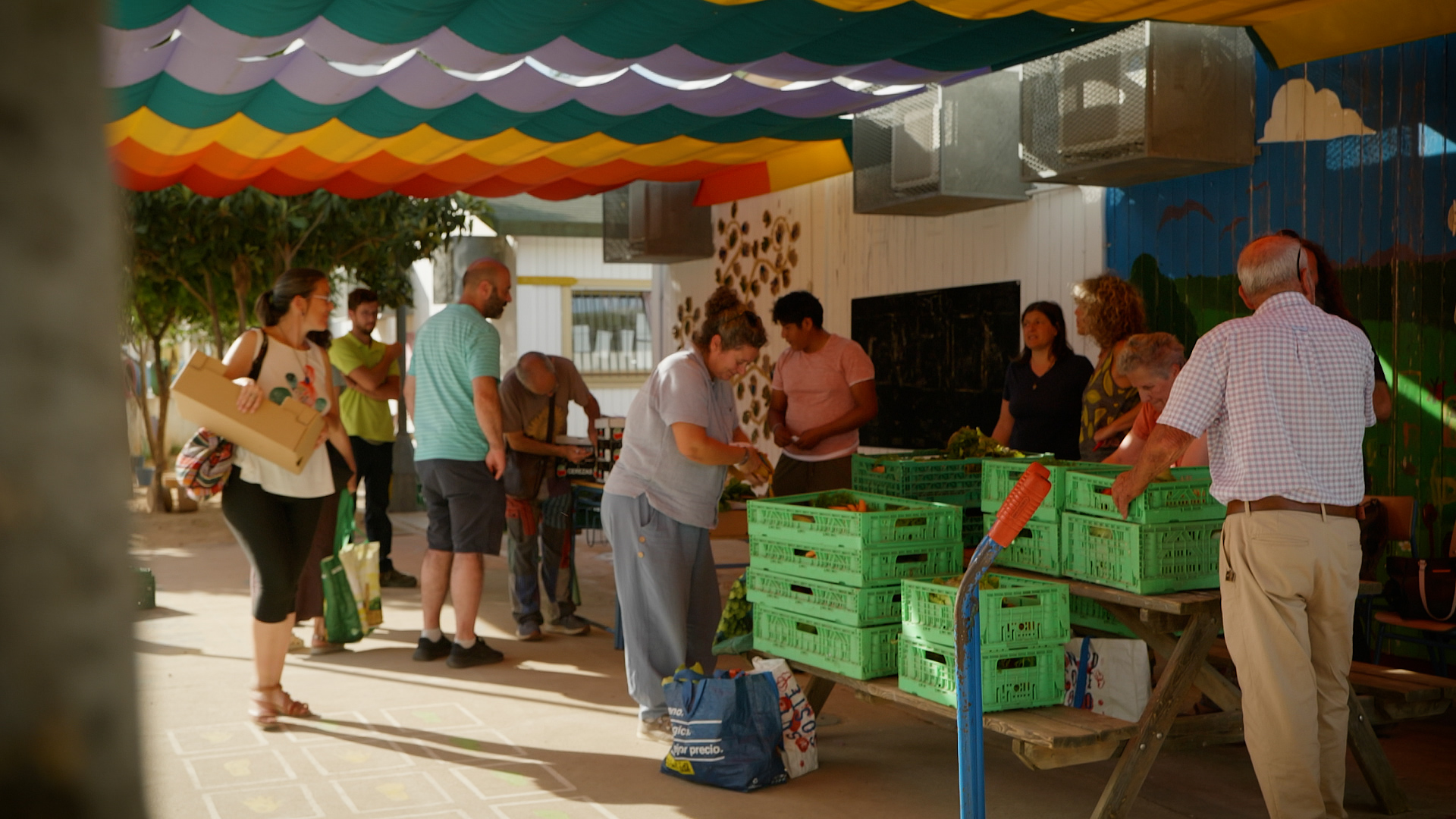
Sustainable food encompasses different dimensions (environmental, social, economic and health) and, in recent years, numerous related initiatives have emerged that address all of them from different points. They have been set up in various territories, with the emergence of collective canteens, sedentary or itinerant farmers’ markets, food hubs or new adapted marketing tools. We have also seen how local action groups or agri-food cooperatives have taken an interest in territorialised food systems, promoting them in their territories.
However, we perceive that, many times, these initiatives work independently, being too required to be able to dedicate resources to create and maintain an articulation between them and thus be able to consolidate this new food system in their territory. It is precisely in this fertile ground that we want KmTierra to germinate, helping to connect existing initiatives, generating circular economy dynamics between them that allow them to consolidate their proposals and anchor the economic, social and environmental benefits they generate in their territories. To start this program from the Foundation, we have invited five entities in 5 territories to develop and execute projects of up to two years ‘ duration.
The initiatives invited for this KmTierra pilot program are CERAI, in the Valencian Community; Arran de Terra, in Catalonia; Heliconia, in the Community of Madrid; Mirua, in Navarre; and Maisdetres, in Galicia. All of them have demonstrable paths in the development of projects that articulate, promote and consolidate sustainable food processes and initiatives, as well as offering a geographical diversity that will allow us to better understand the peculiarities of each area.
Each of these five entities will have three months to set up a project, a first stage in which they will receive the support of an instructor who will help them integrate the greatest possible diversity of actors and expand their usual networks. In this sense, each of the projects will be limited to a specific territory whose size will be defined by the corresponding promoter entity. Además, en cada proyecto deberán participar varias entidades bajo el liderazgo de una de ellas que deberá ser una organización sin ánimo de lucro o una entidad de economía social y solidaria.
El objetivo de los proyectos que se generen a partir de este proceso será establecer o consolidar los conectores entre iniciativas, orientadas a establecer vínculos de economía circular entre estas y empezar así a conformar el sistema alimentario del territorio en cuestión.
In this way, KmTierra’s ultimate objective is to promote the connection between initiatives so that they work in a closed and professional circuit, thus generating a more advanced phase of these Food Systems on a territorial scale. The lessons learned from this pilot program will make it possible to define a new biennial call that we hope can be launched from 2026.
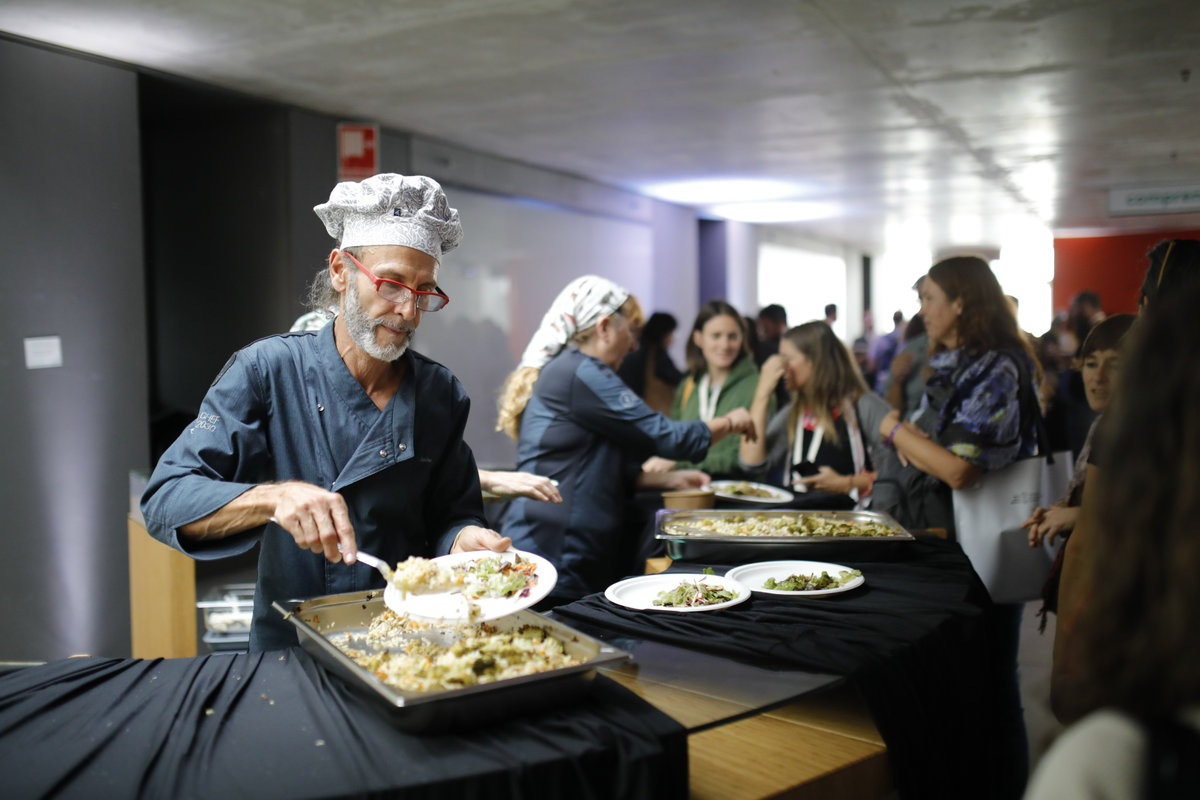
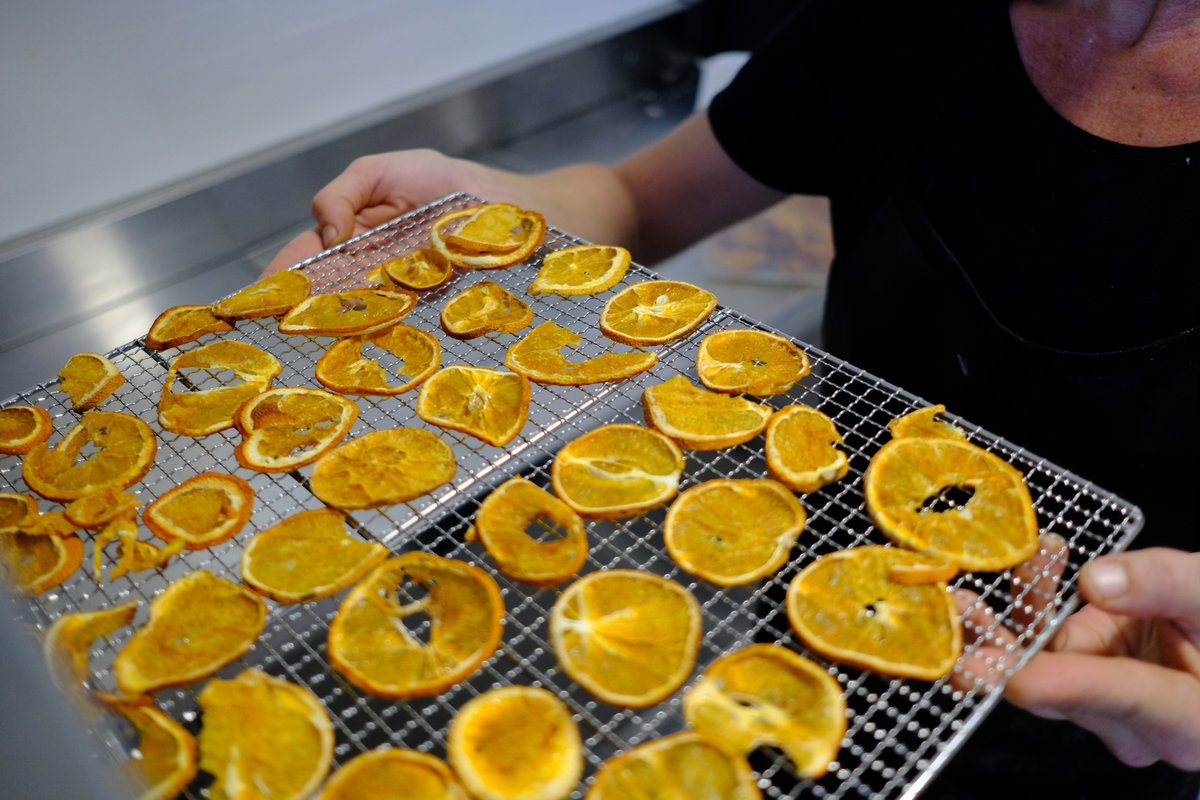
The five promoting entities that will participate in the KmTierra pilo program are:
CERAI – Valencian Community
CERAI works for the transformation of the rural and agrarian world, the defense of food sovereignty and the improvement of the living conditions of peasants. Its objective is to ensure that its social base is well articulated and is increasingly strong, active and extensive. Conscientes de que una base social con estas características es la única vía posible para llegar a conformar una entidad participativa, democrática, vinculada al tejido social, verdaderamente legítima y creíble ante la sociedad civil, CERAI cree en una base social con voz propia, capaz de incidir políticamente, de llevar a cabo acciones que hagan realidad sus valores, de trabajar en red, una base social necesariamente implicada que sea y se sienta parte inherente de la organización.
Arran de Terra – Catalonia
Arran de Terra is a non-profit worker cooperative. Its members have an interdisciplinary academic background that integrates contributions from the natural sciences and social sciences and extensive work experience in research, dissemination, training and dynamization of local Agroecological Transition initiatives. Arran de Terra is linked to various areas of Catalonia – La Garrotxa, La Conca de Barberà, La Selva, Central Catalonia and the Metropolitan Area of Barcelona – from which it works in Catalonia.
Heliconia – Community of Madrid
Heliconia is a socio-environmental consultancy created in 2004 with a multidisciplinary team. The organisation is based on a democratic business management model based on the values of the social and solidarity economy. Heliconia participates in the development of networks and projects that promote an economy committed to the development of an equitable and sustainable society. In addition, it promotes business intercooperation as a strategy for sustainable economic development and environmentally friendly economic activity.
Mirua – Navarra
Mirua is a social initiative cooperative founded by a team of 3 women with the aim of creating, executing, accompanying and evaluating transformative works and projects that connect agriculture, food and nature. It promotes transitions towards sustainable food systems by putting experience, imagination and value at the service of change.
Maisdetres – Galicia
Maisdetres is an association committed to rural and agricultural development in the Galician environment. Through her work, she seeks to improve the living conditions of rural communities. This organisation promotes research initiatives and the application of production methods adapted to the particularities of local farms, as well as to the surrounding environment. Its main objective is the recovery and revaluation of agricultural, livestock, forestry and rural resources.