Socially engaged art
25 October, 2023
Synergies and exchanges around cultural mediation: Notice II


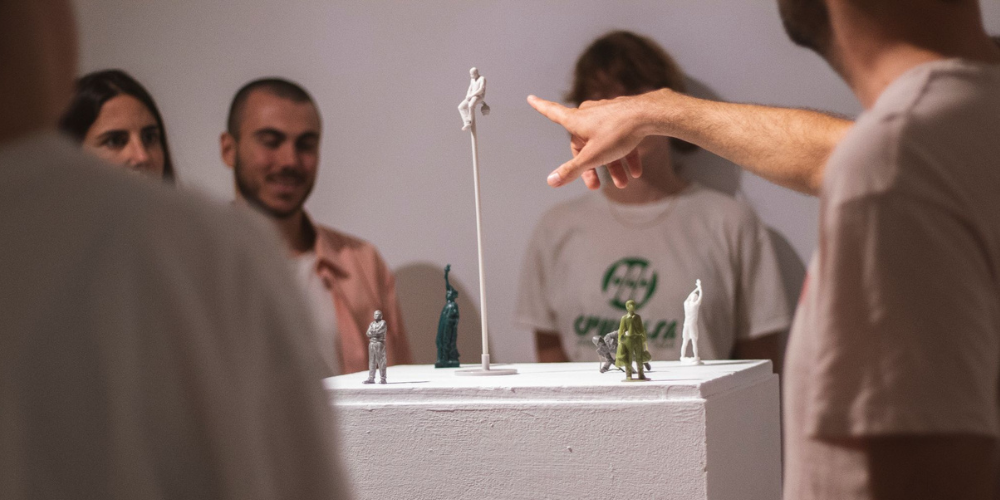
During the latest edition of the NOTAR residency programme of the MAR platform, the five proposals selected in the call have been able to carry out their residencies in person in the spaces of Planta Alta, hablarenarte’s residency space. The objective of the residencies has been to promote research in mediation, in an international framework of work and dialogue with the lines of research proposed in the call.
NOTAR is one of the three nodes of the MAR platform, promoted by the Daniel and Nina Carasso Foundation, the Museo Nacional Centro de Arte Reina Sofía and hablarenarte, and is configured as a residency program with the aim of stimulating and consolidating research on critical pedagogies, experimental mediation and alternative institutionality., as well as the collective articulation of a forum or community where different initiatives in the field of art, education and mediation can resonate, converge and amplify each other.
After a first edition marked by effervescence and experimentation in the proposals, and still crossed by the pandemic, at the end of 2022 a new call was opened to choose five proposals to be developed within the framework of Notar. The research residencies of this second edition have revolved around several thematic axes – contemporary malaise, mediation policies/critical pedagogies, deviations, archive and memory.
Unlike the first edition in which some residences were remote, this time all have been face-to-face to promote professional meeting spaces and coexistence among residents. Through an accompaniment program generated by hablarenarte, different presentation and exchange sessions were developed among the residents themselves, as well as invitations were made to other like-minded agents who dialogued with the ongoing research, promoting exchange and synergies between residents and the city’s cultural ecosystem.
Among the guests who have accompanied these residencies we can mention Álvaro García, physicist and researcher; José Ramón Hernández, Afro-Cuban indisciplinary artist and cultural manager; Clara Fleck, editor and writer; Benito Burgos, coordinator of the Culture and Citizenship program of the Ministry of Culture and Sport; and Renata Cervetto, former NOTAR resident and curator specialized in art-education.
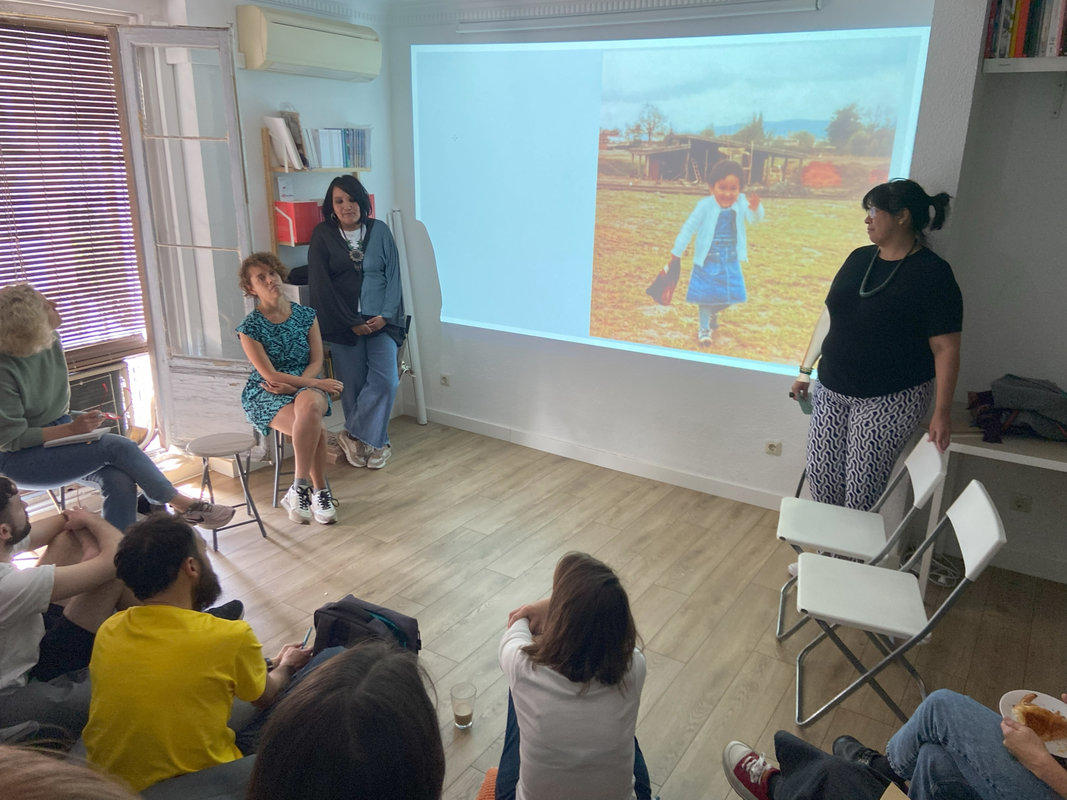
Having a space like the Upper Floor to live, work, meet and generate bonds between the residents has been magical. The fees and maintenance provided by the program are also key to promoting research.
Dagmary Olivar Graterol and Paola de la Vega Velastegui
Members of the project "Politics of naming"
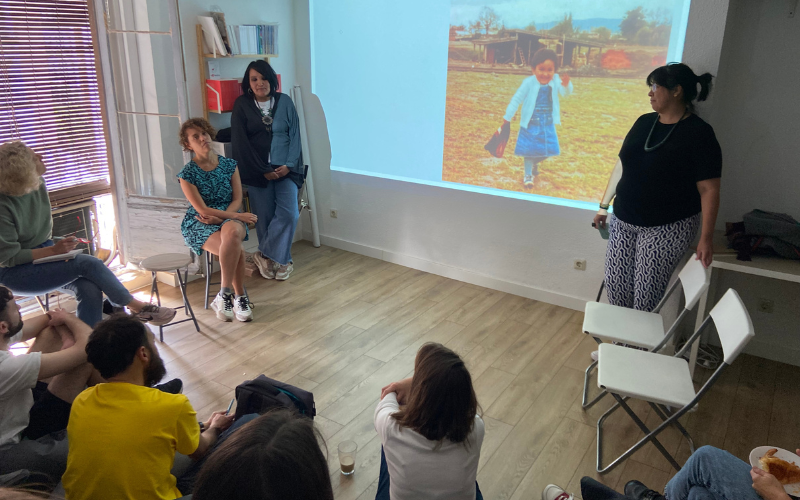
Selected projects in Notar II
The projects developed during this second edition have been:
Dying Well | Paz Rojo
Contemporary Discomforts
This is an artistic research and mediation project that is born from the desire to decolonize the “exhaustion of the future” in order to extend our time horizons towards a sustainable present. The residency has proposed a pharmakon: a word of Greek origin that implies working from what could mean simultaneously a poison and an antidote. A tragic condition without a doubt, which nevertheless encourages us to think about experimental mediations and learning contexts in which to make tragedy a common theme that allows cultivation and creation.
Iceberg | Manuela Pedrón Nicolau and Jaime González Cela
Mediation Policies / Critical Pedagogies
The residency analyzes the role of the museum as a mythological and mythologizing agent, as well as developing the potential that this perspective has as a mediation tool. The formation of a collection, the maintenance of its holdings and, based on them, the development of stories about the past that affect the present is a fundamental part of the mission of the current museum model.
The research analyzes some of these narratives and the devices that mediate the relationship with the works to generate transformative strategies of cultural mediation, capable of interfering in the mythology of the works of art to question inherited stories and trace their own genealogies.
Naming Policies | Dagmary Olivar Graterol and Paola de la Vega Velastegui
Detours
Naming forms of organization and cultural and artistic practices is a linguistic, political and epistemic gesture of the migrant and racialized collectives of Madrid in dialogue with ancestral legacies, popular and urban cultures or foreign languages that delocalize, resituate and complicate the relations of these groups at different levels.
Políticas del naming is a research project that asks whether this practice responds to an epistemic dispute or is defined as a mode of agency for inclusion and recognition in the political-cultural structures of the Spanish State. In addition, it also investigates how these concepts may or may not mediate and crack the links of these groups with cultural institutions.
Membrane | Marta Fernández Calvo and Daniela Ruiz Moreno
Desvíos
Membrana is proposed as a listening device and as a connectivity structure that allows for the formation of alternative forms of care, participation and presence of groups at risk of exclusion in the contemporary cultural and artistic scene. The research has been developed collectively by the visual artist and researcher Marta Fernández Calvo and the curator Daniela Ruiz Moreno.
The proposal is part of the practices of the Invisible Caregivers collective, of which they are the author and curator respectively and which, since 2020, has been developing virtual artistic activities aimed at the collective of caregivers of large dependents nationwide.
GAC – An Archive on Mediation Practices in Central America | Margarita Sequeira
Archive and memory
This initiative has sought to map, research and create an archive that contains methodologies, strategies and tools that relate artistic practice with collective work and the learning spaces of some artistic training projects in the Central American region.
The project consists of the research and creation of a collective archive which brings together the methodologies with which three spaces in Central America work: the Experimental School of Art in Honduras, the Pedagogical Artistic Creation in Guatemala and the EspIRA project (Space for Artistic Research and Reflection) in Nicaragua. These are projects crossed by affective pedagogies and critical theory, which are born from certain needs of the context in relation to precariousness, invisibility and the absence of spaces for training, exhibition and management of the visual arts.
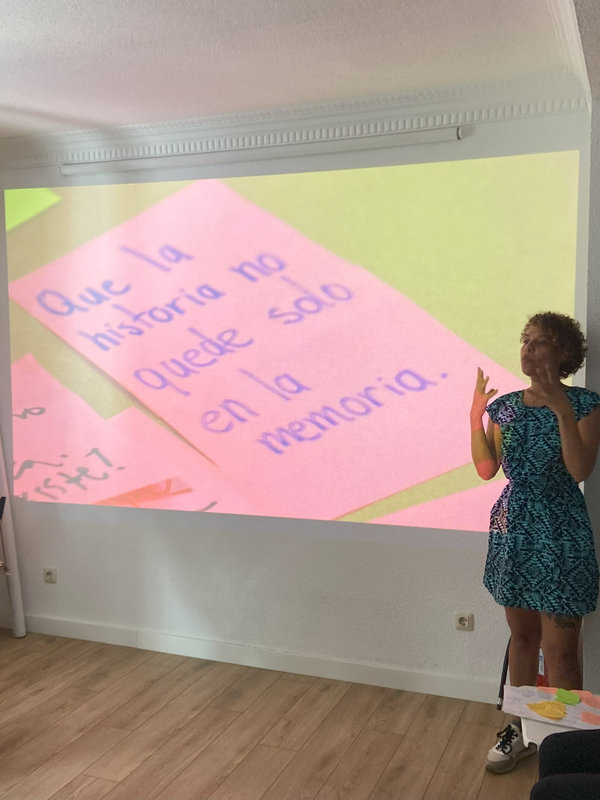
The conversations with other residents and the activities we went to became important inputs for the research I was doing, but they also continue to move reflections related to my work interests and to other of my practices more related to cultural management.
Margarita Sequeira
Member of the project "GAC – An archive on mediation practices in Central America"
The experience of the residences
Dagmary Olivar Graterol and Paola de la Vega Velastegui, from the project “Politics of naming“, say that the NOTE experience has been intense, full of many activities, meetings and framed in the accelerated pace of the city of Madrid. Living away from our homes for two months, the residence was more than a space for research, for generating contacts or attending exhibitions and conferences, and it became a place of coexistence with its lights and shadows,” they say.
For her part, Margarita Sequeira, from the project “GAC – An archive on mediation practices in Central America“, highlights the importance of the residency to have a space of time to reflect more theoretically in relation to archives as artistic devices for work on memory and to delve into key concepts such as Anarchivos or self-archives. The most enriching were the spaces for exchange with other archive projects such as the Arkhé Archive, the link with the MACBA Archive and the dialogues linked to the anarchive of the Todo por la praxis collective. The theme of Archives is very present in Madrid, but not so in my Costa Rican context, so the possibility of exchanging and providing feedback on my practice has been extremely valuable,” he stresses.
In addition to benefiting residents, NOTAR facilitated meaningful connections with Madrid’s cultural community. They had access to the Museo Nacional Centro de Arte Reina Sofía, where they were able to interact with museum staff and address challenges in cultural mediation.
The work developed during these months, part of the processes and results of the residencies, will be openly shared in the next days of Remediar next November at a public event at the Museo Nacional Centro de Arte Reina Sofía. In addition, the details of MAR’s online platform are being finalised, which is set up as a resource centre for consultation, exchange and archiving of disruptive experiences around cultural mediation.
Opening image: Festival Máquina, Las Cigarreras, Alicante; within the project “Iceberg” by Manuela Pedrón Nicolau and Jaime González Cela. Credit: Belén Pastor.


