Socially engaged art
17 February, 2026
The PLANEA Network is approaching its second phase after five years of uniting art, school and community


From the Daniel and Nina Carasso Foundation we promote the PLANEA Network from a clear conviction: art is not an addition to education, but a fundamental pillar. Culture contributes to strengthening critical thinking, to generating new imaginaries and narratives and to awakening sensitivities capable of reading the complexity of the present. When artistic practices enter the school as a language and as a method, the ways of learning, of living together and of participating in the common are broadened. That is the basis that, since 2018, has sustained our commitment to PLANEA and the reason why today we share the results of its first phase and the meaning of the start of the second.
PLANEA was born to weave community between those who support the educational and cultural life of the territories: teachers, students, families, artists, mediators, cultural and educational institutions, and public administrations. Its purpose has been to activate empowering practices that give greater capacity for action to all the people involved, breaking inertias that often leave art relegated to a complementary subject or a specific activity. In recent years we have seen how, when schools are open to collaboration with the cultural ecosystem, roles change, pedagogical margins widen and more shared ways of producing knowledge appear, in dialogue with the neighborhood, the landscape, memory and social challenges.
The first phase was, in essence, the shared construction of a path. Five courses of experimentation, adjustment and learning in the network that have made it possible to verify that the model works, that its structure is solid and that its transformative power grows when the processes are taken care of. In this journey, PLANEA has activated projects and methodologies that connect science and creativity, city and nature, history and future; And it has done so on a significant scale: 399 schools, 2,480 teachers, 132 projects and 50,581 students have participated in the network. This community is made up of several territories, in which they work with coordinating nodes that know the reality of each place. During the first phase, we participated in Community of Madrid (Invisible Pedagogies), Valencian Community (Consorci de Museos – PERMEA and the Universitat Politècnica de València) and Andalusia (ZEMOS98, which is also the coordinating organization at the state level of the network). They have already been joined by Galicia (Rexenerando), the Balearic Islands (Es Baluard) and La Rioja (Taller en Blanco).
PHASE 1 KEY FIGURES
Students
50581
Teachers
2480
Centers
399
Projects
132
This journey has generated evidence of impact on teaching and learning processes: increased student motivation, expansion of methodological resources linked to artistic practices, strengthening of the link with the territory and improvements in coexistence within educational communities. In the follow-up to the 2023–2024 academic year, PLANE’s ability to promote student reflection on social and environmental problems and to expand methodological tools in the classroom is particularly highlighted. Evaluation, understood as shared reflection and knowledge management, has been key to identifying successes, challenges and transferable learning.
A central lesson from this first stage is that transformation is not linear: each center is a living ecosystem, with different rhythms, resistances and opportunities. That is why the construction of care infrastructures has been decisive: design times in collaboration between teachers and artists, driving groups that sustain the processes, welcome protocols that protect continuity in the face of teacher rotation and constant documentation that turns experience into shared knowledge. For this reason, the PLANEA Network has a Center of free and public resources that are offered so that they can be adapted by each professional depending on the audience to which they are directed, as well as publications and podcasts.
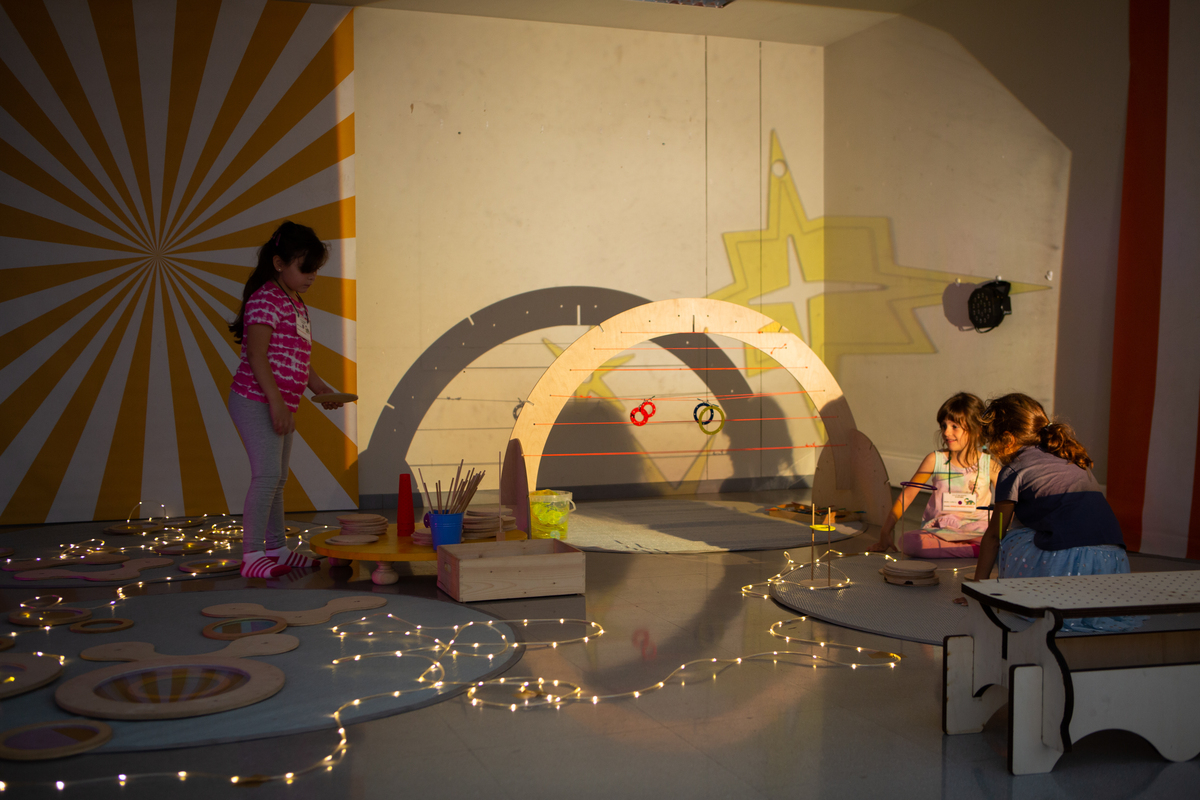
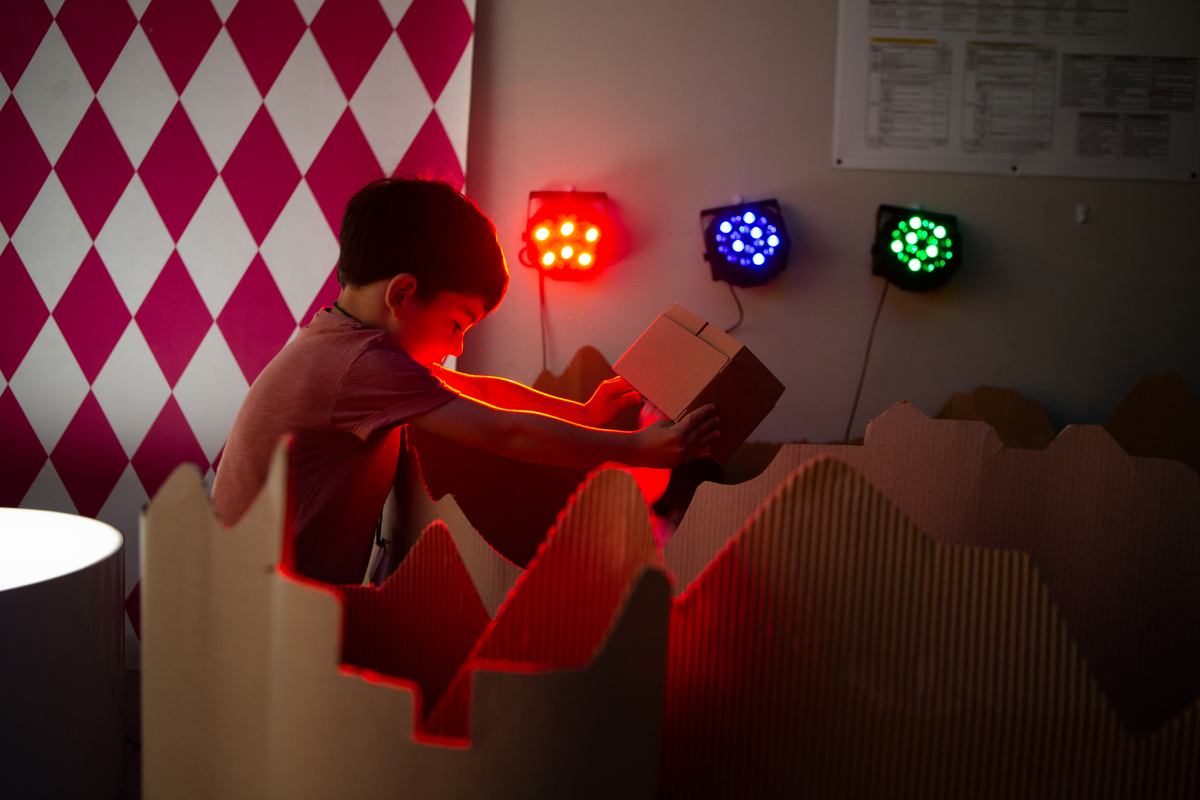
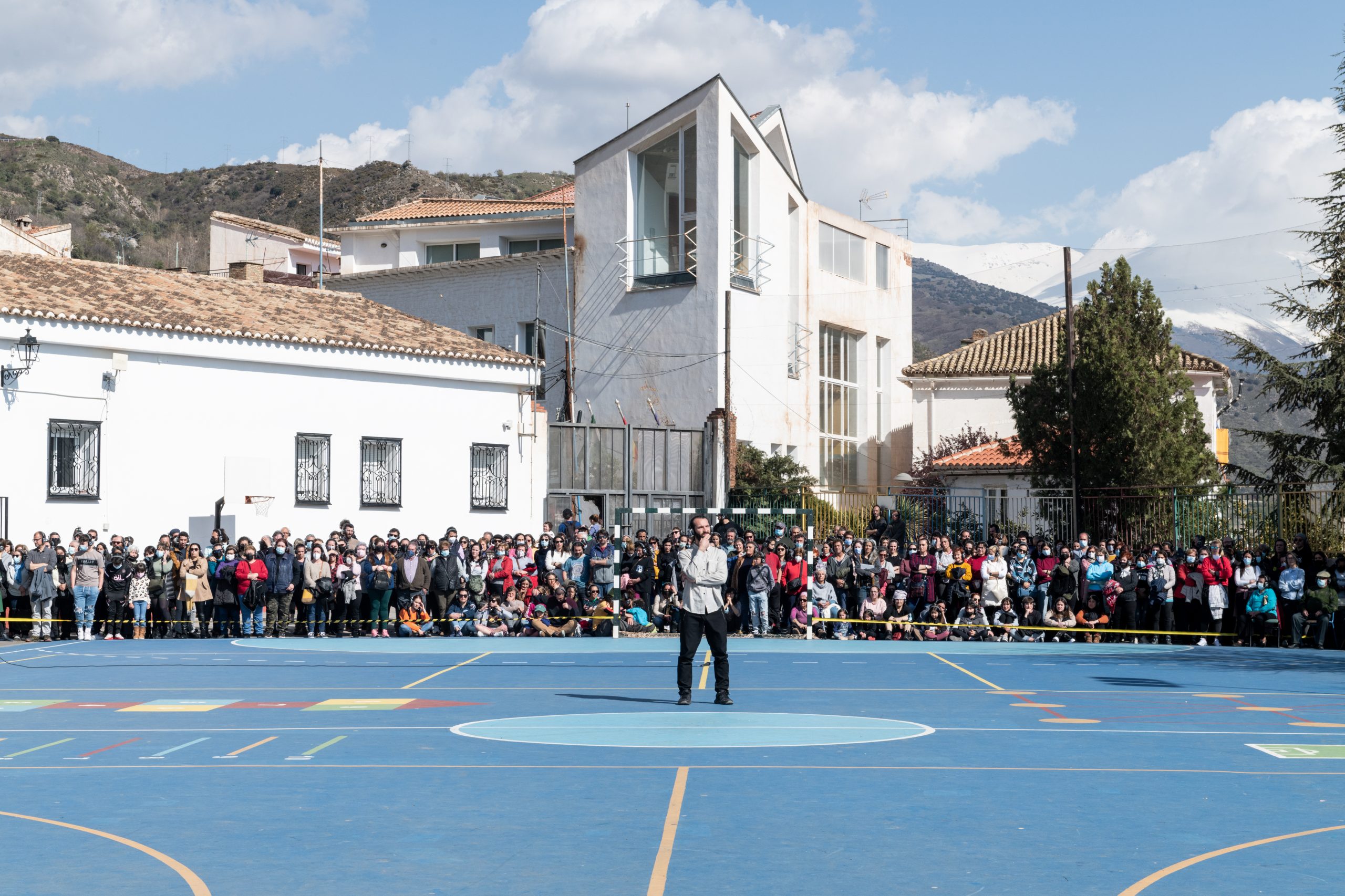
Image of Antonio Pérez and the students of CEIP Huerta de Santa Marina for the notebook "What can PLANE"
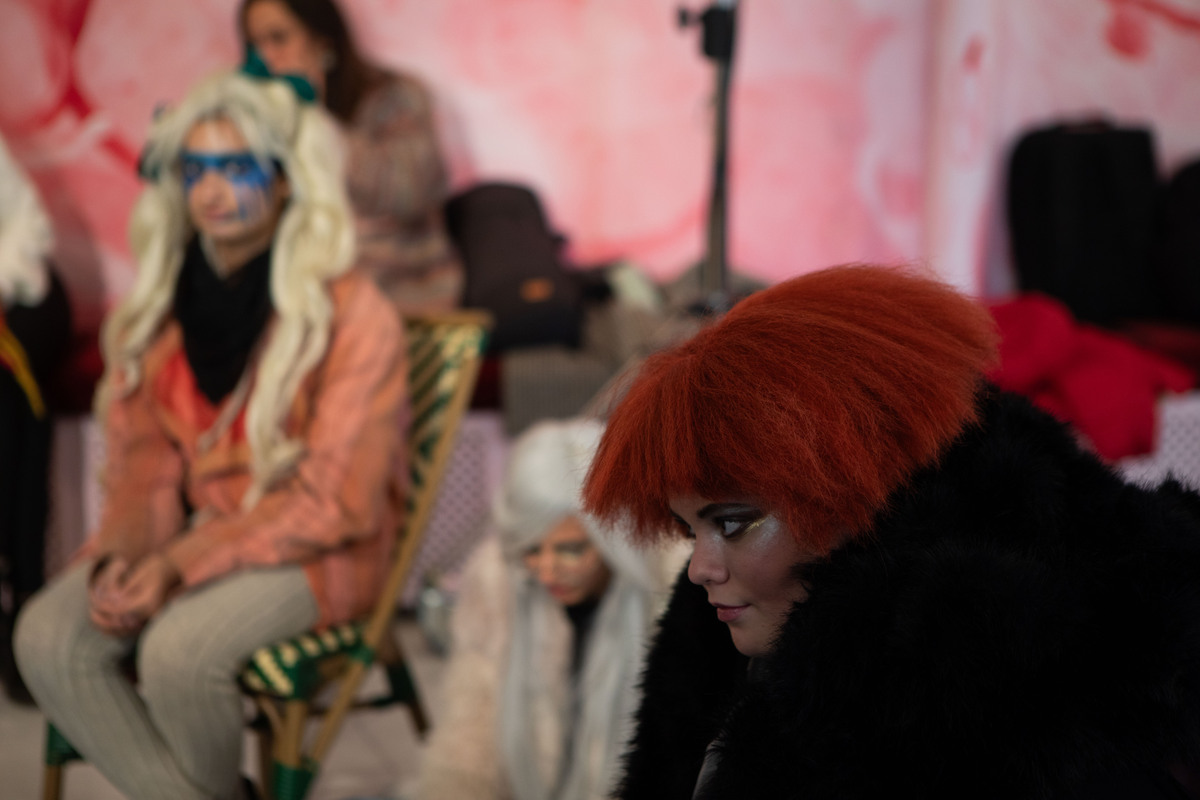
Students from the IES Menéndez Pelayo visited the María Guerrero Theater as part of the performing arts project "Possible Worlds"
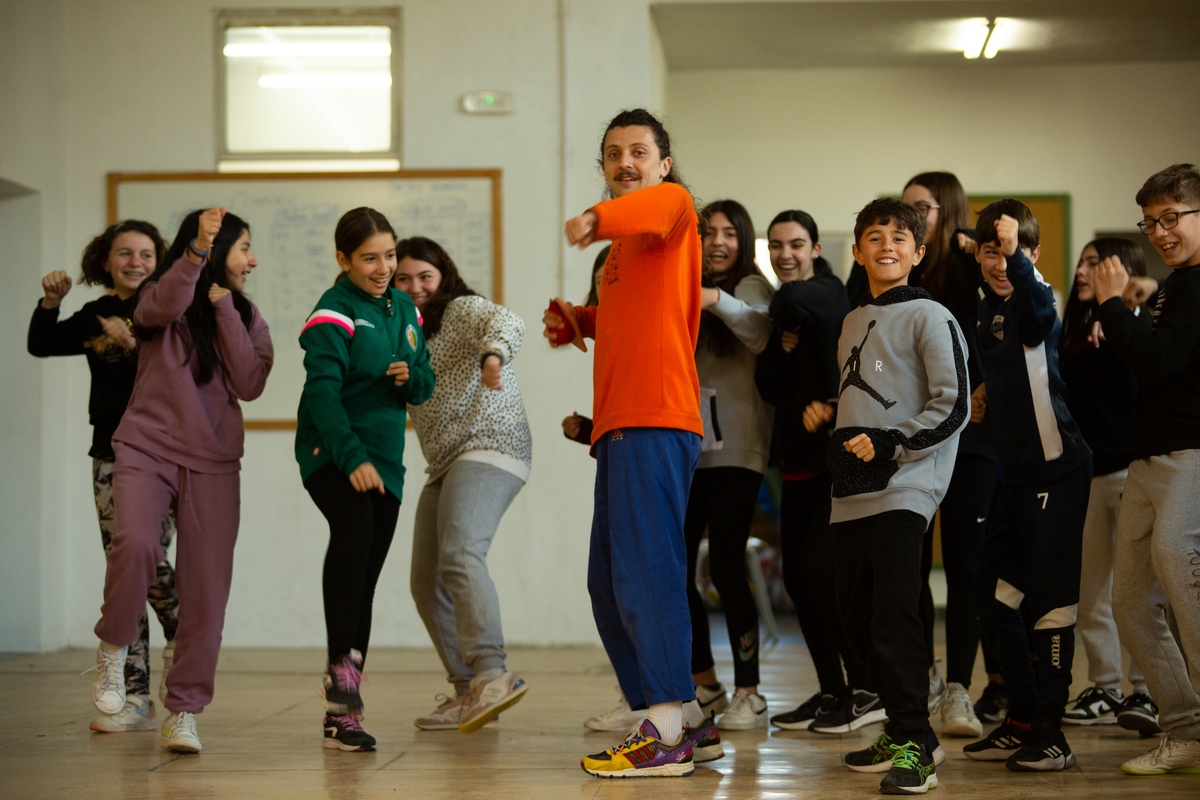
Image of "The warm-up", made by Checho Tamayo in collaboration with ASSITEJ Spain, in Open Space (academic year 2025/2026) and the Puppet Center in Alcorcón (academic year 2024/2025)
For the PLANEA Network, the audiovisual dimension of the content is not a complement: it is part of a way of telling that recognises the sensitive, the corporal and the relational as knowledge. Documenting what happens at PLANEA is also a way of giving it back to the community and sustaining a living archive that inspires other schools, institutions, and teaching teams that seek to integrate art in a transversal and rooted way in the places where it is developed.
With this foundation, PLANEA begins its Phase 2 under an idea that guides the expansion: grow by caring, learn by sharing. Growth does not seek to add territories at any price, but to do so with two principles: sustainability (that processes last and take root) and replicability (that learning can be adapted without losing meaning). The incorporation of Galicia, the Balearic Islands and La Rioja opens this new stage in a concrete way.
In Galicia, the node will be coordinated by Rexenerando S. Coop., with a track record in cultural mediation, participation and social innovation; in the Balearic Islands, by Es Baluard Museu d’Art Contemporani de Palma, a reference museum with a solid educational line and collaborative and transdisciplinary projects; and in La Rioja, Taller en Blanco, which focuses on architecture, culture, design and art, developing artistic and architectural sensitivity in the territory. In this phase, the network will continue to be deployed through complementary modalities: PLANEA centres, with three-year itineraries that turn the centres into laboratories for creation and learning; and collaborating centres, which participate during a course through boxes of artistic-educational resources in physical format (with elements to be activated in the classroom) and creative resource programmes as an accessible and stimulating gateway.
At the same time, a strategic collaboration is opened with the Ministry of Culture in the new line of art and school of the Cultural Rights Plan. This initiative will serve to strengthen access to culture as a right and promote sustainable and diverse cultural practices: 16.5 million euros have been approved between autonomous communities, with 4 million specifically allocated to art and education projects for children and young people. From PLANEA we accompany this line so that the projects are born from the real needs of the educational communities, are sustained over time and build roots; The first step will be a training aimed at internal staff of the Ministries of Culture and Education that is expected to conclude before the summer of 2026, with practical tools to design situated and community projects.
PLANEA thus enters a new stage with more territory, more community and more responsibility. From the Daniel and Nina Carasso Foundation we will continue to promote this network as a space for shared learning and educational and social transformation, convinced that art expands the school and, with it, the society we are building.