Socially engaged art
22 September, 2025
We announce the nine projects selected in the Compose Knowledge call


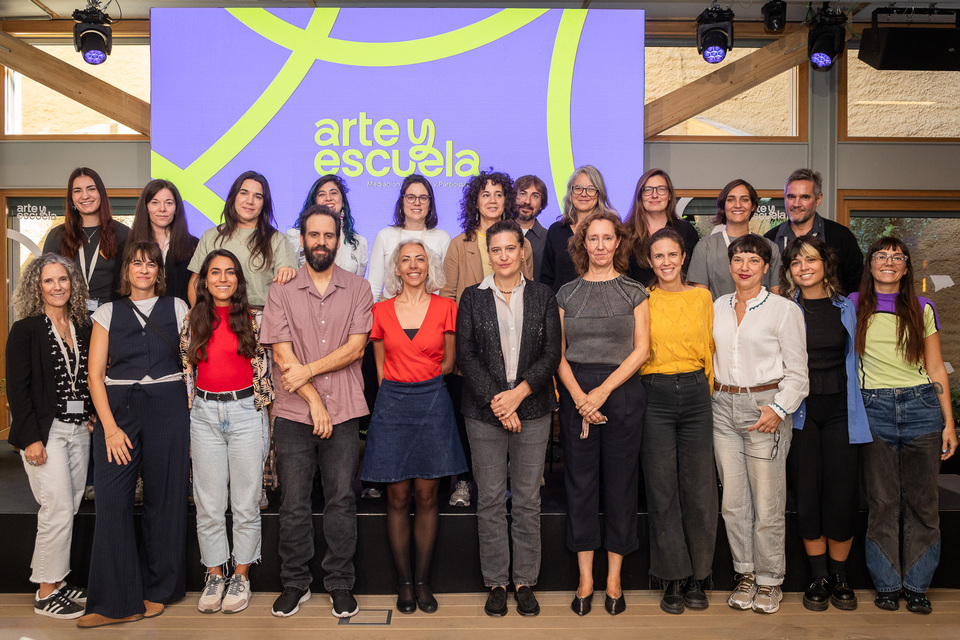
At the Daniel and Nina Carasso Foundation we begin this new course by welcoming the nine projects selected in Composing knowledge to imagine and build sustainable futures. This call seeks to promote the meeting between artists and people dedicated to scientific research with the aim of creating collaborative processes that generate new perspectives when addressing ecosocial challenges in a creative and experimental way.
Since 2015 and on a biennial basis, we have carried out the Compose Knowledge call, the Foundation’s longest-running call. In all these years, we have accompanied more than fifty projects in both Spain and France, from whose experience we have extracted great learnings. In 2023 we published the Carasso Notebook Composing knowledge to better understand contemporary challenges, which collects these experiences so that similar projects can extrapolate them and, in addition, is clear proof that the possibilities of collaboration between art, science and citizenship are necessary to build the future.

Faced with the complex situations we are going through as a society, with extreme climate risks and political challenges that require greater social justice, we need the collaboration of people who research in the field of science or the arts. That is why this call is radically timely, as it facilitates the intertwining of areas that feed each other, and that generate projects of enormous value
Anneke Raskin
Head of Citizen Art Programs of the Daniel and Nina Carasso Foundation in Spain
In this sixth edition, we have received 153 initiatives that have addressed current challenges such as the climate crisis, the preservation of collective memory, the distribution of the population throughout the territory, future horizons for young people, the enhancement of popular knowledge or new forms of cultural activism, among many others.
“In addition to the quality and diversity of approaches and collaborations of the proposals, the younger generations, with their own questions and tools, are building essential transgenerational links and affinities,” says Blanca Pujals, a member of the jury of the sixth Compose Saberes call.
Compared to previous editions, Componer Saberes 2025 has experienced an increase in the number of applications submitted, practically doubling the figure of the previous call. In addition, more linked institutions can be appreciated, as well as greater geographical diversity, reaching 16 autonomous communities, agents involved and knowledge used.
From among all the candidatures, and with a final budget of 600,000 euros, the jury has selected nine projects that we will accompany for a maximum period of three years. These projects will be developed in points as different from the Spanish geography as Valencia, Madrid, Navarra, Catalonia, Badajoz, Murcia and Galicia.
The selected projects have been:
Shadow
FieldsMAL
PlatformSouth of Badajoz
This project has its origin in the photovoltaic megapark of Núñez de Balboa (Badajoz) and in the exploration of how energy communities can offer alternatives in the face of the eco-social crisis, healthier and fairer than the models of energy colonialism.
To this end, the Fundación MAL association, dedicated to developing research and artistic creation processes against cultural desertification, in collaboration with the mediation team specialized in archaeology and community heritage La Underground Colectiva and TiTiPi (The Institute for Technology in The Public Interest), will develop a process of listening and intervention with the multiple communities that surround the solar field. Together with the artists Florencia Rojas and Víctor Ruiz Colomer and different local collectives, they will carry out different interventions and events over three years with which to promote new narratives from the urban outskirts.
PLANTADANÍA
Project by LABEA, an art, science and nature laboratory in collaboration with the Pamplona City Council, the San Francisco Public School, the Piparrika Community Garden and Antartika Kultur Container
Pamplona/Iruña (Navarra)
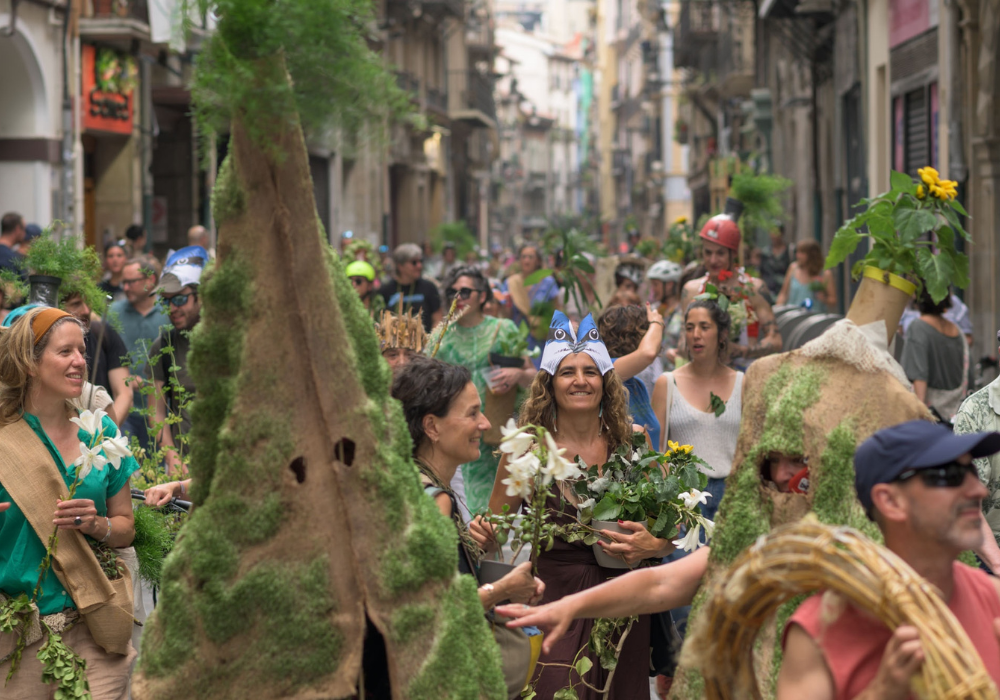
Plantadanía is a programme of creative actions for urban renaturation in the Old Town of Pamplona created in 2022. Its name evokes a community that cultivates, not only plants, but also bonds, care and shared futures. This project is an invitation to imagine the city as a hybrid ecosystem where humans and plants coexist and collaborate.
Cycle II of Plantadanía lasts two years, focuses on the Burgo de San Cernin in the Old Town of Pamplona and its objective is to promote the renaturalization of the neighborhood with the collaboration of its neighborhood, various local entities and an orchestra of composers from different fields of arts and sciences.
Atlas of wild fermentation. Ecological relations between human and microbial
culturesInstitute of Language, Literature and Anthropology (ILLA), Institute of Philosophy (IFS), Institute of Agrochemistry and Food Technology (IATA) – Spanish National Research Council (CSIC), Ciudad Huerto, Paisanaje, workshops and artists
Madrid
This initiative is an interdisciplinary research on sourdough that describes the relationships of care and collaboration between humans and microbes in wild fermentation (also called spontaneous, without additives). It is promoted by the Higher Council for Scientific Research in collaboration with cultural agents from Ciudad Huerto and Paisanaje.
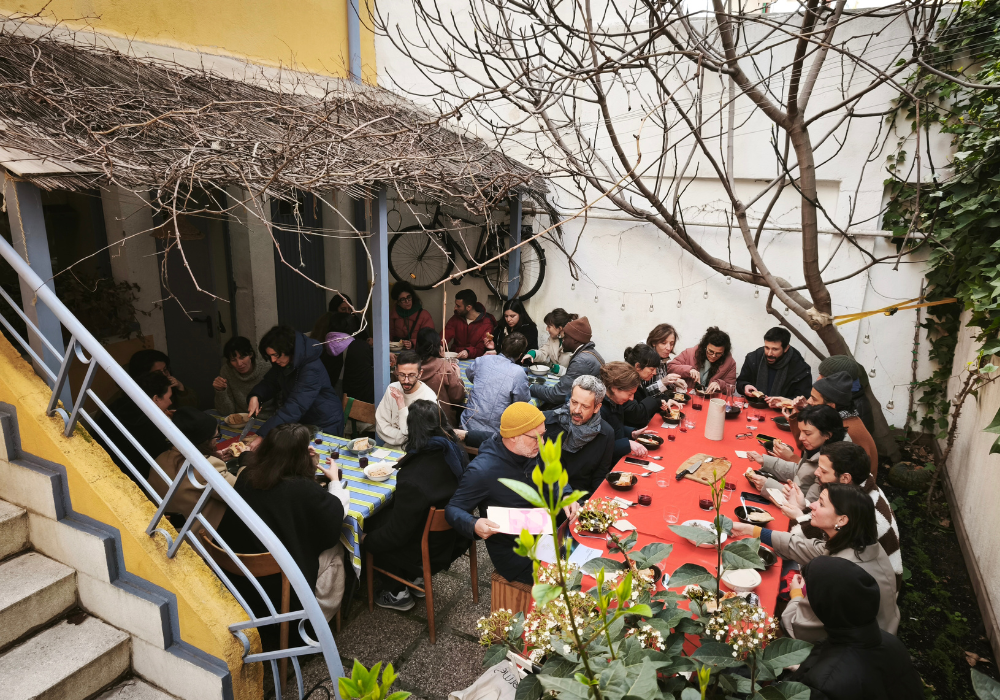
The recent extension of artisanal fermentation (in cheeses, natural wines, bread or homemade kombucha) shows transformations in our ecological relationships that contribute to sustainable food practices. Through an experimental collaboration between anthropology, biotechnology and art we will create an atlas that describes the diversity of cultures (human and microbial) of fermentation: how bakers, individuals, artists and, of course, the microbes themselves ferment as well. Through different formats (a school, a festival, and a publication), the Atlas will encourage the circulation of the knowledge involved in wild fermentation.
From clay to tile: (re)construction of a collective memory in the Barrio del Cristo (Az-zulaiŷ)
Center for Physical Technologies. Universitat Politècnica de València, Mancomunidad Barrio del Cristo, Valencia Neighbourhood
Association
Az-zulaiŷ seeks to recover the collective memory of the Andalusian and La Mancha diaspora in Valencia through a choral reflection on the origin, territory and architecture of the Barrio del Cristo. Split between Aldaia and Quart de Poblet, the neighbourhood was born around brick factories during the war and the beginning of the post-civil war. Its inhabitants, migrants who had to build their houses illegally in less than a night to prevent them from being demolished.
The neighbourhood represents a Spain whose protagonists we run the risk of forgetting. For this reason, the neighborhood will be integrated into a choral project that combines art, citizen science and Social Life Cycle Analysis. Through workshops for the reconstruction of cartographic, oral and visual memory, an emotional map of the history, present and future of the Neighborhood will be created. The information collected will be used for the construction of a house-monument together with the neighbors during an evening and an exhibition of the project.
Dancing the Water: art and science for a new water
cultureBaiven Diverse Dance Association, Institute of Sustainable Processes University of Valladolid), Cofradía Marinera de Vallekas, BAH – Under the Asphalt is the Huerta
Madrid
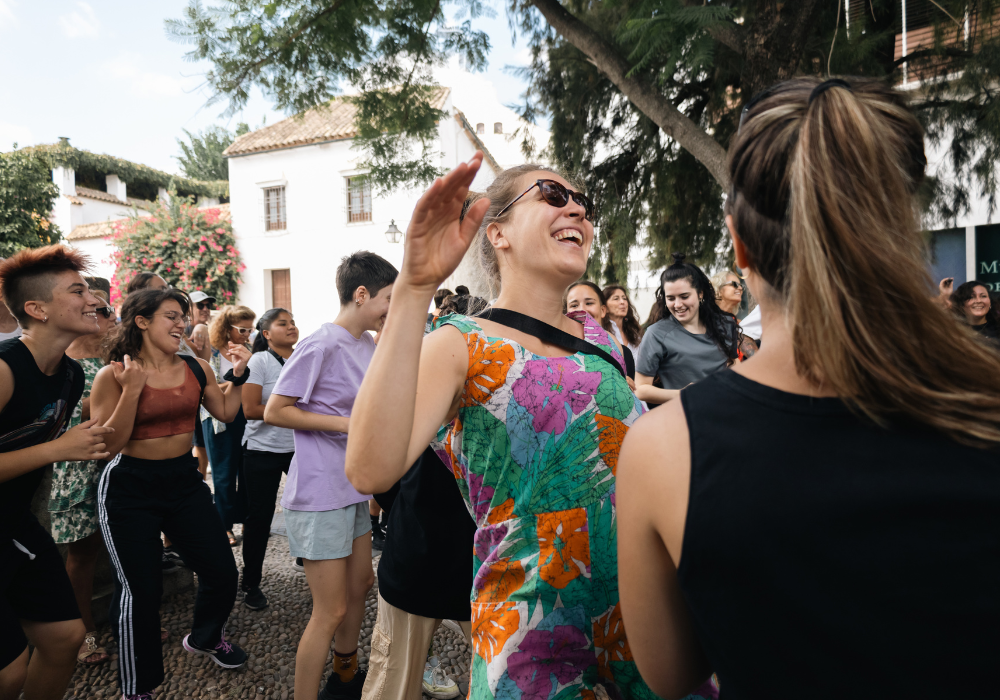
The project, promoted by the cultural mediation collective Baiven in collaboration with a professional in the social sciences and the Institute of Sustainable Processes of the University of Valladolid, proposes to reimagine cultural relations with water by activating popular festivals in which water is the protagonist as spaces for experimentation in the face of the water crisis. It will take place for 14 months in the Vallecas neighborhood (Madrid), around its renowned Naval Battle.
Through situated research, workshops and cultural mediation processes, work will be carried out with local groups, neighbours, scientific teams and cultural agents. The project seeks to articulate diverse knowledge to build a common language that connects art and science to transform narratives around water and build sustainable futures.
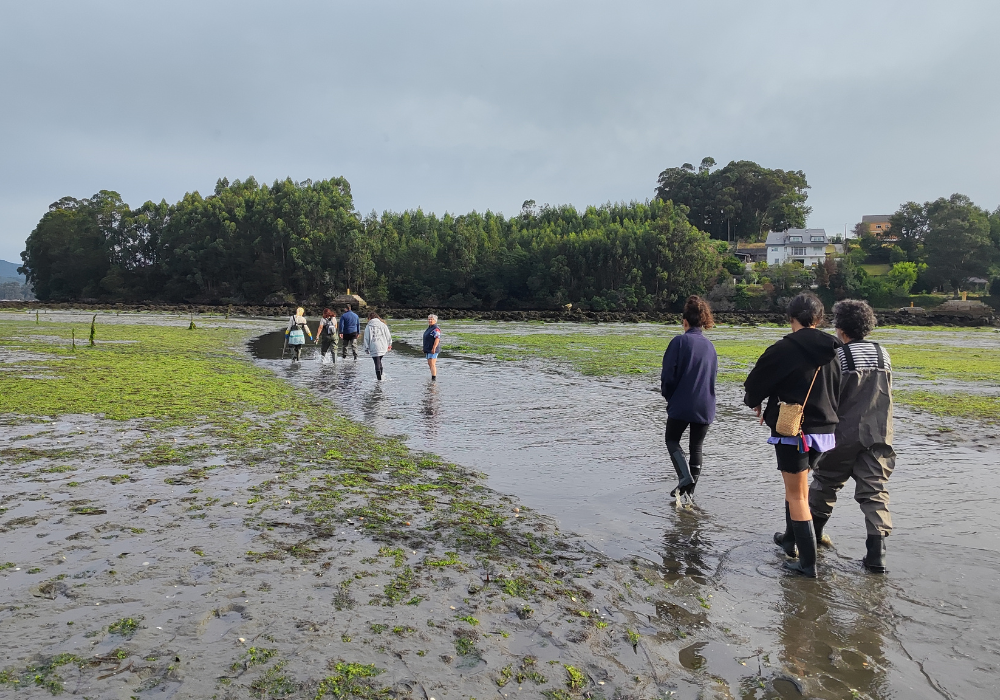
Seafood with Sciences for the Future
Cidadanía Sociedade Cooperativa Galega, AMARTURMAR, Future Oceans Lab (University of Vigo), Sinha Paca – Artelixo and Redondela
City CouncilRedondela (Galicia)
Mariscando con Ciencias para el Futuro is a collaborative project between shellfish gatherers on foot, research staff, local artists and the city council, led by the Galician cooperative Cidadania. We will share narratives and actions that draw lessons from the past, we will analyse and raise awareness with the community fabric about the present challenges produced by climate change, and we will project future views on shellfish on foot, an artisanal, feminised and eminently Galician profession that is part of the identity of many coastal areas. Artists, shellfish gatherers and scientists will exchange technical and popular knowledge to imagine sustainable futures in the artisanal coastal fishing sector in Galicia.
The initiative will take place at the bottom of the Ría de Vigo (San Simón cove), between 2025 and 2026, and will address the challenge of imagining how to adapt a productive sector to environmental changes.
Futures in the air
Aye Cultura Social, MurciaLab, University of Murcia (Fac. of Education), Youth for Change, Murcia City Council and Soma Territorio
Murcia
Futures in the Air aims to promote the recovery of degraded/inadequate natural and urban community spaces in Murcia through transdisciplinary research processes, citizen science and participatory art that enable ecological assemblages. Through the alliance between MurciaLab, Youth for Change, Soma Territorio, University of Murcia and AYE Social Culture, environmental quality is analyzed from an intersectional perspective of gender, class and urban ecology. In addition, artistic devices for urban regeneration are developed that make scientific data and environmental problems visible from aesthetic, social and cultural approaches. This initiative seeks to generate eco-community awareness, a sense of belonging and urban transformation, especially among young people, in the face of challenges such as the scarcity of green areas, poor air quality and rising temperatures. And thus, make Murcia a more resilient and sustainable city that promotes social justice from an intersectional perspective.
The Department of Umbrology
Open University of Catalonia (CareNet/DARTS groups), Contact Architecture, Nusos Coop, Playful Thinking
LaboratoryBarcelona
This 24-month transdisciplinary project brings together four partners from the city of Barcelona at the crossroads of humanities, architecture, arts and environmental sciences: Universitat Oberta de Catalunya, Arquitectura de Contacte, Laboratorio de Pensamiento Lúdico and Nusos Coop. The proposal seeks to prototype a speculative institution for the study and intervention of the urban life of shadows based on a series of co-creation, collaborative and open workshops, in the first year, leading to a Festival of Shadows. Thus, the project seeks to revitalize intergenerational, intercultural and interspecific knowledge, as well as aesthetics of shade that equip ecologies with practices to face the urban transformations that climate change entails communally; and allow us to reclaim popular sovereignty from the shadows and the protection that they make possible in times of climate change.
LipSea-M: Mediterranean Potential Imaging
LaboratoryUniversitat Pompeu Fabra, Institute of Evolutionary Biology (CSIC-UPF), CINEMA group, fishing communities of Cap de Creus and Mercat del Peix
Cap de Creus Natural Park (Girona)
The Laboratory of Potential Images of the Mediterranean is a space for interdisciplinary creation and research between microbiology and cinematographic creation of the CINEMA research group (UPF) and the Institute of Evolutionary Biology (CSIC-UPF). In the face of the climate crisis, we propose to develop a methodology of experimental art-science work that will allow us to visualize potential images, those that can only be accessed via microscopy and scientific instruments and are too abstract and complex to be transmitted.
The project is focused on IBE research on the effects of the tropicalisation of the Catalan Mediterranean on coral holobionts. Our objective is to search, record and archive these images, in addition to developing an expanded film project crossed by actions of citizen participation and knowledge transfer that promotes citizen resensitization about the effects of the climate crisis on our sea.
Starting a support
The Compose Knowledge program promotes a path of mutual learning that, beyond economic support, opens a space for network building and pooling of resources. In this process, the Foundation and the selected projects walk hand in hand towards common objectives. The projects will receive support for their development and the achievement of their objectives. From the Foundation we will also promote the meeting and exchange with and between the projects. The first of them, the Kick-Off Seminar, will take place on November 20 in which all the selected projects will be hosted, in person.
Members of the jury:
Blanca Pujals I Architect, spatial researcher and PhD in Philosophy, Visual Cultures and Materials
David Cerdeño I Honorary Professor of the Department of Theoretical Physics of the UAM
Isabel Ojeda I Director of the Department of Culture of the International University of Andalusia (UNIA)
María Ptqk I Curator, researcher and cultural manager specialized in the intersections between the arts and techno-scientific
culturePablo de Soto I Curator, researcher and educator with an integrative approach to the culture of the 21st century and the transcendental transformations of the digital age and the ecological transition.
Tere Badía I Director of HacTe and technical secretary of Red ACTS. Researcher in the fields of cultural policy, networks, international cultural cooperation and research, development and innovation in artistic production.