17 juillet 2024
Culture & Environment: the new EcoArts Nexus directory maps knowledge and funding


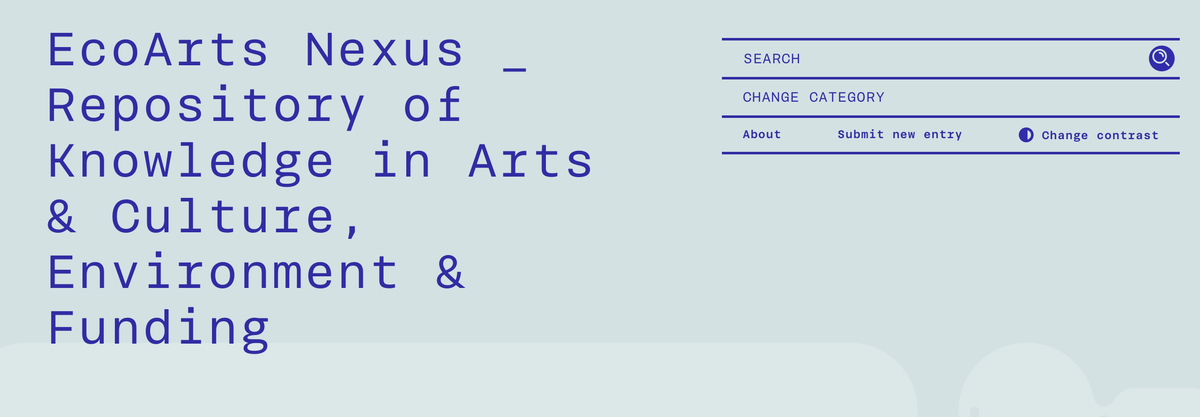
Guides, tools, innovative practices, funding and capacity-building programs… the new EcoArts Nexus platform offers a vast array of open-access resources and data, for those wishing to tackle the environmental challenges of arts and culture. This new European directory reflects the evolving dialogue between ecology and culture. On the occasion of its launch, Dea Vidovic, Director of the Kultura Nova Foundation, who coordinated the project with Klaus Fruchtnis, Head of Citizen Art at the Daniel and Nina Carasso Foundation, as part of the Philea Arts and Culture Funders Forum, answered our questions.
Be inspired and take action to connect culture and climate
Actors in the world of art and culture are increasingly taking up the challenges of climate change and the ecological transition. Encouraged to rethink their practices, they also play a major role in promoting a sustainable future.
In order to increase the visibility of initiatives that combine ecological concerns with cultural expression, the European group Philea Arts and Culture Funders Forum (ACFF) has decided to create a platform of resources and data, accessible free of charge. “EcoArts Nexus is an innovative platform, cataloguing knowledge at the intersection of art, culture, environmental sustainability and financing mechanisms. This dynamic directory maps philanthropic institutions, sources of public funding, the art world and the cultural sector, all committed to addressing pressing environmental challenges,” says Klaus Fruchtnis, Head of the Citizen Art Axis France of the Daniel and Nina Carasso Foundation.
You too, contribute to the platform!
Divided into 15 categories, the database currently contains more than 250 entries: funding programs for cultural adaptation and artistic practices dealing with environmental issues, tools and guidelines, literature, initiatives and organizations dedicated to connecting art and culture with the environment… It benefits from the collective expertise of its key contributors, the Kultura Nova Foundation and the Daniel and Nina Carasso Foundation, as well as the valuable contributions of Porticus and other philanthropic organizations for data sharing. An adaptable and constantly evolving tool, EcoArts Nexus is updated regularly. We invite you to share and showcase your practices if they are not yet included.

«
EcoArtsNexus serves as a compass for philanthropy and cultural actors, helping them move towards climate-neutral sectors and highlighting the power of the arts in addressing the environmental crisis.
»Dea Vidovic, Director of the Kultura Nova Foundation
3 questions to Dea Vidovic, Director of the Kultura Nova Foundation
Who is this new directory for?
EcoArtsNexus serves as a compass for philanthropy and cultural actors, helping them move towards climate-neutral sectors and highlighting the power of the arts in addressing the environmental crisis. In many countries, the intersection between cultural and environmental policies is still in an emerging phase. Many actors do not know how to address the climate crisis and implement effective solutions. EcoArtsNexus aims to be a valuable repository to guide and support their efforts. This platform should inspire and empower foundations, public funding bodies, artists, cultural professionals, artistic collectives, institutions (museums, theatres, galleries, etc.), festivals, art production and distribution companies, and many other actors.
How did you select the resources?
Our selection criteria focus on examples in Europe but also at the global level. We have prioritized resources that present innovative approaches, broad applicability, and educational value. The site is structured by categories, making it easy to navigate and discover. By continuously updating and developing the database through user involvement, we aim to foster a vibrant community of practice that advances the integration of environmental sustainability in the arts and culture sectors.
Why did you create this platform?
First, artists and cultural professionals play a crucial role in advocating for cultural rights, promoting creative climate justice, building resilience, and raising public awareness. Also, although its carbon footprint (excluding the creative industries, especially fashion) is not comparable to that of sectors such as energy or transport, the cultural sector still needs to evolve, which requires self-criticism and a transformation towards carbon neutrality. Finally, we have collectively noted within the European group Philea Arts and Culture Funders Forum, the lack of philanthropic commitment to link the arts and the environment. There are funding initiatives but the lack of standardised and sustainable models persists. Rather than creating guidelines, we have chosen to map good practices in order to improve their visibility and encourage funders to develop a coherent and structured approach.
Platform Overview
17 juil. 2024 · PDF 333 KB