Socially engaged art
30 March, 2026
Frogs and other types of humans: the resistance and desire of queer ruralities


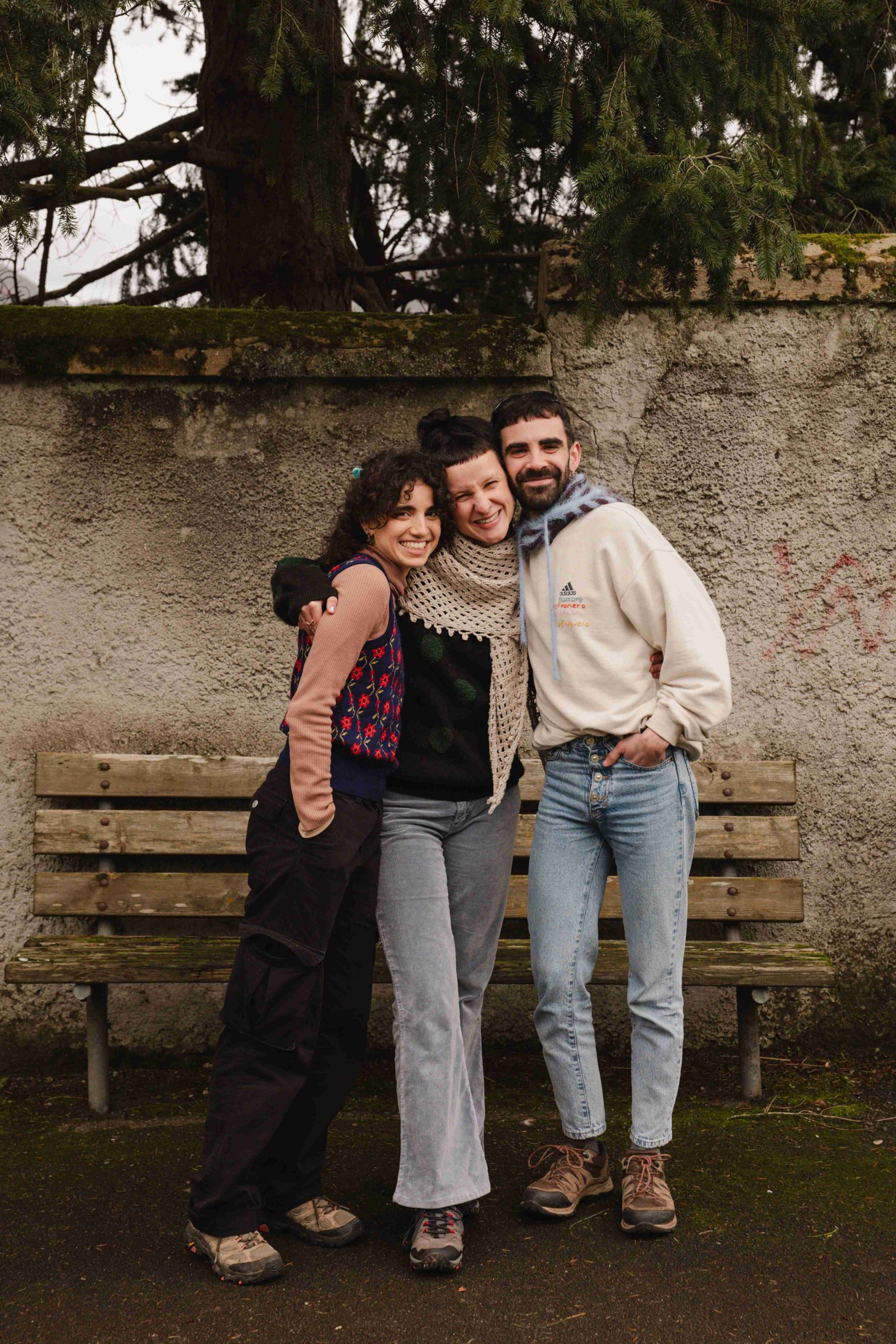
We spoke with the BajoTeja collective about Frogs and Other Types of Humans, a project selected in the call Alliances for a Cultural Democracy. Through the performing arts and mediation, the initiative builds spaces for coexistence in the rural environment of La Vera to celebrate diversity from the common.
BajoTeja defines itself as a team of young cultural workers who inhabit the border between “the asphalt and the meadow”. Her practice is situated at the intersection between diversity, territory and the right to culture, using participatory processes that connect institutions with citizens.
The team, made up of Alex Martínez – a cultural mediator specialising in performing arts and dance – Mara Sannia – cultural mediator, designer and textile artist – and Elena Brea – performing artist and cultural mediator – designs and coordinates cultural projects for social transformation, accompanies entities interested in participatory processes and provides training on mediation and cultural management. In this interview they tell us how their alliance with the VeraCuir Association and the City Council of Talaveruela de la Vera has made it possible to imagine new ways of living in the countryside.
How did you find out about the Alliances for a Cultural Democracy call and what has it meant for your entity to have the support of the Daniel and Nina Carasso Foundation?
We knew about the call for proposals because we followed the Daniel and Nina Carasso Foundation on social networks, and because we learned about some projects that had the call in previous years.
Before formalizing this union in 2024, at what point was the Yo cuento project and what was the relationship between the members of the alliance?
We knew each other and had collaborated occasionally among the members of the alliance, but this call motivated us to form a stable and sustainable alliance over time, especially by joining the City Council of Talaveruela de la Vera. We approached the project as an opportunity to generate political and social impact in terms of diversity and LGTBIQA+ in the territory. Another fundamental objective at the beginning of the project was to get to know each other, create links and (for BajoTeja) get to know and get closer to the territory of La Vera.
How did the alliance with the VeraCuir Association and the City Council of Talaveruela de la Vera (Cáceres) come about and what lessons have you been able to extract from this collective experience?
VeraCuir and I knew each other and had personally attended their festival, and VeraCuir and the Talaveruela City Council had collaborated on activities and projects. We wanted to join knowledge, forces and energies to be able to develop a project that had a little more scope.
Each entity is unique and has different needs, and in order to develop a project like this it is important to align objectives so that all alliances are motivated and willing to get involved.
Why is it important to focus on the cultural rights of the LGTBIQ+ community, specifically in rural areas?
We want to contribute to the visibility of queer ruralities as desirable lives and spaces for cultural creation and resistance. Rural queer communities, as Abel P. Pazos explains in Queer/queer ruralities and metronormativity: Challenges in the Spanish state— a text he wrote for the toolkit we made in the project—do not suffer greater discrimination than urban ones, but simply face different problems. With this type of project we seek to promote the generation of meeting spaces between different people, seek accessible and inclusive languages, and build spaces of coexistence in which it is possible to address issues related to diversity from a friendly place.
Your methodology uses concepts such as ‘hybrid animals’. How do you apply mediation and the performing arts to transform the environment?
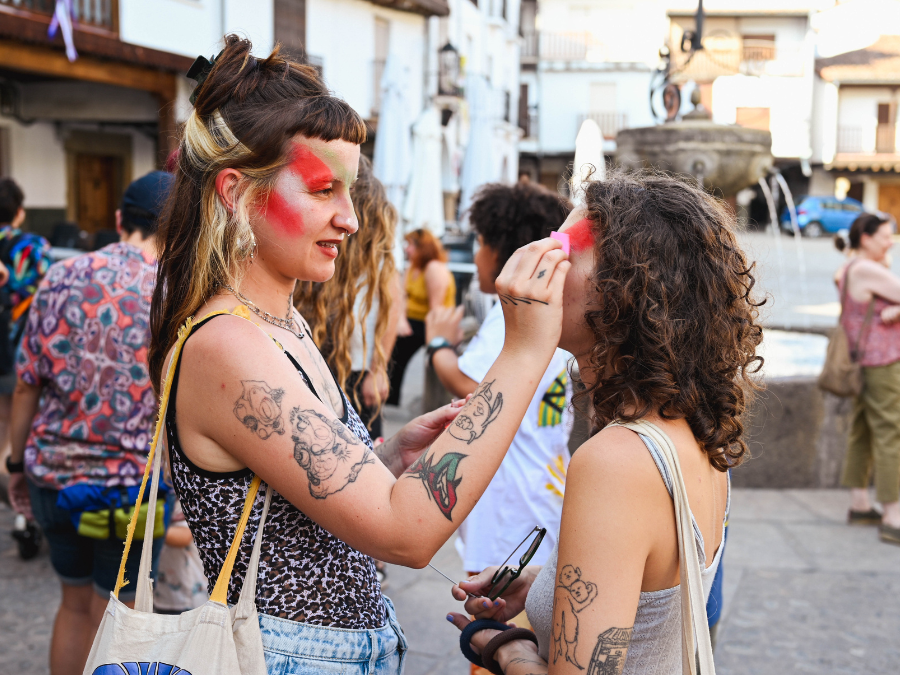
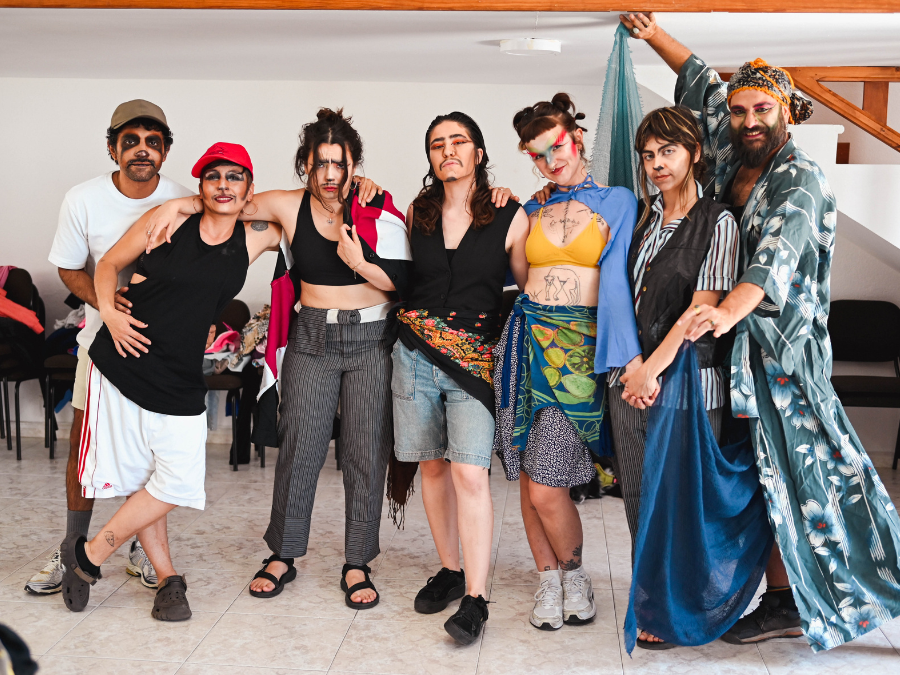
Frogs and other types of humans It addresses the need to generate a community in the village, in which one can experience, reflect and play with one’s own identity, both personal and collective. To do so, we have opted for mediation and the performing arts as a means through which to delve into queering in a close and pleasant way. Understanding the performing arts as an exploration of performativity, identity and the collective. We believe that putting the body on stage and day by day is an act of courage and that training a queer look at bodies broadens our vision of the world; and not only of the human world, but of everything that surrounds us. That’s why hybrid animals were our symbols and representations in this project. In queer animals we have found characteristics that we want for our communities: fluidity, permeability, mimesis, vulnerability… Concepts that are not just metaphors but practical tools with which to build bonds and forms of coexistence that we want to inhabit today.
From ‘animal drag’ workshops to meals in the pond, what have been the results of the actions put in place?
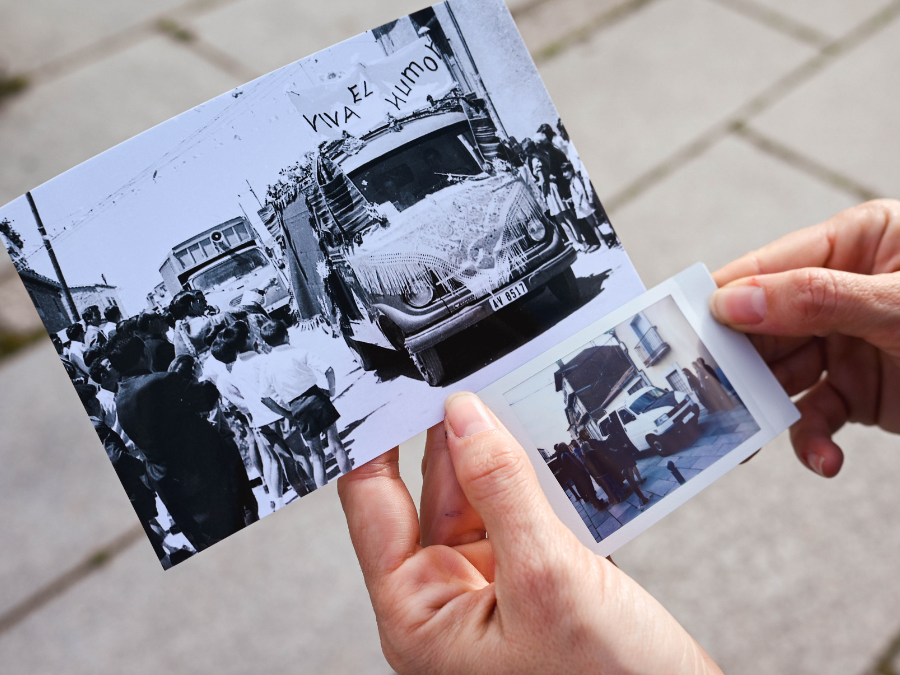
From the project’s own activities – a meal at the pond, a performative writing workshop, an animal drag workshop, collectively creating a romper, a screening of lgtbiqa+ short films, a queer folklore workshop, an artistic parade, a film cycle, etc. – to collaborations with alliances and other entities – participating in forums, talks, presentations, etc.
In addition, for BajoTeja it has meant strengthening (a little more) within the platform the ways and methodologies of work, giving rise to continue researching and implementing from the theme of hybrid animals, for example, the Verberecho program, which took place at Matadero Madrid: an inclusive verbena and a cycle of workshops to reflect on diversity.
What has been the impact that Frogs and other types of humans have generated in the Cáceres region of La Vera?
We started the project with the aim of creating political and social advocacy on diversity, and as the project progressed, we listened and saw that the real need was to generate community around queerness. The impact we value is the one that has been had on the people who have been part of the workshops, with whom we have collaborated, who have reached out to us . In all the new bridges that have been built by bringing us together, meeting and reflecting collectively through the drag animal, sharing meals, projecting and watching movies, sewing a giant romper, inventing new songs. By this we mean that the impact on the individual, on the small, matters. Creating communities where people feel safe, are visible and speak out.
Looking to the future, how does the life of Ranas and other types of humans continue, have you thought about a second phase in other environments?
We have continued with Ranas and other types of humans , opening the process to accompany and mentor other LGTBIQA+ groups in rural areas in the realization of a cultural or artistic project. Right now we accompany VeraCuir —the home and the community through rural art and culture verata, in La Vera—, Ciclo Pulga —Cinema, archive and queer counterculture, in Asturies— and La Bassa Mar —Territories of water: art, science and queer resistance, in L’Ampolla, Tarragona—.
The continuation of the project arises from the desire to learn about initiatives and continue to weave alliances between rural queer movements using the methodology implemented – mediation tools and performing arts – in the first part of the project.
What aspects should people or entities that want to embark on a project of Alliances for a Cultural Democracy take into account, what data, keys or advice would have been useful when starting this journey?
We believe that it is very important to be open to listening and change. If that happens, the project will mutate and nothing will turn out as you expected, and that’s what’s right. Listen, pay attention, move and change towards that need that your project can cover. Looking back, we believe that it would have been useful for us to make the alliances feel the project as their own from the first moment the call was raised. Also, and above all, to work from and on the ground.
An inspiring message for those initiatives that are thinking of applying for the new call for Alliances for a Cultural Democracy?
If effort and desire for change are put in, Alliances for a Cultural Democracy can be a before and after in the professionalization both internally and externally of the collective itself. At BajoTeja, it has helped us to situate our practice, to strengthen our work methodology and to consolidate our internal organization.
Mara Sannia, Elena Brea and Alex Martínez, founders of BajoTeja. Photo: Naysemeya


