


Context and purpose of the test space
Agricultural test spaces emerge as social innovation devices to make it easier for people without a consolidated agricultural career to test a productive project in real conditions before its definitive establishment. In a context marked by the ageing of the agricultural population and the difficulty of accessing productive resources, these spaces provide an environment equipped with land, livestock and infrastructure with technical and training support.
In Gandesa, the project is adapted to the biogeographical conditions of southern Catalonia and to the territorial strategy for the prevention of environmental risks. The initiative responds to the need to integrate livestock production with ecological management functions, offering a model that can inspire other municipalities interested in similar strategies of territorial management and reproduction of agricultural activity.
Development and methodology
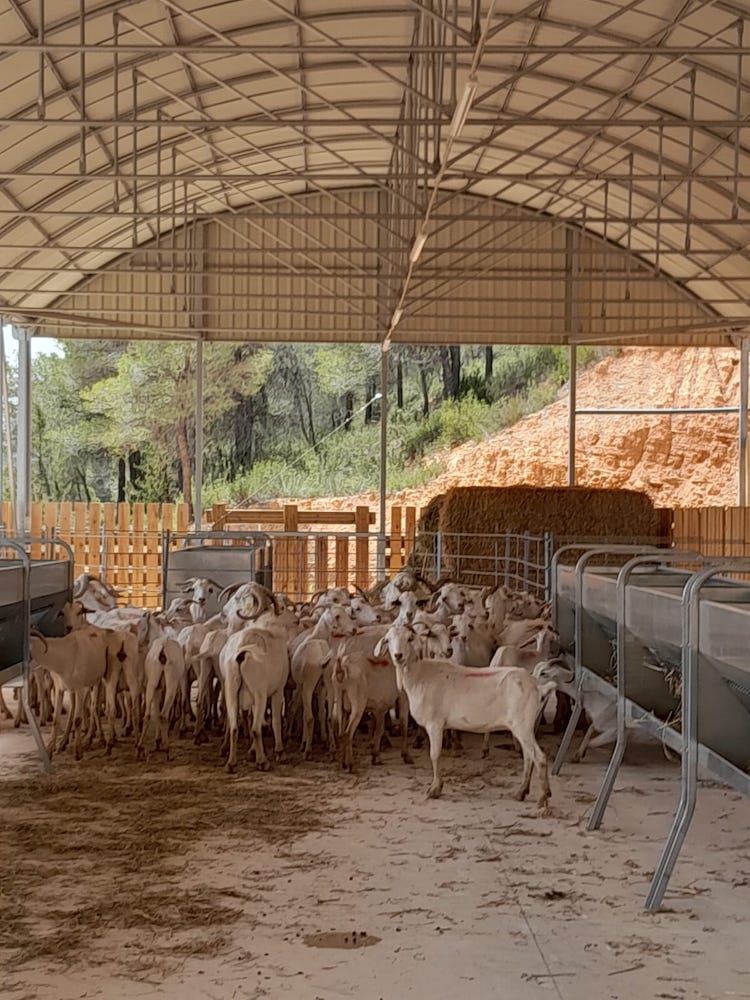
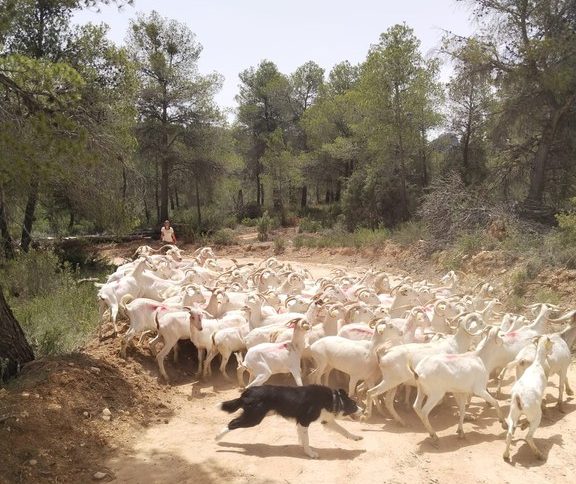
The operational core of the test space consists of a herd of 93 specimens of the Catalan Goat breed (90 females and 3 males) that graze on the municipal estate of Els Comuns. Extensive livestock management is aimed at reducing the fuel mass of the undergrowth, which reduces the risk of large-scale fires, a critical factor in the Mediterranean climate of Terra Alta.
The person participating in the test space was selected through a public call process and has access to technical accompaniment, training and support to develop their productive project. This methodological strategy allows those who join to learn in a real context, evaluate productive and business viability, and minimize risks before assuming higher investment commitments.
Actors and institutional alliances
The Association of Rural and Maritime Initiatives of Catalonia (ARCA) has coordinated the operation in Gandesa, coordinating the participation of various institutions and sectoral entities. The School of Shepherds and Shepherds of Catalonia acts as the owner of the farm, providing training and legal support. The City Council of Gandesa ceded the municipal property and supports logistical aspects, while the Regional Council of Terra Alta and the Interregional Consortium of Socioeconomic Initiatives (CIS) collaborate in territorial coordination.
This governance scheme is part of the Network of Agricultural Test Spaces (RETA), aimed at facilitating the progressive incorporation of producers into the agricultural sector and offering controlled testing environments before installation as independent production units.
Territorial implications and perspectives
Gandesa’s experience shows a hybrid model that combines agricultural production, animal welfare, forest management and the provision of ecosystem services. By integrating these elements, the project is positioned as an innovative response to structural challenges such as access to land, knowledge transfer and the adaptation of productive activities to environmental risks.
In addition to generating goat meat under sustainable parameters, extensive goat management contributes to fire prevention strategies and the conservation of the native Catalan Goat breed, whose state of conservation in the past had been worrying. Local experience can serve as a reference for other territories interested in replicating similar mechanisms that facilitate the transition to more resilient agricultural systems.